
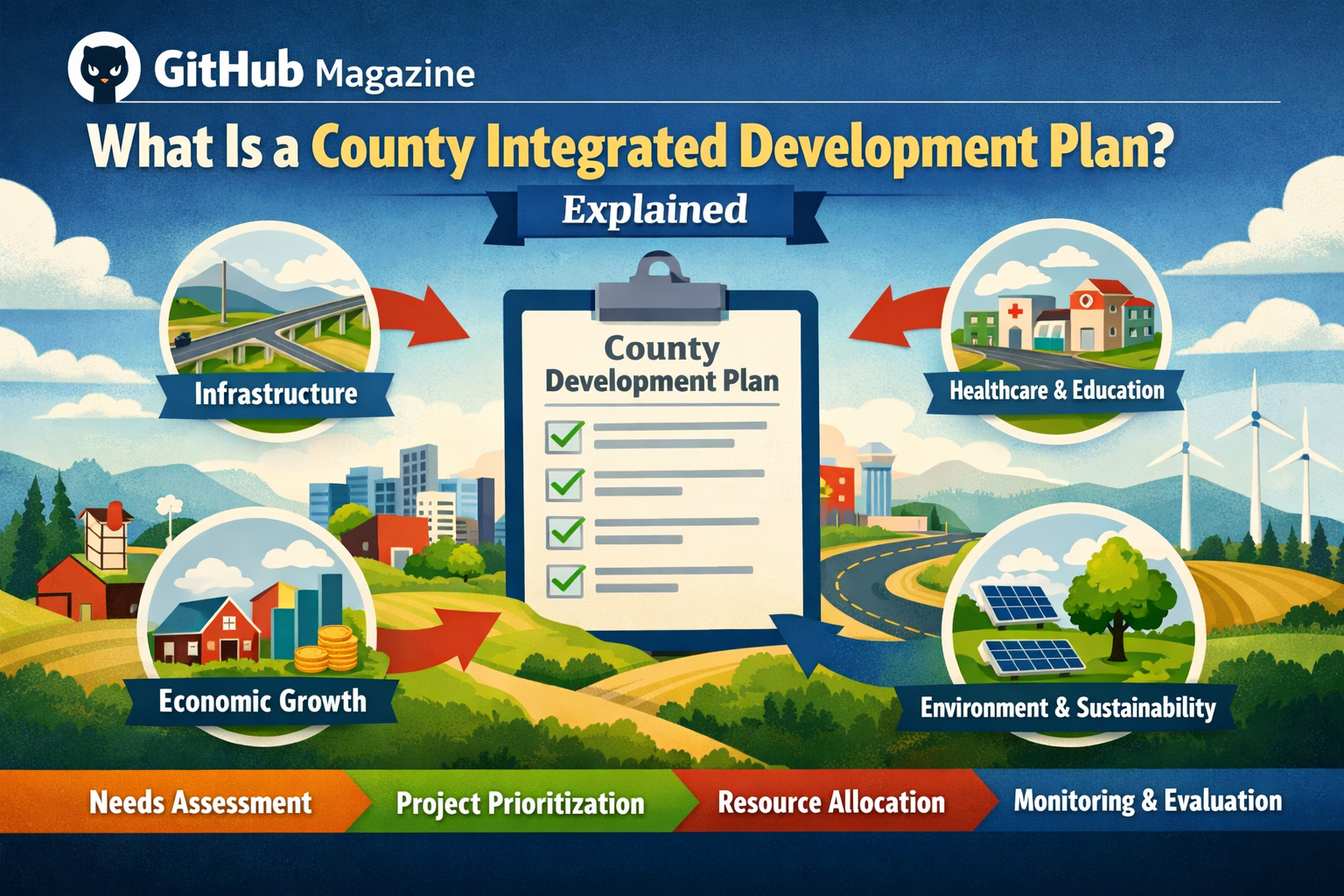
What Is a County Integrated Development Plan Explained
A County Integrated Development Plan, commonly known as a CIDP, is the central planning instrument for county governments operating within devolved systems of governance. In simple terms, it is a five-year strategic plan that sets out a county’s development priorities, programs, and resource allocation in an integrated and legally binding manner. Within the first moments of encountering the concept, it becomes clear that the CIDP is not a ceremonial policy document. It is the authoritative foundation upon which county budgets, annual development plans, and public investments are built.
The CIDP emerged as a response to the need for structured, accountable, and participatory planning at the local level. Rather than allowing development decisions to be driven by short-term political interests or fragmented sector plans, the CIDP provides a coherent roadmap that aligns economic, social, environmental, and institutional goals over a medium-term horizon. It answers essential questions: Where is the county now, where does it want to go in five years, and how will it get there with the resources available?
Beyond its technical role, the CIDP has a democratic dimension. It requires counties to engage citizens, civil society, and other stakeholders in identifying priorities and shaping development choices. This participatory foundation gives the plan legitimacy and ensures that public spending reflects real community needs. As counties continue to grapple with challenges such as service delivery gaps, inequality, and fiscal constraints, the CIDP stands as a critical tool for translating vision into measurable outcomes.
What Is a County Integrated Development Plan
A County Integrated Development Plan is a comprehensive, medium-term planning framework developed by a county government to guide development activities for a period of five years. The word “integrated” is central to its meaning. Unlike isolated sector plans that address health, agriculture, infrastructure, or education independently, the CIDP brings all sectors together under a single strategic vision. This integration helps counties avoid duplication, manage trade-offs, and ensure that development interventions reinforce rather than undermine one another.
The CIDP typically begins with a situational analysis that examines demographic trends, economic conditions, infrastructure status, environmental factors, and institutional capacity. This evidence base informs the county’s vision and strategic objectives. From there, the plan outlines priority programs and projects, estimates required resources, and defines implementation arrangements. Importantly, the CIDP also establishes mechanisms for monitoring and evaluation, allowing progress to be tracked and adjustments made over time.
In practice, the CIDP serves as the reference point for all other county planning and budgeting instruments. Annual development plans, sector strategies, and budget estimates are expected to flow directly from it. This makes the CIDP both a strategic compass and a practical management tool for county governments.
Purpose and Importance of the CIDP
The primary purpose of a CIDP is to provide strategic direction for county development in a predictable and coordinated way. By setting clear priorities over a five-year period, the plan helps counties focus limited resources on interventions with the greatest potential impact. It replaces ad hoc decision-making with a structured approach grounded in data and long-term goals.
Another critical purpose is alignment. The CIDP links county priorities with broader national development agendas and global commitments such as sustainable development principles. This alignment ensures coherence across different levels of government and makes it easier for development partners and investors to support county initiatives that fit within an agreed framework.
Accountability is also central to the CIDP’s importance. With defined targets, timelines, and performance indicators, the plan provides a basis for assessing whether county governments are delivering on their promises. Citizens, oversight bodies, and assemblies can use the CIDP to hold leaders accountable for results, not just intentions.
Finally, the CIDP institutionalizes public participation. By involving communities in identifying needs and setting priorities, counties enhance transparency and trust while improving the relevance of development interventions. In this way, the CIDP functions not only as a planning document but also as a social contract between county governments and their residents.
Core Components of a County Integrated Development Plan
A well-designed CIDP follows a structured format that ensures both strategic clarity and operational relevance. While the specific content may vary by county, most plans share several core components that work together to create a coherent whole.
The situational analysis provides a detailed snapshot of the county’s current conditions. It examines population dynamics, economic activities, service delivery levels, infrastructure networks, environmental challenges, and institutional arrangements. This baseline is essential for identifying gaps and opportunities.
The vision and strategic objectives articulate the county’s long-term aspirations and the key outcomes it seeks to achieve over the five-year period. These statements provide direction and help align stakeholders around shared goals.
Programs and projects translate strategy into action. This section outlines priority interventions across sectors, often highlighting flagship projects intended to drive transformation. Each program is usually linked to specific objectives and indicators.
Resource mobilization and financing strategies estimate the costs of proposed interventions and identify funding sources, including local revenue, intergovernmental transfers, and partnerships.
Implementation, monitoring, and evaluation frameworks define roles, responsibilities, timelines, and performance measures. These mechanisms ensure that the CIDP is not static but actively guides execution and learning throughout its lifespan.
Relationship Between the CIDP and County Budgets
One of the most significant features of a CIDP is its binding relationship with county budgeting processes. In devolved systems, counties are generally required to base their annual budgets and development plans on the priorities outlined in the CIDP. This linkage ensures consistency between long-term strategy and short-term spending decisions.
Through this relationship, the CIDP helps prevent misallocation of public funds. Projects and expenditures that fall outside the approved plan lack a strategic justification, reducing the risk of wasteful or politically motivated spending. Instead, budgets become instruments for implementing agreed priorities rather than collections of disconnected items.
The CIDP also supports fiscal discipline by encouraging realistic planning. By estimating costs and aligning them with projected revenues, counties can better manage expectations and avoid overcommitting resources. Over time, this integration of planning and budgeting strengthens financial management and enhances the credibility of county governments.
Comparative Perspective on County Planning Frameworks
| Aspect | With CIDP | Without Integrated Plan |
|---|---|---|
| Strategic Direction | Clear five-year vision and priorities | Short-term, fragmented decision-making |
| Budget Alignment | Budgets linked to strategic goals | Budgets driven by ad hoc demands |
| Accountability | Measurable targets and indicators | Limited basis for performance assessment |
| Public Participation | Structured citizen engagement | Minimal or inconsistent consultation |
| Coordination | Integrated across sectors | Duplication and sectoral silos |
This comparison illustrates why integrated development planning has become a cornerstone of effective county governance.
Examples of County Integrated Development Planning in Practice
Across different counties, CIDPs reflect local contexts while adhering to a common framework. Urban counties often emphasize infrastructure, housing, and economic competitiveness, responding to rapid population growth and service demands. Rural counties may prioritize agriculture, natural resource management, and access to basic services. Arid and semi-arid regions frequently focus on resilience, water security, and livelihoods.
Despite these differences, the underlying logic of the CIDP remains consistent. Each plan seeks to balance immediate needs with long-term transformation, integrate sectoral priorities, and provide a transparent basis for decision-making. Over successive planning cycles, counties refine their approaches, incorporating lessons learned and responding to emerging challenges such as climate change and public health risks.
Expert Perspectives on County Integrated Development Plans
“The County Integrated Development Plan is the backbone of devolved governance because it connects vision, money, and results in a single framework,” observes a development policy analyst with extensive experience in local government planning.
A governance specialist notes that integration is the plan’s greatest strength. By bringing all sectors together, the CIDP reduces duplication and creates opportunities for synergy, such as aligning infrastructure investments with economic development goals.
From a public administration perspective, the emphasis on participation is equally important. Meaningful citizen engagement in CIDP formulation enhances legitimacy and improves the quality of decisions, leading to outcomes that better reflect community priorities.
Structured Overview of a Typical CIDP Timeline
| Phase | Key Activities |
|---|---|
| Preparation | Data collection, stakeholder mapping, planning guidelines |
| Consultation | Public forums, sector consultations, validation workshops |
| Drafting | Vision setting, program design, costing |
| Approval | Review by executive and legislative bodies |
| Implementation | Annual plans, budgeting, project execution |
| Review | Monitoring, evaluation, mid-term adjustments |
This timeline highlights the cyclical nature of integrated development planning, emphasizing continuous learning and adaptation.
Takeaways
- A County Integrated Development Plan is a legally mandated five-year strategic framework.
- It integrates sectoral priorities into a single, coherent development vision.
- The CIDP forms the foundation for county budgets and annual plans.
- Public participation is central to its legitimacy and effectiveness.
- Monitoring and evaluation mechanisms are built into the plan.
- CIDPs enhance accountability and transparency in county governance.
Conclusion
County Integrated Development Plans represent a decisive shift toward strategic, participatory, and accountable local governance. By anchoring development decisions in evidence, long-term vision, and citizen input, the CIDP moves counties away from fragmented and reactive approaches to planning. It provides a shared roadmap that aligns resources, institutions, and communities around common goals.
The true value of a CIDP lies not in its pages but in its implementation. Effective execution requires political commitment, administrative capacity, and continuous engagement with citizens. When these elements come together, the CIDP becomes a powerful instrument for inclusive growth, improved service delivery, and sustainable development.
As counties navigate increasingly complex challenges, from economic uncertainty to environmental pressures, the integrated approach embodied in the CIDP offers a resilient framework for decision-making. It reminds both leaders and citizens that development is most successful when it is planned collectively, implemented consistently, and evaluated honestly.
Frequently Asked Questions
What is the main objective of a County Integrated Development Plan
Its main objective is to guide county development priorities, budgeting, and service delivery over a five-year period in a coordinated and strategic manner.
Who is responsible for preparing the CIDP
The county government prepares the CIDP through its technical teams, with oversight from elected leaders and input from the public.
How long does a CIDP last
A CIDP typically covers a five-year planning period aligned with electoral or administrative cycles.
Is public participation mandatory in CIDP development
Yes, public participation is a core requirement to ensure that the plan reflects community needs and priorities.
Can a CIDP be revised during its lifespan
Yes, counties can review and adjust their CIDPs through formal processes based on performance reviews and emerging needs.