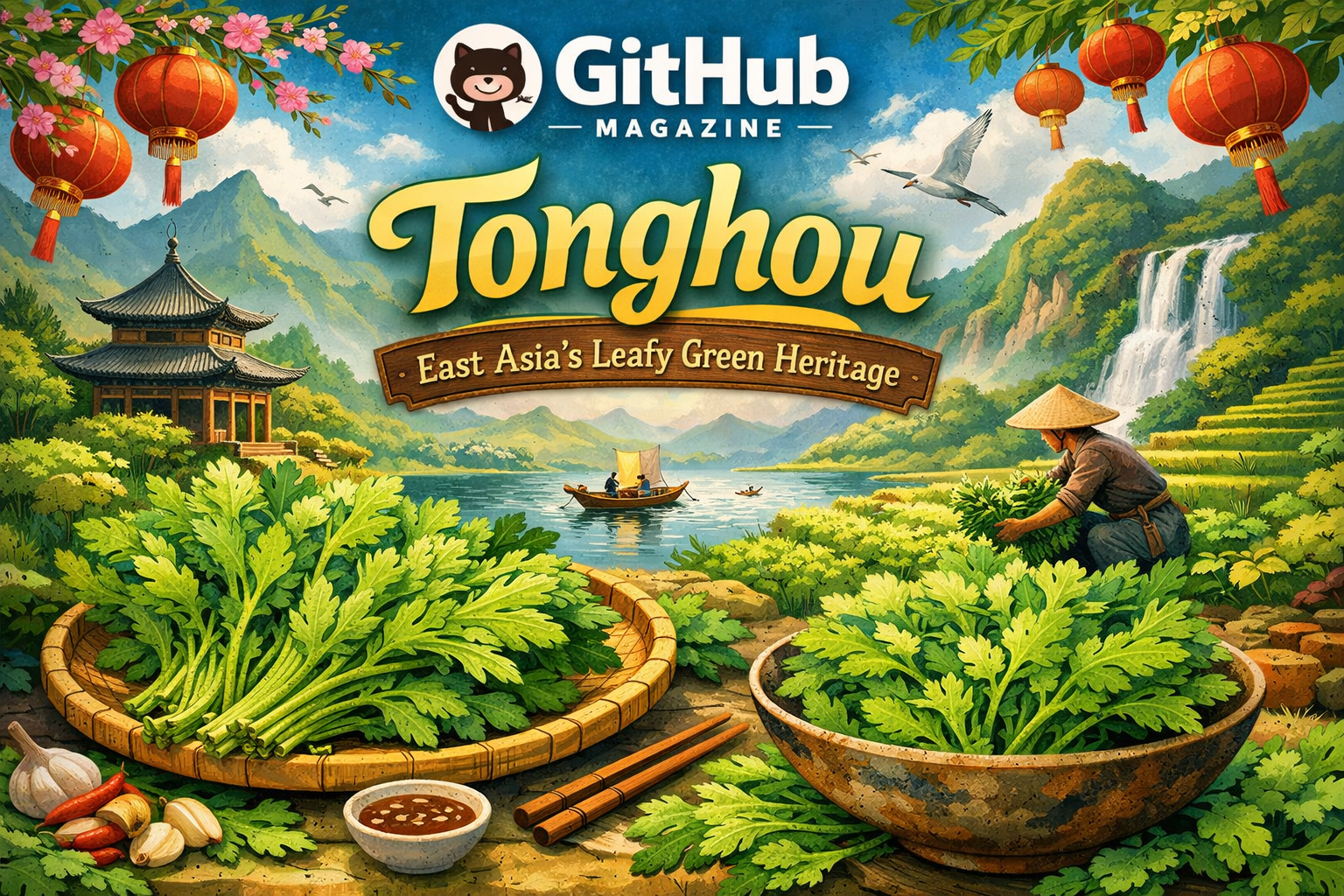
Tonghou: The Quiet Leafy Green of East Asian Cuisine
Tonghou is not a celebrity ingredient. It does not trend on social media feeds or dominate supermarket billboards. Yet in homes across parts of China and Taiwan, it has long been recognized as a quiet constant: a leafy green used in soups, quick stir-fries, and seasonal meals where freshness and balance matter more than spectacle. Known in English as chrysanthemum greens and botanically related to Glebionis coronaria, tonghou is valued for its tender texture, gentle bitterness, and soft herbal aroma.
In practical terms, tonghou is a cool-season vegetable harvested young for its leaves and soft stems, cooked lightly to preserve both color and fragrance. It appears most often in home kitchens rather than restaurants, part of a culinary vocabulary learned through repetition rather than instruction manuals. In many households, it is the vegetable added when meat is heavy, when weather turns cool, or when the body needs something clean and restorative.
But tonghou is more than a recipe component. It is a cultural object, shaped by agriculture, memory, and the rhythms of everyday life. Its continued presence in regional cuisine reflects how food traditions persist even as cities expand and global supply chains standardize taste. As modern diners search for “forgotten” vegetables and nutritionists rediscover the value of diverse greens, tonghou stands as both a relic and a contemporary answer. Understanding it means tracing how flavor, farming, health, and identity quietly intertwine on an ordinary plate.
A Leaf with a Long Memory
Long before tonghou became a line item in produce markets, it existed as part of a broader relationship between farming communities and seasonal land. Leafy greens similar to tonghou were cultivated in temperate regions of East Asia for their fast growth and reliability. They required little storage, could be harvested repeatedly, and offered nutrients during cooler months when fruiting vegetables were scarce.
Historical cookbooks from imperial China often grouped such greens under medicinal-culinary categories, where food and health overlapped naturally. While the modern name “tonghou” varies by dialect, the plant itself was known as something both nourishing and cleansing, useful for restoring balance after heavy meals. It was rarely described poetically, yet it appeared persistently in domestic records, market lists, and everyday meals.
Unlike rice or wheat, tonghou did not define civilizations. Instead, it followed them, quietly adapting as kitchens evolved. During periods of urbanization in the twentieth century, rural migrants brought their food habits with them, including preferences for vegetables like tonghou. It entered crowded city markets not as novelty, but as reassurance.
Food historian Mei Chen has observed, “Vegetables such as tonghou are rarely documented with the reverence given to grains or meats, yet they shape daily eating more consistently than ceremonial foods. They form the background flavor of a culture.” That background flavor is often what survives longest, precisely because it is ordinary.
Botanical Simplicity and Cultivation
Tonghou belongs to a botanical family better known for ornamental flowers than for food. Chrysanthemums, widely cultivated for decoration, share lineage with the edible variety harvested as tonghou. The culinary version, however, is selected for soft leaves and mild bitterness rather than blooms.
The plant favors cool temperatures and moderate sunlight. Farmers typically sow seeds in early autumn or spring, harvesting within weeks. Because the leaves regenerate quickly, a single plot can provide multiple harvests in one season. This efficiency made tonghou valuable to small farmers who depended on short growing cycles to feed families and supply local markets.
Modern agronomists consider tonghou a low-input crop. It tolerates varied soils, requires modest irrigation, and resists many common pests when grown in cooler weather. These traits align closely with contemporary interest in sustainable agriculture and urban farming.
A basic overview of its agricultural profile is summarized below.
| Feature | Description |
|---|---|
| Botanical relation | Chrysanthemum greens (Glebionis coronaria) |
| Climate preference | Cool and mild |
| Time to harvest | Short, often 30–45 days |
| Yield pattern | Multiple harvests per season |
| Edible parts | Leaves and tender stems |
Its physical appearance is modest: serrated green leaves, thin hollow stems, and a scent that hints faintly at herbs and wildflowers. There is nothing dramatic about its form, which may explain why it traveled quietly through history, carried more by necessity than by prestige.
Nutrition Where Tradition and Science Meet
Long before laboratory analysis, cooks understood that tonghou “felt light” on the body. Meals that included it were described as easier to digest, less tiring, and somehow cleansing. Today, nutritional science explains those impressions with measurable components.
Tonghou contains high levels of vitamin A, important for vision and immune response, and vitamin C, which supports tissue repair and antioxidant protection. It also provides iron and dietary fiber, aiding blood health and digestion.
Dr. Jian Li, professor of nutrition science at Zhejiang University, notes, “Leafy greens like tonghou offer a combination of micronutrients and plant compounds that work together. When consumed regularly, they support cardiovascular health, metabolic balance, and gut function more effectively than isolated supplements.”
Another perspective comes from culinary researcher Luo Yan, who studies bitterness in food. “The slight bitterness in tonghou signals the presence of phytochemicals that stimulate digestive enzymes. Traditional cuisines often valued these flavors because they prepared the body for richer foods.”
A simplified nutritional overview illustrates why tonghou has remained relevant.
| Nutrient | Role in the body |
|---|---|
| Vitamin A | Supports vision and immune defense |
| Vitamin C | Protects cells from oxidative stress |
| Iron | Aids oxygen transport in blood |
| Dietary fiber | Improves digestion and satiety |
These attributes help explain why tonghou appears frequently in meals designed to restore balance, such as simple broths after illness or light dinners following festivals.
Flavor, Texture, and Culinary Identity
Tonghou’s taste is subtle but distinctive. It begins with a mild bitterness that fades quickly into herbal sweetness, leaving a clean finish. This profile resists exaggeration. It does not overpower other ingredients, nor does it disappear entirely.
Cooks often treat tonghou with restraint. Overcooking dulls its fragrance and darkens its color, turning elegance into limpness. The most common preparation involves washing the leaves, trimming thick stems, and adding them at the final moments of cooking.
Chef Hua Rong of Taipei’s Blue Jasmine Kitchen describes it this way: “Tonghou is a conversation, not a speech. You notice it more after you swallow than while you chew. That lingering note is what makes people remember the dish.”
In home kitchens, it is paired with tofu, thin slices of pork, or simple egg broths. In recent years, chefs experimenting with modern menus have folded tonghou into grain bowls, herb sauces, and even fresh salads, using its bitterness to replace arugula or radicchio.
Common preparation styles include the following.
| Method | Culinary effect |
|---|---|
| Blanching | Preserves color and tenderness |
| Stir-frying | Releases aroma, softens bitterness |
| Soup | Infuses broth with herbal notes |
| Raw use | Crisp texture with grassy undertone |
Its adaptability allows tonghou to cross culinary boundaries without losing identity. Whether floating in a clear soup or chopped into a modern salad, its flavor still carries traces of older kitchens.
Cultural Meaning Beyond the Plate
Food often carries emotional weight, and tonghou is no exception. In rural areas, harvesting it marked the transition between seasons. Families gathered before sunrise, baskets in hand, knowing that tender leaves meant cooler days ahead.
For older generations, the smell of tonghou cooking evokes memories of childhood kitchens, wooden tables, and shared bowls. These associations persist even as cities replace farms and supermarkets replace open markets.
Anthropologist Keiko Matsuda explains, “Vegetables like tonghou function as cultural anchors. They appear regularly enough to become part of emotional memory. When people migrate or age, these flavors remain powerful reminders of home.”
Urbanization altered how tonghou is purchased and prepared, but not its symbolic role. It still appears in meals served to elders, during modest celebrations, and in everyday dinners where extravagance is unnecessary.
In this way, tonghou participates in what sociologists call “culinary continuity,” the slow transmission of habits that resist globalization. It is not marketed aggressively, but it persists through repetition, through mothers teaching daughters, through market vendors arranging small bundles beside more glamorous produce.
Rediscovery in Contemporary Food Culture
As global cuisine turns its attention to forgotten or undervalued ingredients, tonghou has begun to reappear in new contexts. Food writers document it as an alternative leafy green. Health-focused cooks praise its nutritional density. Chefs incorporate it into menus designed around heritage produce.
This rediscovery is part of a broader movement that values biodiversity and regional food knowledge. Vegetables once considered ordinary are now studied, photographed, and reinterpreted.
Some modern recipes blend tonghou with olive oil and nuts into pesto-like sauces. Others mix it into noodles or layer it under roasted vegetables. These adaptations may differ from traditional uses, but they rely on the same qualities: tenderness, fragrance, and balance.
Nutrition educator Zhang Rui observes, “When people search for healthier diets, they often rediscover what earlier generations never abandoned. Tonghou is an example of how tradition and innovation meet quietly.”
The leaf that once belonged only to regional kitchens now travels across borders, carried by cookbooks, immigrant markets, and online curiosity.
Takeaways
- Tonghou is an edible chrysanthemum green traditionally used in East Asian home cooking.
- It grows quickly in cool climates and supports multiple harvests per season.
- The vegetable is rich in vitamins, fiber, and plant compounds beneficial to digestion and immunity.
- Its flavor is gently bitter and aromatic, suited to light cooking methods.
- Tonghou holds cultural significance as a marker of seasonality and family tradition.
- Contemporary chefs are adapting it into modern, global recipes while preserving its identity.
Conclusion
Tonghou does not announce itself loudly. It does not demand attention. Yet its endurance tells a story about how cultures choose what to keep. Through dynasties, migrations, and changing food systems, this small green leaf has remained useful, nourishing, and quietly beloved.
In a world increasingly shaped by industrial agriculture and standardized taste, tonghou represents another path. It reminds us that value does not always align with scale, that nutrition and meaning can coexist in modest forms, and that culinary heritage often survives in the everyday rather than the extraordinary.
As modern kitchens rediscover the richness of traditional ingredients, tonghou offers more than novelty. It offers continuity. It shows how memory can be edible, how identity can be seasoned lightly, and how the simplest foods often carry the deepest stories.
FAQs
What exactly is tonghou?
Tonghou is a leafy vegetable related to chrysanthemums, commonly used in East Asian cuisine for soups and stir-fries.
Does tonghou taste bitter?
It has a mild bitterness balanced by herbal sweetness, which softens when cooked lightly.
Is tonghou nutritious?
Yes. It contains vitamins A and C, iron, and dietary fiber that support overall health.
Where is tonghou commonly eaten?
It is most common in Chinese and Taiwanese regional cooking, especially in home kitchens.
Can tonghou be grown at home?
Yes. It grows well in cool weather, needs little space, and matures quickly.

Related Posts

Directorate of Staff Development Explained

Toro Star: The Complete Guide to El Toro and the Constellation Taurus