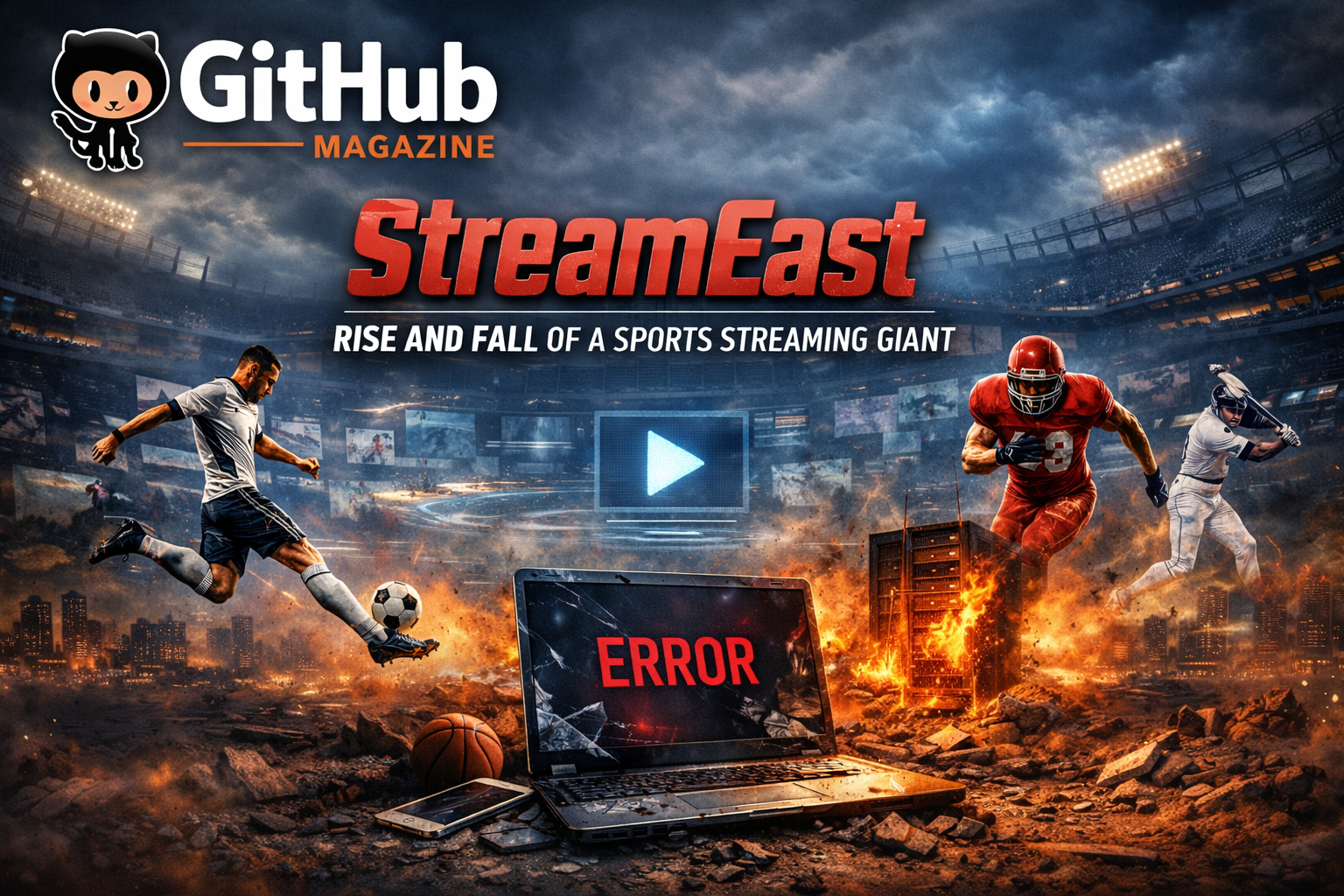
StreamEast: Rise and Fall of a Free Sports Streaming Giant
StreamEast emerged as one of the most searched free sports streaming platforms of the 2020s, offering instant access to live football, basketball, combat sports, and global tournaments without subscriptions or regional limits. For users frustrated by fragmented streaming services and rising monthly fees, it felt revolutionary. For broadcasters and leagues, it was a direct threat to the financial architecture supporting professional sports.
Within a few years, the platform grew from an obscure link-sharing website into a massive digital gateway used by millions each month. It aggregated live streams from multiple external sources and presented them through a clean, minimal interface that worked across phones, tablets, and desktop browsers. No accounts were required. No payments. No contracts. One click, and the match began.
Yet behind that simplicity lay a complex story of copyright conflict, cybersecurity risk, shifting consumer behavior, and the uneasy future of digital content ownership. StreamEast did not merely exist on the margins of the internet. It became part of mainstream online culture, frequently trending on social platforms during major sporting events and quietly replacing cable television for a generation raised on on-demand access.
This article examines how StreamEast functioned, why it became so dominant, what forces led to its collapse, and what its story reveals about the deeper transformation underway in global media distribution.
The Rise of StreamEast in the Streaming Era
StreamEast gained popularity during a period when sports broadcasting entered its most fragmented phase. Major leagues sold exclusive rights to multiple platforms across regions, forcing fans to juggle subscriptions to follow their favorite teams. A single household could require three or four paid services to watch one season of football or basketball.
StreamEast positioned itself as the opposite. Its homepage listed live and upcoming games in chronological order, categorized by league and sport. Clicking an event opened several mirror streams hosted elsewhere on the web. This architecture allowed the site to scale rapidly while avoiding the infrastructure costs of hosting video itself.
By 2023, StreamEast had become a default search result for phrases like “free NFL stream” or “watch NBA live online.” Its growth was driven less by marketing than by algorithmic discovery and word-of-mouth among students, international fans, and cost-conscious households.
The platform’s design philosophy was stark. No branding beyond a simple logo. No editorial commentary. No user accounts. The product was the stream itself. This functional minimalism helped it blend into the wider ecosystem of internet utilities rather than entertainment brands.
How the Platform Actually Worked
StreamEast did not operate like Netflix or ESPN+. It functioned as an aggregator and directory. The site indexed live broadcast links uploaded to third-party servers and embedded them into its own interface. When one link failed, others were rotated in its place.
This structure reduced hosting costs and technical exposure while increasing resilience. Domains could be blocked or seized, but new mirrors would appear within days, often promoted through social channels or browser bookmarks passed between users.
However, this same structure created serious security vulnerabilities. Because the streams originated from unregulated sources, advertising networks attached to them frequently included aggressive pop-ups, trackers, and occasionally malicious scripts. Users traded financial savings for digital risk, often unknowingly.
Cybersecurity researchers repeatedly warned that unlicensed streaming ecosystems function as prime environments for data harvesting, browser hijacking, and credential theft. Without regulatory oversight, there was no incentive to protect user privacy.
The Economics of Sports Broadcasting
Professional sports depend heavily on media revenue. In the United States alone, major leagues collectively generate tens of billions of dollars each year from television and digital rights contracts. These agreements fund stadiums, player salaries, youth development programs, and international expansion.
StreamEast disrupted this ecosystem by offering the same product—live games—without paying any licensing fees. Every viewer who chose the free option represented a potential loss to broadcasters and advertisers.
The impact extended beyond corporations. Smaller regional networks, production crews, and digital infrastructure providers depend on licensing revenue to remain solvent. When piracy scales to millions of users, it becomes an economic event rather than a technical nuisance.
This tension created a structural contradiction in modern media. Technology made global distribution effortless. Law attempted to contain it within national contracts.
Legal Pressure and the Global Crackdown
By 2024, StreamEast was no longer invisible to regulators. International coalitions representing broadcasters and sports leagues began coordinating with law enforcement agencies to trace its infrastructure and alleged operators.
A year-long investigation eventually led to coordinated domain seizures and arrests linked to the platform’s backend administration. Authorities reportedly confiscated servers, digital wallets, and networking equipment tied to the site’s operations.
The takedown signaled a new phase in digital copyright enforcement: cross-border, coordinated, and technologically sophisticated. It also demonstrated that platforms operating in legal gray zones could no longer rely on jurisdictional ambiguity for protection.
Yet even after major domains were shut down, dozens of clones appeared almost immediately, copying the design and using similar naming conventions. The ecosystem proved harder to eliminate than any single website.
User Behavior and Cultural Shifts
StreamEast succeeded because it aligned with evolving user psychology. Younger audiences increasingly view content as a service, not a product. They expect availability across devices, no geographic restrictions, and minimal friction.
To many users, legality felt abstract compared to convenience. Paying multiple monthly fees for fragmented access appeared irrational when a free alternative existed.
This mindset reflects a broader transformation in how digital goods are valued. Ownership has been replaced by access. Loyalty has been replaced by utility.
StreamEast did not invent this culture. It exploited it.
Comparison of Streaming Models
| Feature | Licensed Platforms | Aggregator Platforms like StreamEast |
|---|---|---|
| Legal status | Fully compliant | Unauthorized |
| Cost to user | Monthly subscription | Free |
| Video reliability | High | Variable |
| Data security | Regulated | High risk |
| Support for leagues | Direct revenue | None |
| Customer support | Available | None |
Security Risks and Digital Exposure
The most overlooked cost of free streaming is exposure. Many users accessed StreamEast through mobile browsers without ad-blocking or VPN protection. Some streams redirected through multiple advertising layers before video playback began.
Security analysts documented cases of crypto-mining scripts embedded in video players, as well as phishing overlays disguised as “play” buttons. Because no formal accountability structure existed, users had little recourse when devices were compromised.
This created an invisible economy where personal data functioned as the true currency.
Market Data on Sports Media Rights
| Market | Estimated annual rights value | Distribution model |
|---|---|---|
| NFL | $10+ billion | Multi-network + streaming |
| NBA | $2.6+ billion | Global licensing |
| Premier League | $5+ billion | Regional exclusives |
| UFC | $1+ billion | Platform exclusivity |
Expert Perspectives
Dr. Laura Shields, media law researcher: “Unauthorized aggregation sites highlight a failure of distribution design. Consumers are signaling that existing models no longer match their expectations of access or affordability.”
Michael Grant, cybersecurity analyst: “Free streaming platforms are structurally hostile to privacy. Users may not pay with money, but they often pay with personal data.”
Emma Liu, sports business strategist: “Every illegal stream reduces the negotiating power of legitimate broadcasters. Over time, that reshapes what leagues can invest in.”
What StreamEast Changed Permanently
Even after its decline, StreamEast altered the digital landscape. It normalized the idea that live sports should be globally accessible with minimal friction. It revealed the demand for unified platforms that cross league and regional boundaries.
Broadcasters responded by experimenting with bundled services, flexible subscriptions, and ad-supported tiers. Technology companies explored blockchain-based rights management and decentralized distribution tracking.
In this sense, StreamEast functioned as both disruptor and warning.
Takeaways
- StreamEast became one of the most widely used free sports streaming platforms globally.
- Its success was driven by fragmented legal streaming markets and rising subscription costs.
- The platform operated by aggregating third-party streams rather than hosting content directly.
- International enforcement efforts led to coordinated domain seizures and arrests.
- Users faced significant cybersecurity and privacy risks.
- Sports broadcasting economics depend on exclusive licensing models.
- Demand for simpler, affordable access to live sports remains unresolved.
Conclusion
StreamEast did not collapse because demand disappeared. It collapsed because law, economics, and international cooperation finally caught up with technology.
Its rise exposed the mismatch between how modern audiences consume content and how media companies sell it. Its fall demonstrated that digital anonymity is no longer guaranteed at scale.
But the deeper conflict remains unresolved. Fans still want universal access. Leagues still need exclusive revenue. Technology still erases borders faster than regulation can follow.
StreamEast was not an anomaly. It was a preview.
FAQs
What was StreamEast?
A free online platform that aggregated live sports streams from third-party sources.
Was it legal to use?
In most regions, no. It distributed copyrighted broadcasts without authorization.
Why was it shut down?
International anti-piracy investigations targeted its infrastructure and alleged operators.
Was it dangerous to users?
Yes. Unregulated advertising and tracking posed cybersecurity risks.
Are there legal alternatives?
Yes. Licensed platforms include ESPN+, NBA League Pass, NFL Game Pass, and regional sports networks.

Related Posts

What Is Machine Learning Simple Explanation
SparkPressFusion Platform Explained