
Served Bracket Challenge Review and Analysis
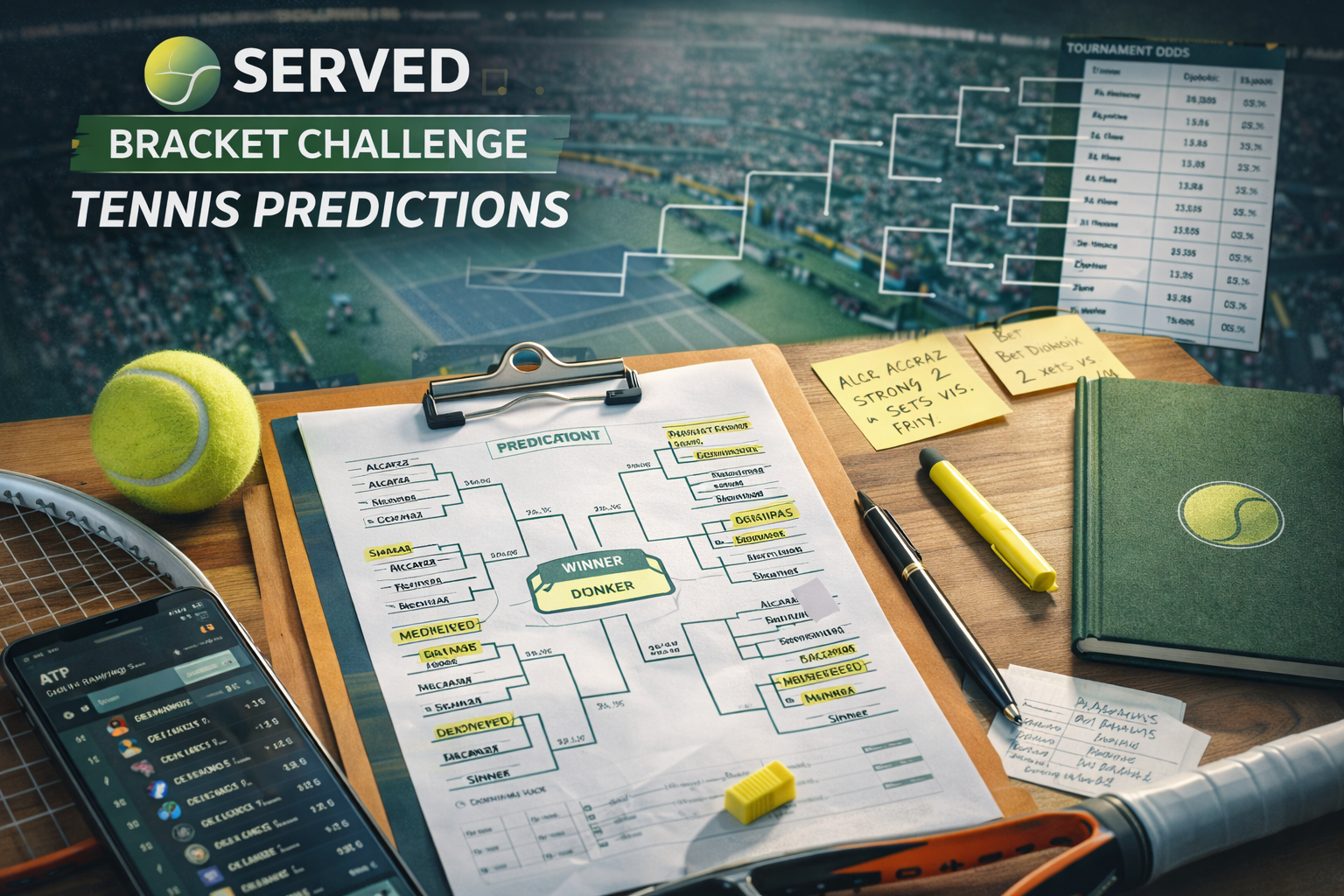
If you are searching for what the Served Bracket Challenge is and whether it is worth your time, here is the clear answer upfront: it is a free, structured tennis prediction competition built around Grand Slam draws, allowing fans to forecast match outcomes, earn points and compete on a live leaderboard throughout each major tournament. It combines strategy, tennis knowledge and calculated risk in a way that deepens how fans experience every Slam.
When I first explored the format, what struck me most was how naturally it fits into modern sports culture. We no longer consume tournaments passively. We simulate them, predict them and debate them before a single serve is struck. The Served Bracket Challenge captures that instinct and gives it structure. Instead of simply watching the Australian Open or Wimbledon unfold, participants create their own version of the story in advance. Every upset becomes personal. Every correct semifinal pick feels earned.
For a sports audience that thrives on analysis, podcasts and data breakdowns, this challenge feels less like a side game and more like an extension of the tournament itself. It invites fans to think like coaches, analysts and statisticians. And in doing so, it reshapes the emotional arc of a Grand Slam from a spectator event into an interactive competition layered on top of elite tennis.
The Evolution of Bracket Culture Beyond Basketball
Bracket competitions were once almost exclusively associated with the NCAA basketball tournament. March Madness popularized the ritual of filling out predictions before the first tip off, transforming millions of casual viewers into temporary analysts. Over time, that model proved adaptable.
Tennis, with its clean single elimination structure and clearly defined draw, provides an ideal framework for bracket play. Each of the four Grand Slams releases an official draw days before the event begins. That bracket is essentially a ready made prediction grid. Instead of guessing a single champion, participants forecast every round from the opening matchups to the final.
What makes tennis uniquely compelling in bracket form is its volatility. Unlike team sports with series formats, Grand Slams hinge on individual performance over two weeks. Form fluctuates. Injuries linger. Surface preferences matter. A clay court specialist might dominate in Paris and struggle on grass weeks later. This unpredictability makes bracket strategy both analytical and intuitive. It rewards preparation but never guarantees perfection.
How the Served Bracket Challenge Works
At its foundation, the Served Bracket Challenge follows a straightforward structure. Participants sign up, review the official Grand Slam draw and submit predictions before the tournament begins. Once the first ball is struck, brackets lock. There are no edits. No second chances.
Points are awarded based on round progression, meaning correct picks later in the tournament carry greater weight than early round selections. This mirrors traditional bracket scoring models and encourages long term thinking.
Below is a simplified representation of the scoring logic that defines competitive strategy:
| Round | Points Per Correct Pick |
|---|---|
| Round 1 | 10 |
| Round 2 | 20 |
| Round 3 | 30 |
| Round 4 | 40 |
| Quarterfinals | 60 |
| Semifinals | 80 |
| Final | 100 |
In addition to progressive scoring, upset bonuses add complexity. Correctly predicting an unseeded player defeating a seeded opponent can double the round’s points. That rule shifts the entire strategy landscape. Playing it safe may protect a bracket early, but bold predictions often separate leaderboard leaders from the pack.
The Calendar Structure of Participation
The challenge aligns directly with the annual Grand Slam calendar, creating four major competitive windows each year. Each tournament becomes its own prediction season.
| Tournament | Typical Month | Surface |
|---|---|---|
| Australian Open | January | Hard Court |
| Roland Garros | May to June | Clay |
| Wimbledon | June to July | Grass |
| US Open | August to September | Hard Court |
Because each surface favors different playing styles, bracket strategy must adapt. A power server may thrive at Wimbledon but struggle on clay. A defensive baseline specialist may peak at Roland Garros but face early elimination on faster courts. This seasonal rotation prevents stagnation and keeps the competition intellectually dynamic.
Strategic Thinking in Bracket Construction
Building a competitive bracket requires layered thinking. Successful participants typically combine three analytical approaches.
First, surface specialization analysis. Tennis is not a uniform sport across tournaments. Clay rewards endurance and spin. Grass favors aggressive serving and net play. Hard courts balance both. Understanding player strengths on each surface provides a foundational advantage.
Second, draw positioning. Even elite players can be vulnerable if placed in a difficult quarter. A predicted champion facing multiple top contenders early in the draw may struggle to conserve energy for later rounds. Bracket architects often study potential matchups beyond the first round.
Third, calculated upset selection. Choosing every top seed rarely wins a large pool. Identifying one or two plausible early upsets can create point surges if they materialize. However, excessive risk can collapse an entire bracket within days. The balance between boldness and probability defines high level bracket play.
The Psychology Behind Prediction Competitions
Prediction contests transform emotional investment. Watching a match becomes a dual experience. Fans care about the tournament narrative, but they also track personal bracket performance in real time.
Sports psychology research consistently shows that active participation increases engagement and memory retention. When outcomes affect a personal score or leaderboard ranking, attention sharpens. Even a first round match between lower ranked players becomes compelling if it impacts a bracket path.
There is also a social dimension. Participants compare picks, debate reasoning and analyze differences before the event begins. This creates a pre tournament conversation ecosystem. During the tournament, reactions intensify. An unexpected upset may trigger celebration from some and frustration from others. The shared volatility fosters community interaction.
In this sense, the Served Bracket Challenge functions not only as a game but as a social amplifier for tennis fandom.
Integration with Podcast Culture
One of the distinguishing aspects of the Served Bracket Challenge is its connection to tennis media commentary. Built alongside the Served with Andy Roddick podcast, the competition extends on air analysis into direct fan participation.
Listeners who hear discussions about draw difficulty, player form and tactical matchups can immediately apply those insights to their brackets. The conversation does not remain theoretical. It becomes actionable.
This integration reflects a broader shift in sports media. Podcasts no longer simply recap results. They shape predictive frameworks. Fans increasingly want tools to test their understanding against others. The bracket challenge becomes a bridge between commentary and competition.
Community and Competitive Dynamics
Leaderboard systems are central to sustaining interest. As points accumulate across rounds, participants monitor their position relative to others. Movement in rankings during quarterfinals and semifinals adds suspense independent of match outcomes.
Large scale participation introduces strategic differentiation. If thousands select the same champion, unique semifinal or quarterfinal picks may determine overall standings. In smaller private pools, social familiarity intensifies rivalry. Colleagues, friends and family members compete with direct visibility into each other’s predictions.
The absence of monetary betting distinguishes the format from gambling platforms. Instead, the reward is status, accuracy and bragging rights. That distinction broadens accessibility and reduces barriers to entry for casual fans.
Comparative Strengths and Limitations
Like any predictive system, the Served Bracket Challenge carries strengths and constraints. A clear evaluation highlights both.
| Strengths | Limitations |
|---|---|
| Deepens tournament engagement | High dependence on early round accuracy |
| Encourages analytical thinking | Injuries can invalidate projections instantly |
| Accessible and free participation | Perfect brackets remain statistically unlikely |
| Aligns with podcast and media discussion | Time commitment required before each Slam |
The unpredictability of tennis ensures no bracket is immune to disruption. A single early exit by a projected finalist can cascade through later round predictions. However, that fragility is also part of the appeal. Perfection is nearly impossible, but competitive proximity remains achievable.
The Role of Upsets in Narrative Shifts
Upsets function as narrative accelerants. When a lower ranked player eliminates a top seed, tournament expectations realign overnight. In bracket competition, those moments can redefine standings instantly.
Predicting an upset requires contextual awareness. It may involve analyzing fatigue from previous tournaments, minor injury reports or stylistic mismatches. For example, a defensive counterpuncher facing a power hitter on a slower surface may create conditions ripe for surprise.
These decisions reflect not blind risk but informed deviation from consensus. Participants who correctly anticipate such shifts often gain exponential point advantages due to bonus multipliers.
Why the Format Appeals to Modern Sports Audiences
Today’s sports consumers are data literate. They track rankings, performance trends and historical outcomes. A bracket challenge leverages that knowledge base.
It also satisfies a desire for gamification. Leaderboards, point systems and locked predictions create structure around emotional investment. Instead of passively hoping for exciting matches, participants actively forecast them.
The format’s cyclical nature, returning four times annually with each Slam, reinforces continuity. Fans refine strategies from one tournament to the next. Lessons learned in Melbourne may influence picks in Paris. Over time, the bracket becomes a seasonal ritual embedded within tennis culture.
Takeaways
• The Served Bracket Challenge allows fans to predict Grand Slam outcomes through structured bracket submissions.
• Progressive scoring and upset bonuses reward both consistency and strategic risk.
• Surface differences across Slams require adaptable analytical approaches.
• Integration with tennis media commentary enhances engagement.
• Leaderboards foster community rivalry without involving gambling.
• Upsets drive both tournament drama and bracket volatility.
Conclusion
The Served Bracket Challenge reflects a broader transformation in sports consumption. Fans no longer watch from the sidelines alone. They analyze, simulate and compete in parallel with the athletes themselves. By aligning prediction play with the four Grand Slams, the format embeds itself directly into tennis’s most prestigious calendar moments.
What I appreciate most is how it balances accessibility with depth. A newcomer can fill out a bracket using instinct and surface level knowledge. A seasoned analyst can dissect draw positioning and probability. Both enter the same arena.
Ultimately, the challenge does not replace the drama of live tennis. It reframes it. Every serve, break and tiebreak carries dual meaning. There is the pursuit of a championship on court and the pursuit of predictive precision off it. That layered engagement defines why bracket culture, once confined to basketball, now thrives within the global rhythm of tennis.
FAQs
What is the Served Bracket Challenge?
It is a free tennis prediction competition where participants forecast Grand Slam match outcomes and earn points for correct picks.
When can brackets be submitted?
Brackets must be completed after the official draw release and before the tournament’s first match begins.
How are winners determined?
Participants accumulate points for accurate round predictions, with higher rounds awarding more points and bonuses for upsets.
Is money involved?
No. The competition focuses on engagement, strategy and leaderboard rankings rather than gambling.
Do I need deep tennis knowledge to participate?
No. While analysis helps, casual fans can participate and compete effectively with informed instincts.

Related Posts

Hywaze Smoke Shop and Modern Retail Trends

Innotox and the Future of Liquid Botox