
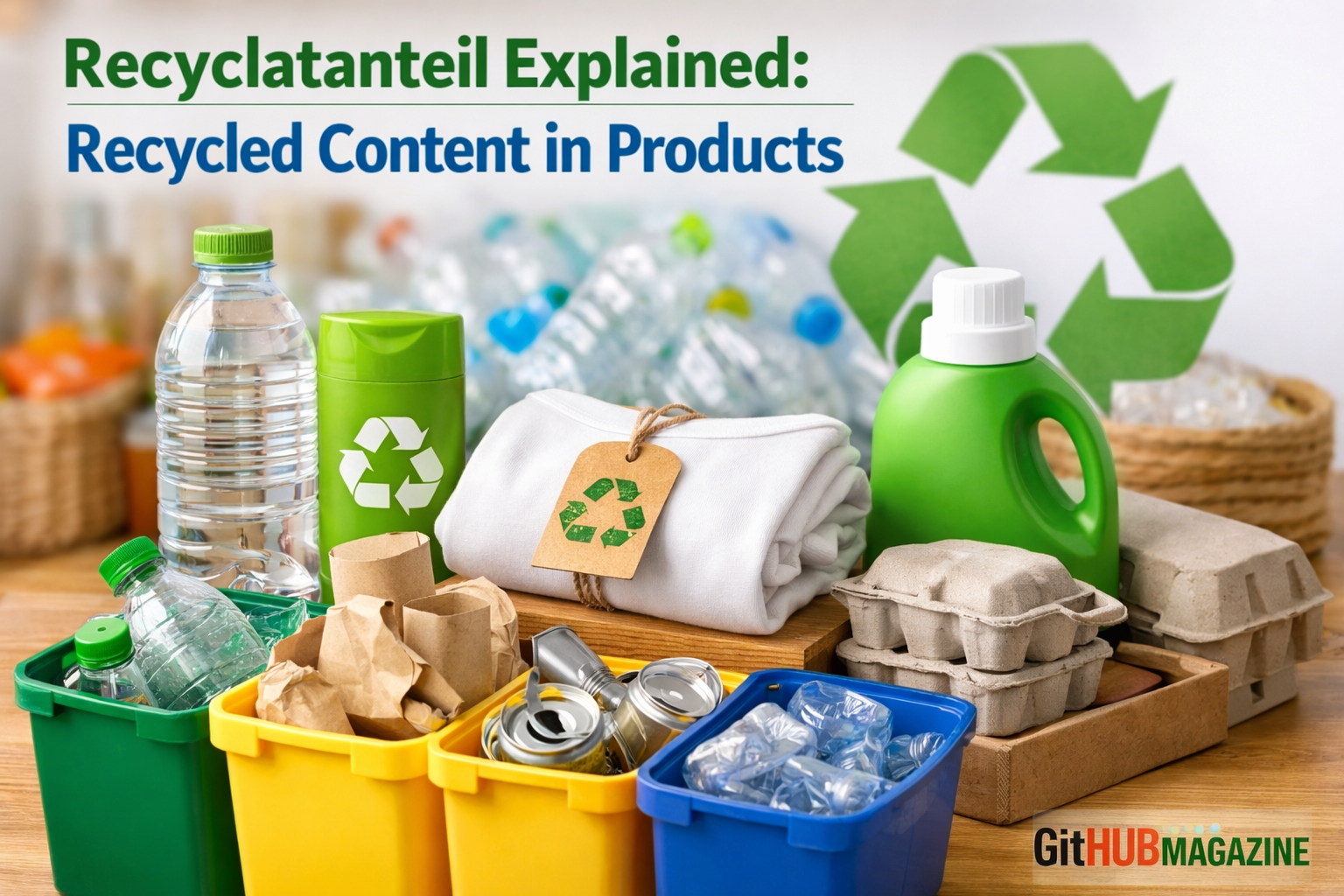
Recyclatanteil Explained in Circular Economy
I have often noticed that public discussions about recycling focus on a single question: how much waste is recycled. That number appears in headlines and environmental reports, yet it only explains part of the story. A deeper and more revealing measurement exists within sustainability science, and it is called recyclatanteil.
Recyclatanteil refers to the percentage of recycled material contained within a product compared with virgin raw materials. In simple terms, it shows how much recycled input actually goes back into manufacturing. If a plastic bottle contains 30 percent recycled plastic and 70 percent newly produced plastic, the recyclatanteil of that bottle is 30 percent.
This metric has become increasingly important as governments, industries, and environmental researchers attempt to evaluate the true effectiveness of recycling systems. Recycling collection alone does not guarantee that materials will reappear in new products. Without recycled material being used again in manufacturing, recycling remains incomplete.
Across sectors such as packaging, construction, textiles, and automotive manufacturing, recyclatanteil is now used to measure real progress toward a circular economy. Instead of simply counting how much waste is collected, it evaluates whether society is reducing reliance on virgin resources.
Understanding recyclatanteil therefore means understanding whether recycling systems truly close the loop between waste and production. It represents one of the clearest indicators of whether modern economies are shifting away from a linear model of extraction and disposal toward a sustainable cycle of reuse.
Understanding Recyclatanteil in the Circular Economy
When I first began examining sustainability metrics, recyclatanteil stood out because of its clarity. The concept simply measures the share of recycled material within a product’s total material composition. It answers a straightforward question: how much of a product was made using previously used materials rather than newly extracted resources.
The calculation is based on the weight of recycled inputs divided by the total weight of materials used to produce a product. The result is expressed as a percentage that indicates how strongly recycled materials contribute to manufacturing.
Two main types of recycled material typically contribute to recyclatanteil. The first is post consumer recyclate, which comes from products that have already been used and discarded by consumers. The second is post industrial recyclate, which consists of leftover material from manufacturing processes that can be reused during production.
Although both types improve circular material use, post consumer recyclate is often considered more environmentally significant because it returns waste materials into productive use.
Recyclatanteil also differs significantly from the idea of recyclability. A product might technically be recyclable but contain no recycled material at all. A bottle labeled recyclable may still be made entirely from virgin plastic. Recyclatanteil instead measures whether recycled materials are actually used.
For policymakers and sustainability researchers, this distinction is essential because it highlights whether recycling systems truly function as intended.
Recycling Rate Versus Recyclatanteil
Many environmental discussions rely heavily on recycling rates, but recycling rates and recyclatanteil measure completely different aspects of material sustainability.
Recycling rate measures how much waste is collected and processed for recycling. Recyclatanteil measures how much recycled material is actually incorporated into new products.
These two measurements can produce very different results.
| Metric | What It Measures | Key Question |
|---|---|---|
| Recycling Rate | Share of waste collected and processed | How much waste enters recycling systems |
| Recyclatanteil | Share of recycled material in new products | How much recycled material replaces virgin resources |
A region may collect and sort large volumes of recyclable waste yet still produce new products mostly from newly extracted materials. In that case, recycling systems appear successful while material demand for virgin resources remains high.
Environmental researchers frequently describe this gap as one of the biggest challenges in modern recycling systems. Collection infrastructure exists, but recycled materials do not always find their way back into manufacturing.
Dr. Kate O’Neill, an environmental governance scholar, has noted that recycling only becomes meaningful when industry uses recycled materials as inputs. Without industrial demand for recyclate, recycling programs struggle to create real environmental benefits.
Recyclatanteil therefore provides the missing measurement that reveals whether recycling systems truly close the material loop.
Environmental Importance of Recyclatanteil
From my perspective, recyclatanteil matters because it directly connects recycling activity to environmental outcomes. Increasing the proportion of recycled material in products reduces the need for extracting raw materials from nature.
Producing materials from recycled sources typically requires far less energy than producing them from virgin resources. Metals, plastics, paper, and glass can often be remanufactured using significantly lower energy inputs.
For example, aluminum recycling can save up to ninety five percent of the energy required to produce aluminum from raw bauxite ore. This energy reduction also translates into lower greenhouse gas emissions and reduced industrial pollution.
Higher recyclatanteil values therefore support several environmental goals at once. They reduce pressure on natural resources, decrease energy consumption, and limit carbon emissions from industrial production.
Recyclatanteil also reduces the amount of waste sent to landfills or incineration facilities. By ensuring that recycled materials return to manufacturing, the metric supports continuous material circulation rather than disposal.
Materials scientist Dr. Veena Sahajwalla has often described waste as a misplaced resource. Recyclatanteil embodies that idea by measuring how effectively industries transform waste materials into valuable inputs.
As global resource demand continues to grow, increasing recyclatanteil will likely become one of the most important strategies for achieving sustainable production.
Government Policies Encouraging Recycled Content
In recent years, policymakers have increasingly recognized the importance of recycled material use. Many governments now require minimum recycled content levels in certain products.
These regulations aim to create stable markets for recycled materials while encouraging industries to integrate recyclate into production.
One prominent example is legislation targeting plastic beverage containers. Several governments have introduced policies requiring bottles to contain minimum percentages of recycled plastic over time. These rules push manufacturers to redesign packaging and expand recycling supply chains.
Regulatory frameworks also encourage investment in recycling technologies, sorting systems, and waste collection infrastructure. By guaranteeing demand for recyclate, policies help stabilize recycling markets that might otherwise fluctuate with commodity prices.
| Region | Regulation Focus | Recycled Content Targets |
|---|---|---|
| European Union | Plastic beverage bottles | Gradual increase toward higher recycled content |
| United States (state level) | Beverage containers | Increasing recycled plastic requirements |
| Global packaging policies | Plastic reduction strategies | Minimum recycled material thresholds |
Environmental policy researcher Roland Geyer has emphasized that market forces alone often fail to create sufficient demand for recycled materials. Regulations help ensure that recyclate remains competitive with virgin materials.
Through these policies, recyclatanteil has evolved from a voluntary sustainability metric into a formal requirement in many industries.
Industrial Adoption of Recyclatanteil
Industries around the world have begun integrating recycled materials into production processes to meet sustainability commitments and regulatory standards.
Packaging remains one of the most visible sectors adopting recycled content. Beverage companies increasingly advertise the percentage of recycled plastic used in bottles. Some companies have committed to reaching fifty percent recycled content in packaging within the next decade.
Automotive manufacturers are also exploring recycled materials in vehicle components such as interior panels, insulation, and seat fabrics. These materials help reduce environmental impact while maintaining product performance.
Construction industries have long relied on recycled metals, glass, and aggregates. These materials reduce the demand for newly mined resources and often lower construction costs.
Textile production provides another important example. Recycled polyester made from plastic bottles is widely used in sportswear, outdoor clothing, and industrial fabrics.
Professor Julian Allwood, a materials engineering expert at the University of Cambridge, has argued that expanding recycled material use in manufacturing could dramatically reduce global industrial emissions.
For many industries, increasing recyclatanteil represents both an environmental responsibility and an opportunity to innovate new material systems.
Technical and Economic Challenges
Despite its benefits, increasing recyclatanteil is not always straightforward. Several technical and economic barriers still limit widespread adoption.
Recycled materials often vary in quality depending on how waste is collected and processed. Contamination from food residues, mixed materials, or chemical additives can reduce the usability of recyclate.
Manufacturers producing high performance materials sometimes require extremely pure inputs, which can be difficult to achieve with recycled feedstock.
Supply consistency presents another challenge. Recycling systems depend on stable waste collection and sorting processes. If recyclate supply fluctuates, manufacturers may struggle to maintain reliable production.
Economic factors also influence material choices. When oil prices fall, virgin plastics can become cheaper than recycled plastics, reducing incentives to use recyclate.
Technological innovations are beginning to address these challenges. Advanced sorting technologies, improved recycling infrastructure, and chemical recycling techniques promise to improve the quality and availability of recycled materials.
As these technologies develop, recyclatanteil levels across industries are expected to increase significantly.
The Future Role of Recyclatanteil
Looking ahead, recyclatanteil will likely become a central measurement in global sustainability reporting. Companies increasingly disclose recycled content levels as part of environmental performance metrics.
Product labels may soon display recycled material percentages much like nutrition labels display ingredients on food packaging. Such transparency would allow consumers to make informed choices about the environmental impact of the products they buy.
Digital product passports and material tracking technologies may also help manufacturers monitor recycled content across supply chains.
Financial markets are beginning to recognize the importance of material circularity. Investors evaluating environmental performance increasingly consider recycled content levels when assessing corporate sustainability strategies.
As circular economy principles continue to shape environmental policy and industrial design, recyclatanteil will remain a critical indicator of progress.
Ultimately, the metric represents a simple but powerful idea: materials should circulate through the economy rather than disappear as waste.
Key Takeaways
- Recyclatanteil measures the percentage of recycled material used in a product’s composition.
- It differs from recycling rates, which only track waste collection and processing.
- Higher recyclatanteil reduces resource extraction, energy consumption, and emissions.
- Governments increasingly require minimum recycled content levels in certain products.
- Industries including packaging, automotive, construction, and textiles are adopting recycled materials.
- Technological innovation is helping improve the quality and availability of recyclate.
Conclusion
I often reflect on how society talks about recycling. We celebrate collection programs and sorting systems, yet the real transformation happens later, inside factories and manufacturing plants.
Recyclatanteil captures that transformation. It measures whether recycled materials truly replace newly extracted resources in the products we use every day.
As global demand for materials continues to grow, simply collecting waste will not be enough. The success of recycling depends on whether those materials return to production.
Increasing recyclatanteil offers a practical path toward more sustainable manufacturing. By integrating recycled materials into everyday products, industries can reduce environmental pressure while maintaining economic productivity.
In many ways, recyclatanteil represents the missing link in the recycling conversation. It shifts the focus from waste management to resource management.
If societies succeed in raising recyclatanteil across industries, recycling will no longer be just a waste solution. It will become a foundation for a truly circular economy.
FAQs
What does recyclatanteil mean
Recyclatanteil refers to the percentage of recycled materials used in a product compared with virgin raw materials. It indicates how much recycled content returns to manufacturing.
How is recyclatanteil calculated
It is calculated by dividing the weight of recycled material used in a product by the total weight of all materials in that product.
Why is recyclatanteil important for sustainability
Higher recyclatanteil reduces the need for extracting natural resources and lowers energy consumption and greenhouse gas emissions.
Which industries commonly track recyclatanteil
Packaging, automotive manufacturing, construction materials, textiles, and consumer goods industries often monitor recycled content levels.
Can a product reach 100 percent recyclatanteil
Some materials such as metals or certain plastics can achieve very high recycled content, although technical and regulatory limits may apply.

Related Posts

Haruna Saito Irvine Student Profile

Unified Products and Services Branches Guide