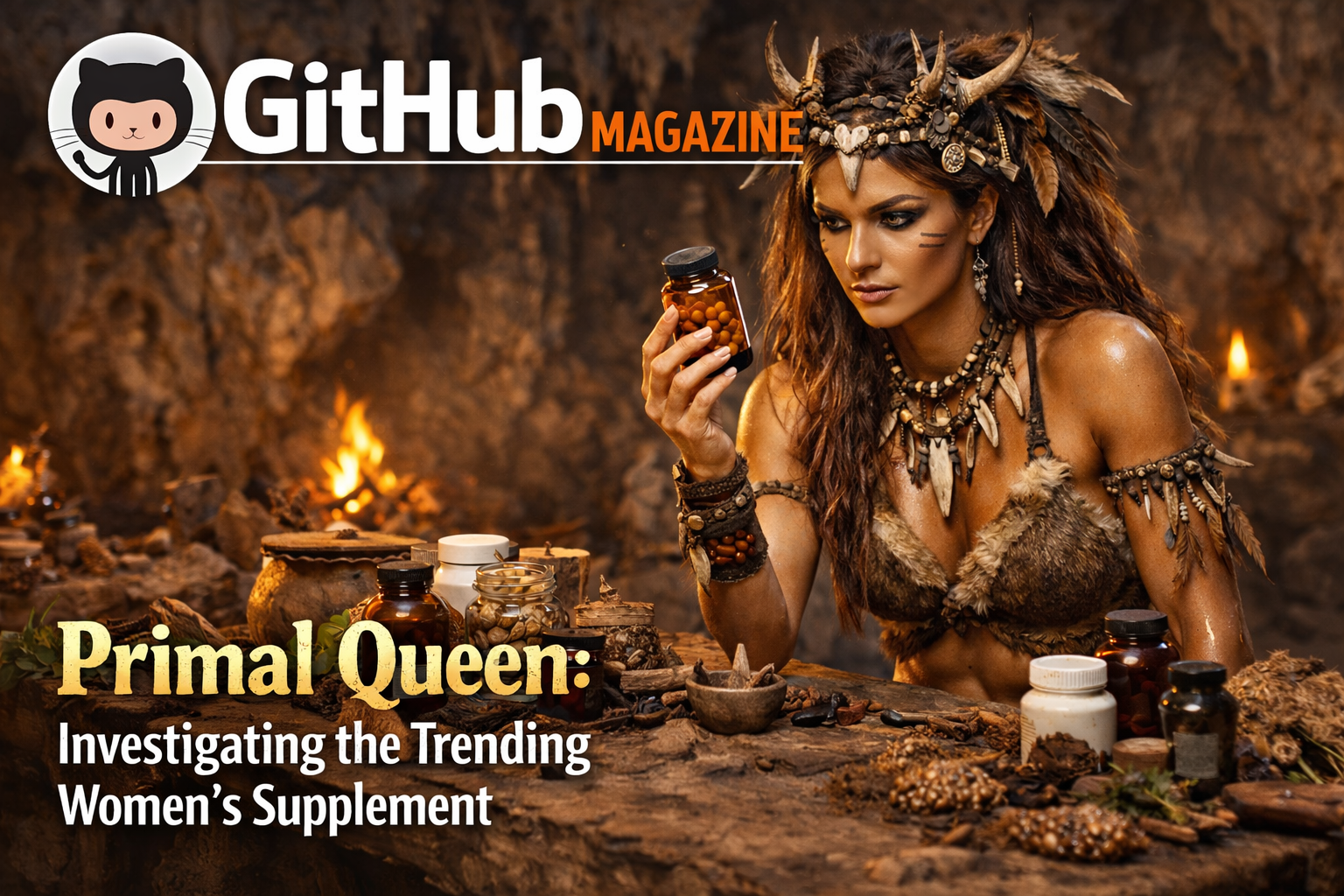
Primal Queen: Inside the Viral Women’s Wellness Supplement
Primal Queen has become one of the most discussed women’s wellness supplements of the past few years, circulating widely across TikTok, Instagram, private Facebook groups, and review platforms. At its core, the product is simple: capsules made from freeze-dried beef organs, marketed as a natural way to support hormonal balance, energy, mood, libido, and menstrual health. For many women searching for alternatives to synthetic hormones or conventional treatments that feel impersonal or ineffective, this promise is compelling.
In the first hundred words of any honest explanation, the essential facts are these: Primal Queen is not a drug, not a hormone replacement therapy, and not a medically approved treatment. It is a dietary supplement rooted in the idea that organ meats once played a vital role in ancestral diets and that modern women suffer from nutritional gaps as a result of industrialized food systems. Its branding blends evolutionary language with empowerment rhetoric, framing the user as strong, instinctive, and biologically intuitive.
The product sits at the intersection of several powerful trends: frustration with traditional healthcare, renewed interest in “ancestral” or “primal” nutrition, and the rise of social-media-driven wellness culture. Some users describe dramatic improvements in energy and emotional stability; others report no effect or uncomfortable side effects. Scientists and clinicians, meanwhile, point out the lack of large, independent clinical trials and warn that nutrient-dense does not automatically mean therapeutically effective.
This article examines Primal Queen as both a product and a cultural symbol: how it is made, what it claims to do, why it resonates with so many women, where the science stands, and what its popularity reveals about the modern search for bodily autonomy and health certainty.
What Primal Queen Is and What It Contains
Primal Queen is formulated from freeze-dried beef organs sourced from grass-fed cattle. According to its published ingredient lists and product descriptions, the capsules typically include liver, heart, kidney, uterus, ovaries, and fallopian tubes. These tissues are dehydrated at low temperatures, ground into powder, and sealed into gelatin capsules designed for daily consumption.
The nutritional rationale is straightforward. Organ meats are naturally rich in micronutrients that are often difficult to obtain in sufficient quantities from muscle meat alone. Liver contains high concentrations of vitamin A, vitamin B12, folate, iron, and choline. Heart tissue provides coenzyme Q10 and additional B vitamins. Kidneys contain selenium and riboflavin. From a nutritional standpoint, these compounds are real and well documented.
Where the product becomes more controversial is in its leap from general nutrition to targeted hormonal regulation. Marketing language frequently implies that consuming female reproductive organs supports the consumer’s own reproductive system through a principle sometimes called “like supports like.” This idea has roots in historical folk medicine and early twentieth-century organotherapy but remains weakly supported by modern biomedical evidence.
Supporters argue that the supplement simply restores what industrial diets removed: dense nutrition in a convenient form. Critics counter that capsules cannot replicate the complexity of a whole dietary pattern and that the body’s endocrine system is regulated by feedback loops far more intricate than a single category of nutrients.
The Cultural Power of the “Primal” Narrative
The word “primal” carries heavy symbolic weight. It suggests authenticity, pre-industrial purity, physical strength, and evolutionary wisdom. In wellness marketing, it often functions as shorthand for “trust your body more than institutions.” Primal Queen draws deeply from this language, presenting modern women as disconnected from their biological design and positioning the supplement as a tool for reconnection.
This framing resonates particularly strongly in communities where women feel dismissed by medical systems or frustrated by years of vague diagnoses related to fatigue, mood instability, or menstrual pain. The supplement becomes more than a product; it becomes a narrative device, a way of telling a story in which suffering has a simple, natural explanation and an accessible solution.
Dr. Marion Nestle, professor of nutrition and public health at New York University, has repeatedly warned that this type of messaging blurs the line between food and medicine: “Supplements are marketed with the language of empowerment, but they are rarely held to the evidentiary standards of healthcare. That gap is where misunderstanding thrives.”
Another frequently cited concern is what philosophers of science call the appeal-to-nature fallacy: the assumption that something is beneficial simply because it is old, natural, or non-synthetic. Human ancestors did consume organ meats, but they also lived shorter lives, faced chronic infections, and experienced vastly different environmental conditions.
Primal Queen’s success shows how persuasive this story remains. It offers certainty in a world of medical ambiguity and an identity in a culture that increasingly equates consumption with self-definition.
Ingredients and Claimed Functions
The supplement’s formulation is built around nutrient density rather than botanical extracts or isolated vitamins. Each component is presented as having a specific physiological role.
| Ingredient | Traditional nutritional role | Common claims in marketing |
|---|---|---|
| Liver | Vitamin A, iron, B12, folate | Energy, immunity, hormone support |
| Heart | CoQ10, B vitamins | Cellular energy, circulation |
| Kidney | Selenium, riboflavin | Detox support, metabolism |
| Reproductive organs | Trace minerals, peptides | Libido, cycle regulation |
From a biochemical standpoint, the vitamins and minerals are real. Iron deficiency, for example, is common among menstruating women, and vitamin B12 plays a role in neurological function and energy metabolism. However, controlled studies have not yet demonstrated that consuming dried reproductive tissue directly alters estrogen, progesterone, or testosterone levels in humans.
Dr. Jen Gunter, an obstetrician-gynecologist known for her public writing on women’s health misinformation, has stated in interviews and articles that “hormones are not Lego blocks. You don’t raise estrogen by eating ovaries. The body regulates hormones through complex endocrine feedback, not ingredient symbolism.”
This does not mean the supplement is useless. Improved micronutrient intake can indirectly affect fatigue, mood, and overall well-being. The distinction lies in whether those benefits justify claims of targeted hormonal optimization.
Consumer Experiences and Online Testimony
The popularity of Primal Queen is driven largely by user narratives. On review platforms and in private groups, many women describe feeling more energetic within weeks, reporting clearer thinking, reduced menstrual discomfort, or a sense of emotional steadiness.
A typical positive review frames the supplement as a turning point after years of trial and error with vitamins, dietary changes, and medical consultations. Some users describe discontinuing other supplements because Primal Queen “covers everything in one product.”
At the same time, negative experiences are not rare. Some users report digestive upset, nausea, or an unpleasant taste if capsules break open. Others say they noticed hair shedding, acne, or no measurable change after several months.
These conflicting accounts are common in the supplement industry, where outcomes depend heavily on baseline health, diet, expectations, and psychological factors. The placebo effect, in which belief itself produces subjective improvement, is well documented and can be powerful, especially in areas like energy and mood that are difficult to measure objectively.
What is striking is how emotionally charged these discussions become. For some, criticism of the product feels like criticism of their personal health journey. The supplement becomes part of an identity narrative: resilient, self-directed, and skeptical of conventional authority.
Internal Studies and Reported Outcomes
Primal Queen’s manufacturer has cited internal observational studies in promotional material. These studies typically involve users tracking symptoms over several menstrual cycles and reporting changes in energy, discomfort, and overall satisfaction.
| Symptom area | Reported change after three cycles | Source |
|---|---|---|
| Cycle satisfaction | +83.4% | Brand-linked internal data |
| Energy levels | Moderate improvement | Self-reported |
| Symptom severity | –24% overall | Baseline comparison |
Such data can be useful for hypothesis generation but does not replace randomized, placebo-controlled trials. Without independent oversight, it is impossible to know how participants were selected, how outcomes were measured, or how much confirmation bias influenced reporting.
Dr. Pieter Cohen, an associate professor at Harvard Medical School who studies dietary supplement safety, has summarized the problem succinctly: “Internal studies are marketing tools, not scientific proof. They can suggest that something might be worth studying further, but they cannot establish effectiveness.”
Scientific Context: What Is Known and What Is Not
The human endocrine system relies on tightly regulated feedback loops involving the brain, pituitary gland, ovaries, adrenal glands, and other organs. Hormone levels fluctuate naturally across days, weeks, and life stages. Nutrition influences this system indirectly by supporting overall metabolic health, but no reputable clinical body currently recognizes organ-meat supplementation as a direct method for balancing reproductive hormones.
There is also the question of dosage. Organ meats in traditional diets were consumed irregularly and in varying quantities. Encapsulating them into standardized daily doses is a modern intervention with unknown long-term effects.
Another issue is nutrient excess. Liver, for example, is extremely high in vitamin A. Chronic overconsumption of preformed vitamin A can, in rare cases, lead to toxicity, causing headaches, bone pain, or liver abnormalities. Most supplements remain below dangerous thresholds, but the risk highlights the importance of moderation and medical guidance.
The broader scientific consensus is cautious neutrality: organ meats are nutritious foods, but claims of specific hormonal engineering exceed available evidence.
Regulation and Consumer Protection
In the United States and many other countries, dietary supplements are regulated as foods rather than drugs. Manufacturers are responsible for ensuring safety but are not required to prove efficacy before selling products. Labels may not claim to diagnose, treat, cure, or prevent disease, but they may suggest general wellness benefits.
This regulatory framework creates an environment in which bold implications can be made without the burden of pharmaceutical-level trials. For consumers, this means marketing language must be interpreted critically.
Healthcare providers generally advise patients to disclose supplement use, particularly when managing thyroid disorders, fertility treatments, or mood disorders. Interactions are rare but possible, especially when supplements alter iron intake or fat-soluble vitamin levels.
Primal Queen as a Mirror of Modern Wellness Culture
Beyond its capsules, Primal Queen represents something larger: a shift in how health authority is perceived. Social media influencers, peer testimonials, and aesthetic branding increasingly rival physicians and public institutions as sources of guidance.
The product’s popularity reflects dissatisfaction with fragmented healthcare systems, the slow pace of research into women’s health, and a cultural longing for certainty in bodily experience. It also illustrates how easily nutritional concepts become moralized: natural versus synthetic, ancestral versus modern, intuitive versus clinical.
In this sense, Primal Queen is not an anomaly but a case study in how health products become stories people tell about themselves.
Takeaways
• Primal Queen is a freeze-dried beef-organ supplement marketed primarily for women’s hormonal and energy support.
• Its appeal is driven as much by cultural narratives as by nutritional content.
• Organ meats are nutrient-dense, but evidence for targeted hormonal effects is limited.
• User experiences vary widely, from strong enthusiasm to complete indifference or discomfort.
• Internal studies suggest possible benefits but lack independent verification.
• Supplements operate under lighter regulation than medicines, requiring consumer caution.
Conclusion
Primal Queen occupies a gray zone between nutrition and medicine, tradition and technology, hope and evidence. For some women, it becomes a symbol of regained agency, a tangible step toward feeling heard and proactive about their bodies. For others, it is simply another expensive experiment in an already crowded supplement cabinet.
Its story is not just about beef organs in capsules. It is about the ways modern societies struggle to integrate scientific uncertainty with personal experience, about the hunger for narratives that make suffering intelligible, and about the economic machinery that transforms those narratives into products.
Whether Primal Queen ultimately proves beneficial for a subset of users or fades as another wellness trend, its rise offers a revealing snapshot of contemporary health culture: deeply personal, commercially driven, scientifically incomplete, and emotionally powerful.
FAQs
Is Primal Queen scientifically proven to balance hormones?
No. Existing evidence is largely observational and internally produced. Independent clinical trials are limited.
What are the main ingredients?
Freeze-dried beef liver, heart, kidney, and female reproductive organs.
Can it replace medical hormone therapy?
No. It is a dietary supplement and should not substitute prescribed treatment.
Are side effects common?
Some users report digestive discomfort, acne, or hair changes, but experiences vary.
Who should avoid it?
People who are pregnant, have liver conditions, or take medications affecting iron or vitamin A should consult a doctor.

Related Posts
Capocollo: Italian Cured Meat Tradition

Virtual Airline News and Digital Aviation Growth