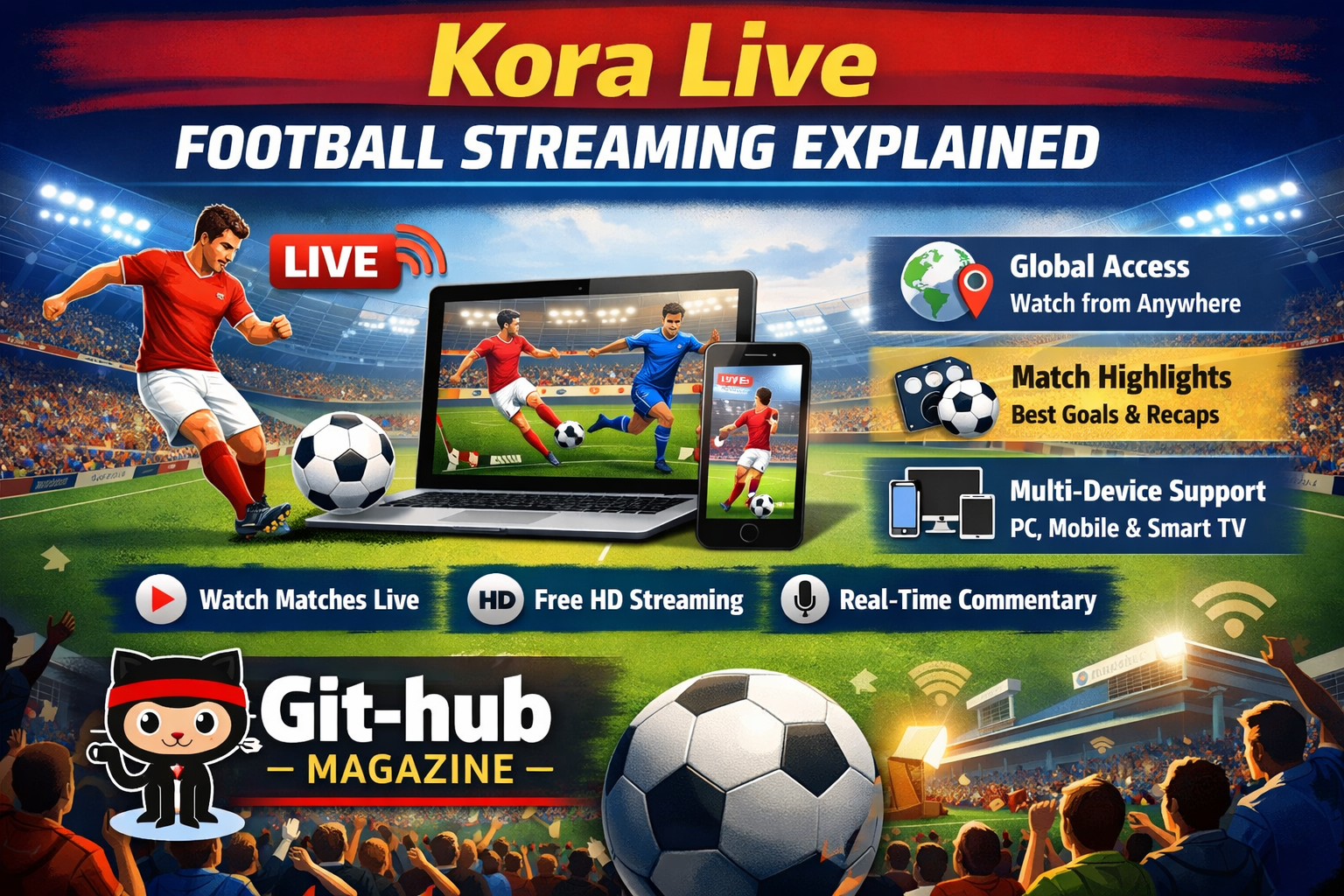
Kora Live Football Streaming Explained
In the world of football fandom, where every second carries emotional weight and every goal becomes a shared memory, Kora Live has emerged as one of the most recognizable digital names associated with following the game in real time. For most people searching the term today, the intent is direct and practical: to understand what Kora Live is, how it works, whether it is reliable, and how it delivers live matches, scores, and schedules. Within minutes of typing the phrase into a browser or app store, users expect instant access to fixtures, live streams, and constant updates from leagues stretching from England to Argentina, Spain to Saudi Arabia.
Kora Live is not a single unified company or platform. Instead, it represents a cluster of websites and mobile applications that share a common purpose: providing football coverage in real time, often free of charge, and usually supported by advertising or third-party streaming links. For many fans in the Middle East, North Africa, South Asia, and parts of Europe, it has become a daily companion during league seasons and international tournaments alike. It offers match listings, kickoff times adjusted to local zones, goal alerts, league tables, and links to live broadcasts gathered from a wide range of sources.
This ecosystem exists in parallel with the highly regulated world of official broadcasters and subscription streaming services. While companies invest billions in exclusive rights, Kora Live platforms operate in a more fluid and legally ambiguous space, shaped by user demand for accessibility and immediacy. The result is a digital phenomenon that reflects modern sports consumption: decentralized, mobile-first, constantly updated, and deeply embedded in fan culture. Understanding Kora Live means understanding how football itself is now watched, discussed, and experienced across borders.
What Kora Live Is Today
At its core, Kora Live describes a family of digital services dedicated to football coverage. Some appear as Android applications distributed through app stores or third-party platforms, while others exist solely as web portals optimized for mobile screens. Despite differences in design, ownership, and technical infrastructure, they tend to offer the same foundation: a continuously updated list of matches, live scores, and links to video streams.
Most Kora Live apps present users with a simple dashboard. Ongoing matches appear at the top, upcoming fixtures are sorted by league or kickoff time, and completed games display results and basic statistics. Many versions also include push notifications for goals, red cards, or final scores, allowing fans to follow games discreetly during work hours or while commuting.
The appeal lies in centralization. Instead of navigating between official league apps, broadcaster websites, and social media feeds, fans can find everything in one interface. This convenience has allowed Kora Live to build recognition even without a single official brand owner, turning the name into shorthand for “free football streaming and live scores” in online conversations and fan communities.
The Audience Behind the Screens
Kora Live’s user base is geographically diverse but shares common characteristics. Most are digitally fluent football supporters who follow multiple leagues and clubs simultaneously. Many live in regions where subscription sports packages are expensive relative to average income, or where broadcast coverage is fragmented across several paid channels.
For these fans, football is not an occasional entertainment product but part of daily routine and identity. Checking scores during lunch breaks, tracking league standings late at night, and watching weekend derbies with friends online are habitual acts. Kora Live platforms accommodate this lifestyle by offering immediate, low-barrier access to information and streams.
There is also a generational element. Younger fans who grew up with smartphones often prefer lightweight apps and web services to traditional television broadcasts. They are comfortable navigating pop-up ads, switching between links, and troubleshooting buffering issues if it means avoiding monthly subscription fees. Kora Live fits naturally into this environment, becoming less a website and more a utility.
How Kora Live Works Behind the Interface
Technically, most Kora Live platforms operate as aggregators rather than broadcasters. They do not usually own cameras, satellites, or broadcast infrastructure. Instead, they collect links to existing streams hosted elsewhere on the internet, embed them into their pages or apps, and present them alongside match data drawn from automated sources.
Live scores and event timelines are typically generated through data feeds or scraping tools that monitor official league statistics providers. When a goal is scored in Madrid or Manchester, the update can appear on a user’s phone seconds later in Cairo or Jakarta. Schedules are stored in databases that update seasonally, reflecting fixture changes, postponements, and tournament progress.
This architecture keeps costs low and scalability high. A small technical team can operate a platform that serves millions of users, provided servers can handle traffic spikes during major matches. However, it also means quality control is inconsistent. Streams may disappear without warning, audio commentary can be in unexpected languages, and video resolution varies dramatically depending on the original source.
Core Features Users Expect
| Feature | Description | Typical Availability |
|---|---|---|
| Live streaming links | Embedded or redirected video sources | Common |
| Real-time scores | Goal alerts and match timelines | Universal |
| Match schedules | Daily and weekly fixture lists | Universal |
| League tables | Updated standings | Common |
| Push notifications | Alerts for favorite teams | App-based |
These features mirror those offered by official services, but without formal licensing or guaranteed stability.
The Legal and Ethical Landscape
The popularity of Kora Live cannot be separated from the legal debates surrounding digital sports distribution. Major leagues sell broadcasting rights for enormous sums, forming the financial backbone of professional football. When matches appear on unofficial streaming platforms, it challenges this economic structure.
Kora Live platforms often state that they do not host copyrighted material directly, positioning themselves as directories of publicly available links. This distinction places them in a legal gray area that differs by jurisdiction. In some countries, linking to unauthorized streams is considered infringement; in others, enforcement focuses on the original host rather than the aggregator.
From an ethical standpoint, opinions diverge. Supporters argue that football should be accessible to all, regardless of income or geography. Critics counter that without rights revenue, clubs and leagues would struggle to fund player development, stadium maintenance, and grassroots programs. The debate mirrors wider tensions in digital media, where user expectations of free access collide with traditional business models.
Comparison With Official Broadcasting
| Aspect | Official broadcasters | Kora Live platforms |
|---|---|---|
| Licensing | Fully licensed | Usually unlicensed |
| Cost to user | Monthly or annual fee | Free |
| Stream stability | High | Variable |
| Video quality | High definition | Inconsistent |
| Legal certainty | Clear | Ambiguous |
This contrast highlights why Kora Live thrives alongside, rather than replacing, formal services. It fills gaps but does not offer the reliability that paying subscribers expect.
Expert Perspectives on the Trend
Dr. Sarah Johnson, a media economist specializing in digital distribution, notes that free streaming platforms represent a structural shift rather than a temporary anomaly. She argues that user behavior has permanently changed, with audiences now prioritizing convenience over traditional notions of ownership or channel loyalty.
Technology analyst Amir Saeed points out that platforms like Kora Live flourish most in markets where broadband penetration is high but legal streaming options are limited or overpriced. According to him, these services reveal unmet demand rather than deliberate defiance.
Sports rights consultant Li Wei adds that leagues themselves bear some responsibility. Fragmented rights packages and region-specific deals, he says, push fans toward unofficial solutions when legitimate access becomes confusing or unaffordable.
Together, these views suggest that Kora Live is less an outlier and more a symptom of an evolving sports media ecosystem.
The Everyday Fan Experience
For users, the technical and legal complexities fade into the background. What matters is whether the match loads before kickoff, whether the stream freezes during a penalty, and whether the score notification arrives in time to celebrate or despair.
Many fans describe a routine built around the platform. Mornings begin with checking overnight results. Afternoons involve scanning upcoming fixtures. Evenings are reserved for live streams, often shared through group chats where links are exchanged when one source fails.
Yet frustration is common. Streams can lag behind live television, creating spoilers when social media updates arrive first. Pop-up advertisements interrupt viewing. Occasionally, entire websites disappear for days after being blocked or taken offline, only to reemerge under a slightly different domain name.
Despite these issues, loyalty remains strong, sustained by the simple fact that alternatives often require payment.
Cultural Impact Beyond Streaming
Kora Live’s influence extends into how football conversations unfold online. Because so many fans watch matches through similar unofficial channels, shared technical experiences become part of the narrative: the collective groan when a stream crashes during extra time, the relief when a backup link works seconds before kickoff.
In regions where stadium attendance is rare or impossible, this digital togetherness replaces physical crowds. Supporters comment simultaneously, argue over refereeing decisions in chat forums, and circulate highlight clips minutes after final whistles. Kora Live, intentionally or not, facilitates this parallel public sphere of fandom.
Over time, the name itself has become a cultural marker. To say “I watched it on Kora Live” signals not just the source, but a certain kind of resourcefulness and belonging within a global network of fans navigating the same digital terrain.
Takeaways
- Kora Live refers to a network of apps and websites offering live football streams, scores, and schedules.
- It thrives in regions where official broadcasting is expensive or fragmented.
- Most platforms aggregate third-party streams rather than hosting content directly.
- Legal status varies widely and remains contested.
- Fans value accessibility and immediacy over technical perfection.
- The platform has influenced how online football communities interact.
Conclusion
Kora Live occupies an uneasy but fascinating position in modern football culture. It is neither an official broadcaster nor a simple fan forum, but something in between: a digital shortcut that reflects both the passion of supporters and the shortcomings of existing media structures. Its rise underscores a fundamental truth about the sport in the twenty-first century. Football is no longer confined to stadiums or television screens. It lives on phones, in browser tabs, and in the quiet glow of screens shared across continents.
Whether Kora Live’s future lies in regulation, commercialization, or continued adaptation is uncertain. What is clear is that the demand it serves will not disappear. As long as fans crave instant access to the world’s most popular game, platforms like Kora Live will remain part of the conversation, shaping how football is watched, discussed, and remembered.
FAQs
What is Kora Live?
Kora Live is a collective name for apps and websites that provide live football streams, scores, and match schedules, often free of charge.
Is Kora Live safe to use?
Safety depends on the specific site or app. Official app store versions are generally safer than unknown third-party websites, which may include intrusive advertising.
Do I need to pay to watch matches?
Most Kora Live platforms are free, supported by ads or external streaming links.
What leagues are usually available?
Coverage typically includes major European leagues and international tournaments, depending on available streams.
Why do streams sometimes stop working?
Because the platforms rely on third-party sources, links may be removed, blocked, or overloaded without notice.