
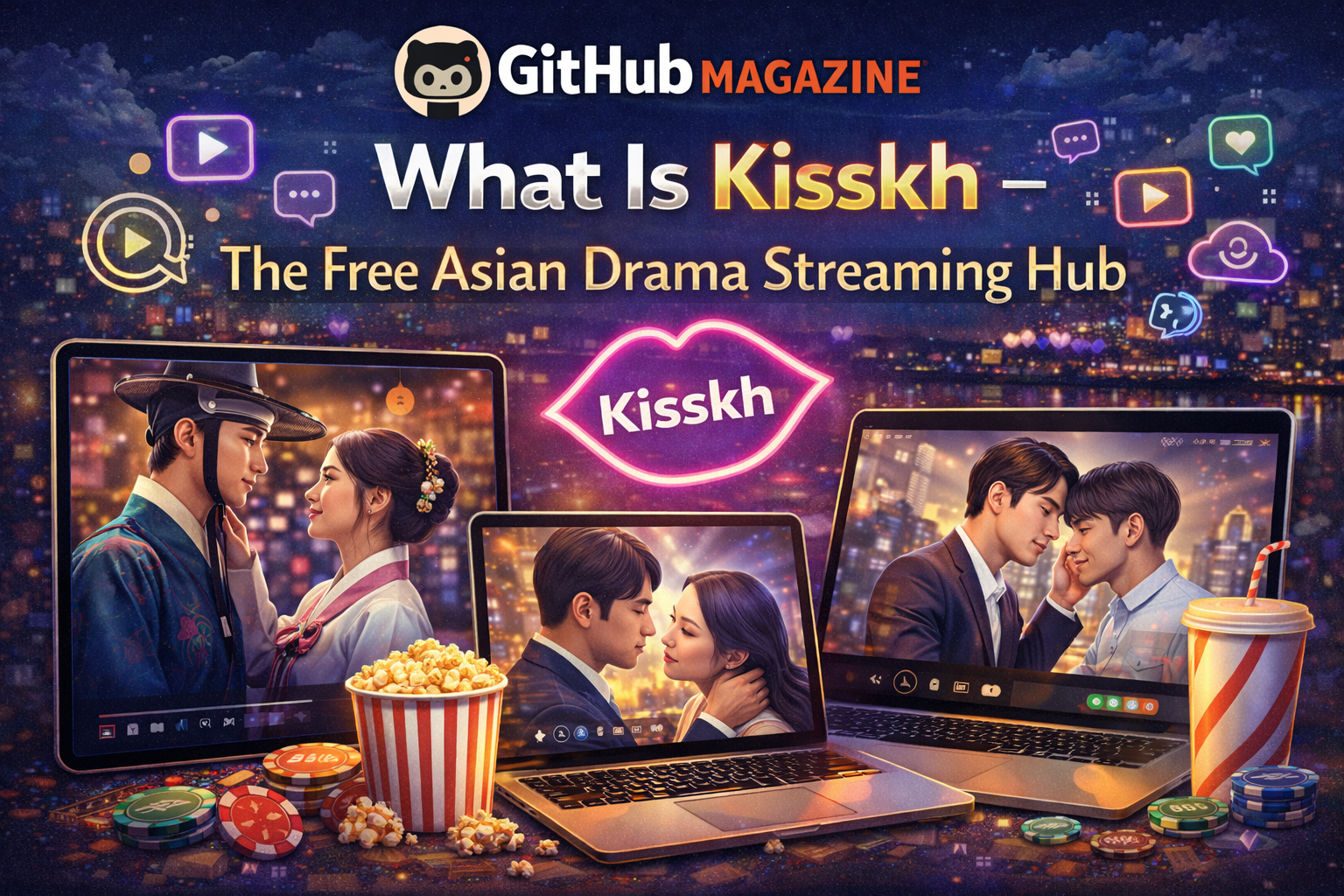
Kisskh Explained: Free Asian Drama Streaming and Its Impact
Kisskh occupies a distinctive place in today’s digital entertainment ecosystem. For millions of viewers searching for Korean dramas, Asian television series, and subtitled films without subscription barriers, Kisskh represents immediacy and abundance. The search intent around Kisskh is rarely abstract. People want to know what it is, how it works, whether it is safe, and why it keeps resurfacing under new domains. In its simplest form, Kisskh is a free streaming website that aggregates Asian dramas and movies and makes them instantly available to global audiences. In a more complex sense, it is a cultural signal, revealing how audiences behave when access, affordability, and availability collide.
Within the first moments of visiting Kisskh, users encounter a familiar digital rhythm: searchable catalogs, episode lists, subtitle options, and rapid playback. The platform feels designed for consumption rather than contemplation. Yet behind this ease lies a web of ethical tension, legal ambiguity, and shifting digital identities. Kisskh is not merely a website; it is a symptom of a fractured streaming economy where demand for Asian storytelling has grown faster than licensed distribution.
For Git-Hub Magazine, which examines technology, culture, and the human consequences of platforms, Kisskh offers a revealing case study. It shows how unofficial systems thrive alongside billion-dollar streaming giants and how global audiences quietly reshape media norms through everyday viewing choices.
The Emergence of Kisskh in the Global Streaming Landscape
Kisskh did not emerge in isolation. Its rise parallels the global expansion of Korean dramas, Chinese historical epics, and Japanese television series that began accelerating in the early 2010s. As Asian entertainment crossed linguistic and geographic boundaries, international audiences searched for access points. Licensed platforms expanded slowly, often constrained by regional rights, pricing models, and catalog limitations. Kisskh filled the gaps.
What distinguishes Kisskh from traditional platforms is not originality but aggregation. It does not position itself as a studio or distributor. Instead, it curates links, organizes content, and prioritizes speed. Episodes appear quickly after release, often with subtitles that cater to international fans. For viewers outside major markets, this immediacy feels empowering. It removes waiting periods, subscription costs, and regional locks.
Yet this convenience exists outside formal licensing frameworks. Kisskh thrives because it operates in digital margins where enforcement is inconsistent and user demand is relentless. Its growth reflects a broader pattern in internet culture: when official systems move slowly, informal alternatives evolve rapidly.
How the Platform Functions in Practice
From a user perspective, Kisskh appears straightforward. Content is grouped by country, genre, and popularity. Clicking a title reveals episode lists, streaming links, and subtitle options. Playback occurs directly in the browser, reducing friction. The design prioritizes function over branding, signaling that the primary goal is access rather than community building.
Behind the interface, Kisskh relies on decentralization. Multiple mirrors, duplicate domains, and alternative access points allow the platform to persist even when individual URLs are blocked or taken down. This adaptability is central to its survival. The platform does not depend on a single digital identity; it exists as a shifting network.
This structure mirrors broader trends in unofficial digital ecosystems. By dispersing risk across domains and servers, platforms like Kisskh remain resilient. For users, this means familiarity mixed with instability. A bookmarked site may disappear, only to reappear elsewhere with the same layout and catalog.
Table: Core Functional Characteristics of Kisskh
| Aspect | Description | User Impact |
|---|---|---|
| Content aggregation | Links to externally hosted videos | Rapid access, minimal control |
| No registration | Viewing without accounts | Low friction, low accountability |
| Multiple domains | Frequent URL changes | Continued access, confusion |
| Subtitle availability | English and other languages | Global reach |
Legality, Ethics, and the Grey Zone
The most persistent issue surrounding Kisskh is legality. The platform generally does not hold official rights to distribute the content it presents. Instead, it operates in a legal grey zone that varies by jurisdiction. In many countries, streaming unlicensed content violates copyright law, even if enforcement focuses more on distributors than viewers.
Ethically, Kisskh raises questions about sustainability. Asian drama production is resource-intensive, involving writers, actors, crews, and post-production teams. Licensed platforms return revenue to these systems. Unofficial platforms do not. Yet audiences often justify their use of sites like Kisskh by pointing to access barriers, regional unavailability, or cost.
This tension reflects a larger digital contradiction. The internet promises universal access, while copyright law remains territorial and restrictive. Kisskh exists where those two forces clash. It neither resolves nor ignores the conflict; it simply operates within it.
Digital Safety and User Risk
Beyond legality, safety concerns shape the Kisskh experience. Free streaming platforms often rely on aggressive advertising networks. Pop-ups, redirects, and embedded ads can expose users to tracking, malware, or misleading downloads. While not every visit results in harm, the risk profile is higher than on licensed platforms.
For many users, this risk becomes normalized. Ad blockers, private browsing modes, and cautious clicking are treated as informal safety protocols. This normalization reveals how audiences adapt behavior when platforms do not provide institutional safeguards. Kisskh does not actively cultivate trust; it benefits from user familiarity with navigating unsafe digital terrain.
Expert Insight:
“Unofficial streaming sites persist because users learn to manage risk rather than avoid it. That adaptation is a defining feature of modern internet culture.”
Kisskh and the Economics of Free Access
The popularity of Kisskh cannot be separated from economic reality. Subscription fatigue is real. As streaming platforms multiply, costs accumulate. In many regions, a single subscription may equal a day’s wages. Kisskh offers an alternative that feels democratic, even if it is structurally exploitative.
Licensed platforms emphasize quality, stability, and legality. Kisskh emphasizes volume and immediacy. These models are not competing on equal terms. One is regulated and capital-intensive; the other is fluid and informal. Yet both serve the same audience desire: stories that resonate emotionally and culturally.
For Git-Hub Magazine, this contrast highlights how technology reshapes value. In digital spaces, accessibility often outweighs ownership. Kisskh thrives because it aligns with that reality, even as it challenges existing norms.
Table: Licensed Platforms vs Unofficial Aggregators
| Dimension | Licensed Streaming | Kisskh-Style Platforms |
|---|---|---|
| Cost | Monthly subscription | Free |
| Rights | Fully licensed | Typically unlicensed |
| Stability | High | Variable |
| Safety | High | Inconsistent |
| Creator support | Direct | Minimal |
Cultural Impact and Audience Identity
Kisskh is not only about watching shows. It is about belonging to a global fandom that values immediacy and shared experience. Fans discuss episodes in real time, share recommendations, and form emotional attachments across borders. Kisskh facilitates this by removing delays and restrictions.
This immediacy reshapes how audiences relate to media. Waiting becomes unnecessary. Scarcity disappears. The result is a culture of continuous consumption, where discovery is endless and attachment is fleeting yet intense. Kisskh fits seamlessly into this rhythm.
From a cultural perspective, the platform reflects how digital identity forms around access rather than ownership. Viewers do not “have” shows; they pass through them, guided by algorithms and availability.
Takeaways
• Kisskh functions as an unofficial aggregator for Asian dramas and films
• Its popularity reflects unmet demand in licensed streaming markets
• Legal and ethical ambiguity defines its operation
• Users trade safety and stability for free access and immediacy
• The platform illustrates how global audiences adapt to fragmented media systems
• Kisskh is a cultural signal, not just a website
Conclusion
Kisskh exists because the modern streaming landscape is uneven. While Asian entertainment has achieved global popularity, legal access has not kept pace everywhere. In that gap, platforms like Kisskh emerge, offering immediacy at the cost of legitimacy. They do not replace licensed services; they expose their limitations.
For readers of Git-Hub Magazine, Kisskh should be understood less as a rogue anomaly and more as a mirror. It reflects how technology empowers audiences while destabilizing traditional models. It shows how culture travels faster than regulation and how desire often outruns infrastructure.
Kisskh may disappear, rebrand, or fragment further, but the conditions that created it remain. As long as access is unequal and demand is global, similar platforms will continue to surface, quietly shaping how stories are consumed in the digital age.
FAQs
What is Kisskh primarily used for
Kisskh is mainly used to stream Asian dramas and movies for free, often with subtitles.
Why does Kisskh change domains frequently
Domain changes help the platform remain accessible despite blocks or takedowns.
Is Kisskh considered legal everywhere
No. Its legality depends on local copyright laws and enforcement practices.
Does Kisskh support content creators
Indirectly, no. It does not typically return revenue to rights holders.
Why do people still use Kisskh despite risks
Users prioritize free access, speed, and availability over legality and safety.

Related Posts
Oil Palm Waste Lamp Project Explained
Debby Clarke Belichick Life and Legacy