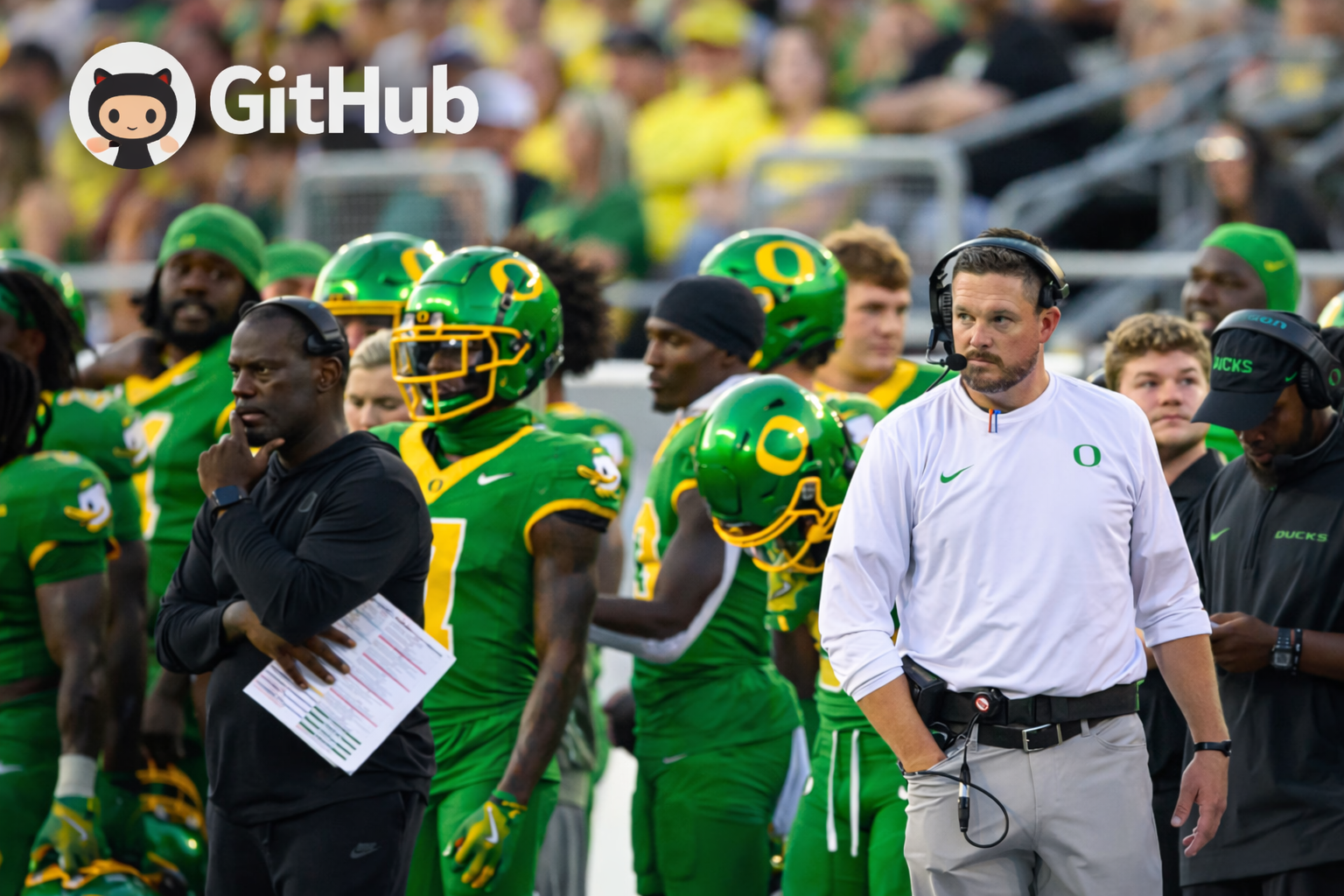
Jimbo Fisher: A Champion Coach in College Football’s New Era
In the crowded pantheon of college football coaches, Jimbo Fisher occupies a complicated, modern place: a championship winner whose reputation grew inside elite programs, then collided with the sport’s accelerating economics. Search intent around Fisher tends to ask the same questions—who is he, what did he win, why did his tenure at Texas A&M end the way it did, and what does his story say about today’s game? The answers are intertwined. Fisher rose through the profession as a technician, a quarterback tutor who could diagram defenses into submission. He won big at Florida State, delivering a national title and briefly owning the sport’s future. He then accepted one of the richest contracts in coaching history at Texas A&M, an experiment in whether resources, recruiting reach, and patience could be engineered into inevitability.
Within his first seasons in College Station, the promise looked plausible. Recruiting surged, facilities gleamed, and the Southeastern Conference seemed open to disruption. But college football sped up. The transfer portal, name-image-likeness (NIL) markets, and expectations calibrated to immediate contention compressed timelines. Fisher’s approach—control, development, continuity—was tested by a sport now rewarding flexibility and churn. By late 2023, Texas A&M moved on, absorbing a historic buyout that doubled as a referendum on ambition itself.
This article traces Fisher’s path from West Virginia roots to championship heights, dissects his offensive philosophy, and situates his tenure within the forces reshaping college football—money, impatience, and the razor-thin margins between vision and verdict.
Roots of a Technician
Fisher’s football education began in West Virginia, where he played quarterback and absorbed the game’s geometry early. His professional identity formed not as a charismatic motivator but as a systems thinker. Early coaching stops sharpened that instinct: quarterback mechanics, route timing, and the choreography of protections. Colleagues often describe him as a relentless teacher—film-heavy, detail-obsessed, intolerant of mental errors. That temperament fit the late-1990s and early-2000s college game, when playbooks expanded and repetition was king.
At LSU, where he served as offensive coordinator, Fisher’s reputation crystallized. He helped modernize pro-style concepts for college athletes, emphasizing reads and precision while retaining physicality. The results weren’t merely schematic; they were developmental. Quarterbacks left his rooms polished and confident. The perception followed him: Fisher was the rare assistant who could install complexity without paralysis, a coach who could teach why as well as what.
That identity—builder through detail—would follow him everywhere, shaping expectations long before he wore a head coach’s headset.
Florida State: The Summit Years
Florida State represented Fisher’s first full canvas. Taking over a program accustomed to excellence, he inherited expectations and infrastructure but still had to deliver. He did, decisively. The 2013 season stands as his signature: an undefeated run culminating in a national championship and a Heisman Trophy winner at quarterback. It was a season of balance—explosive offense paired with opportunistic defense—and a masterclass in roster construction.
Fisher’s Seminoles blended NFL concepts with college tempo, trusting quarterbacks to diagnose coverages while skill players attacked space. Recruiting followed success. Florida State became a destination again, and Fisher’s reputation shifted from brilliant coordinator to complete program leader. He spoke often about culture and accountability, but his teams were also undeniably talented, stocked with speed and size that could overwhelm opponents.
Yet even at the summit, hints of tension appeared. As the sport’s pace accelerated, sustaining dominance required constant recalibration. Florida State remained competitive after the title, but the margins narrowed. When Texas A&M came calling with unprecedented resources, Fisher faced a modern dilemma: remain a champion caretaker or attempt to engineer a new powerhouse from raw materials.
Texas A&M and the Age of the Contract
The move to Texas A&M in 2018 was seismic. The contract—fully guaranteed, eye-watering in scale—signaled not just belief in Fisher but a broader SEC arms race. The Aggies wanted proof that investment could compress time, that a national brand could be built quickly with elite recruiting and facilities.
Early returns encouraged that belief. Fisher’s teams improved, culminating in a 2020 season that flirted with playoff contention. Recruiting soared, highlighted by a top-ranked class that suggested momentum had arrived. Fisher preached patience and development, arguing that elite programs are forged through cycles, not shortcuts.
But college football was changing beneath his feet. NIL altered recruiting dynamics; the transfer portal rewarded adaptability. Offenses spread wider and faster. Fisher’s pro-style roots, once an advantage, drew scrutiny when execution lagged. Injuries, quarterback turnover, and schematic debates compounded pressure. By 2023, performance no longer matched investment, and Texas A&M chose a hard reset—absorbing a historic buyout to reclaim optionality.
The episode became a case study in modern risk: when ambition is financed without guarantees of fit, even proven winners face abrupt endings.
Offensive Philosophy, Explained
Fisher’s offensive philosophy has always been quarterback-centric. He favors layered route concepts, protection adjustments at the line, and the marriage of run and pass through play-action. In his ideal world, the quarterback is an extension of the coordinator, diagnosing leverage and choosing answers. That demands intelligence and repetition—traits Fisher values over improvisation.
Critics argue the approach can be rigid, especially against defenses designed to disguise and blitz. Supporters counter that when executed, it is devastating and prepares players for the NFL. The truth lies between. Fisher’s system can elevate disciplined teams but struggles when continuity breaks—through injuries, transfers, or youth.
Table 1: Fisher’s Coaching Milestones
| Phase | Program | Role | Notable Outcome |
|---|---|---|---|
| Early Career | Various | Assistant/OC | Quarterback development reputation |
| Peak | Florida State | Head Coach | National Championship (2013) |
| Expansion | Texas A&M | Head Coach | Top recruiting classes; SEC contention |
Leadership Style and Culture
Fisher leads with intensity. Practices are structured; meetings are exacting. Players describe clarity of expectation but little tolerance for freelancing. That clarity can stabilize young teams, yet it can also collide with a generation accustomed to autonomy. Managing modern locker rooms—where NIL valuations and transfer options loom—requires persuasion alongside instruction.
Three outside observers have framed Fisher’s approach in telling ways. ESPN analyst Kirk Herbstreit once noted that Fisher “teaches the game as a profession,” emphasizing habits over hype. Former NFL coach Jon Gruden praised Fisher’s quarterback schooling as “pro-ready,” a pipeline that reduces transition shock. Conversely, columnist Pat Forde has argued that Fisher’s insistence on control can “lag the sport’s velocity,” especially when adaptation must be immediate.
Those perspectives sketch a leader optimized for depth and preparation, navigating an era that increasingly prizes speed and flexibility.
The Economics of Expectation
Fisher’s Texas A&M chapter cannot be separated from economics. The contract itself altered the relationship between patience and pressure. When compensation reaches nine figures, timelines shrink—not because coaches forget how to build, but because stakeholders demand return. Buyouts become strategic levers, not last resorts.
Table 2: Forces Reshaping Fisher’s Era
| Force | Impact | Consequence |
|---|---|---|
| NIL | Player mobility and valuation | Recruiting volatility |
| Transfer Portal | Rapid roster turnover | Reduced continuity |
| Mega-Contracts | Compressed patience | Earlier resets |
| In this environment, Fisher’s story reads less as personal failure than as structural friction. A methodical builder entered a sprint. |
What Comes Next
Speculation around Fisher’s future oscillates between sabbatical and reinvention. His résumé ensures opportunities, whether as a head coach with recalibrated terms or as a coordinator shaping quarterbacks again. Time away could offer distance—space to absorb how the game has shifted and what adaptations are essential.
If Fisher returns, success may hinge on synthesis: preserving his teaching strengths while embracing modularity. The coaches thriving now blend system with flexibility, authority with collaboration. Fisher has already shown he can win at the highest level. The question is not capability but alignment.
Takeaways
- Fisher’s rise was built on elite quarterback development and system mastery.
- A national championship cemented his reputation as a complete program leader.
- Texas A&M illustrated how money accelerates expectations and consequences.
- Modern college football rewards adaptability as much as preparation.
- Fisher’s methods can still succeed with recalibrated fit and flexibility.
Conclusion
Jimbo Fisher’s career mirrors college football’s recent transformation. He mastered an era that prized structure, development, and patience, then confronted a landscape where velocity and leverage often prevail. His championship remains indisputable; his Texas A&M exit, instructive. Together, they form a cautionary tale about alignment—between philosophy and context, ambition and time.
Great coaches are not static. They evolve or they collide with the moment. Fisher has already shown the capacity to build, teach, and win. Whether his next chapter is a return to fundamentals or a reimagined approach, his imprint on the sport is secure. In a game increasingly defined by transactions and timelines, Fisher’s story reminds us that process still matters—so long as it moves at the speed of the present.
FAQs
Who is Jimbo Fisher best known for coaching?
He is best known for leading Florida State to a national championship and later coaching Texas A&M in the SEC.
Did Jimbo Fisher win a national title?
Yes. He won the College Football Playoff National Championship with Florida State in the 2013 season.
Why did Texas A&M part ways with Fisher?
Performance did not match expectations amid a rapidly changing college football landscape, prompting a reset despite a large buyout.
What is Fisher’s offensive style?
A pro-style, quarterback-driven system emphasizing reads, protection, and play-action.
Could Fisher coach again?
Given his résumé, future opportunities remain plausible after reassessment or reinvention.

Related Posts
Directorate of Staff Development Explained

Toro Star: The Complete Guide to El Toro and the Constellation Taurus