
Invalid IP Addresses Explained: Meaning and Limits
At first glance, 264.68.111.161 looks convincing. It has dots, rhythm, and the familiar cadence of an internet address. To many readers, it appears technical enough to signal authority and obscure enough to discourage questioning. Yet it is not real. The number exceeds the basic limits of internet addressing, rendering it invalid before it can ever point to a server, a place, or a machine. That small error opens a larger story about how digital symbols gain power and how easily form is mistaken for substance online.
In the first moments of encountering a string like this, search intent is simple: what is it, does it matter, and should I care. The answer unfolds quickly for those fluent in network fundamentals and far more slowly for everyone else. The modern internet is full of artifacts that look meaningful without being functional. IP addresses, domain names, hashes, and identifiers now circulate in culture as symbols of credibility, even when they are wrong.
This article treats 264.68.111.161 not as a destination but as a case study. It examines why invalid technical data spreads, how platforms and publishers should contextualize it, and what this reveals about digital literacy in 2026. For Git-Hub Magazine readers, this is not about correcting a typo. It is about understanding how structure, limits, and verification define the modern web, and how editorial responsibility now includes technical clarity as much as narrative polish.
Understanding the Structure Behind an IP Address
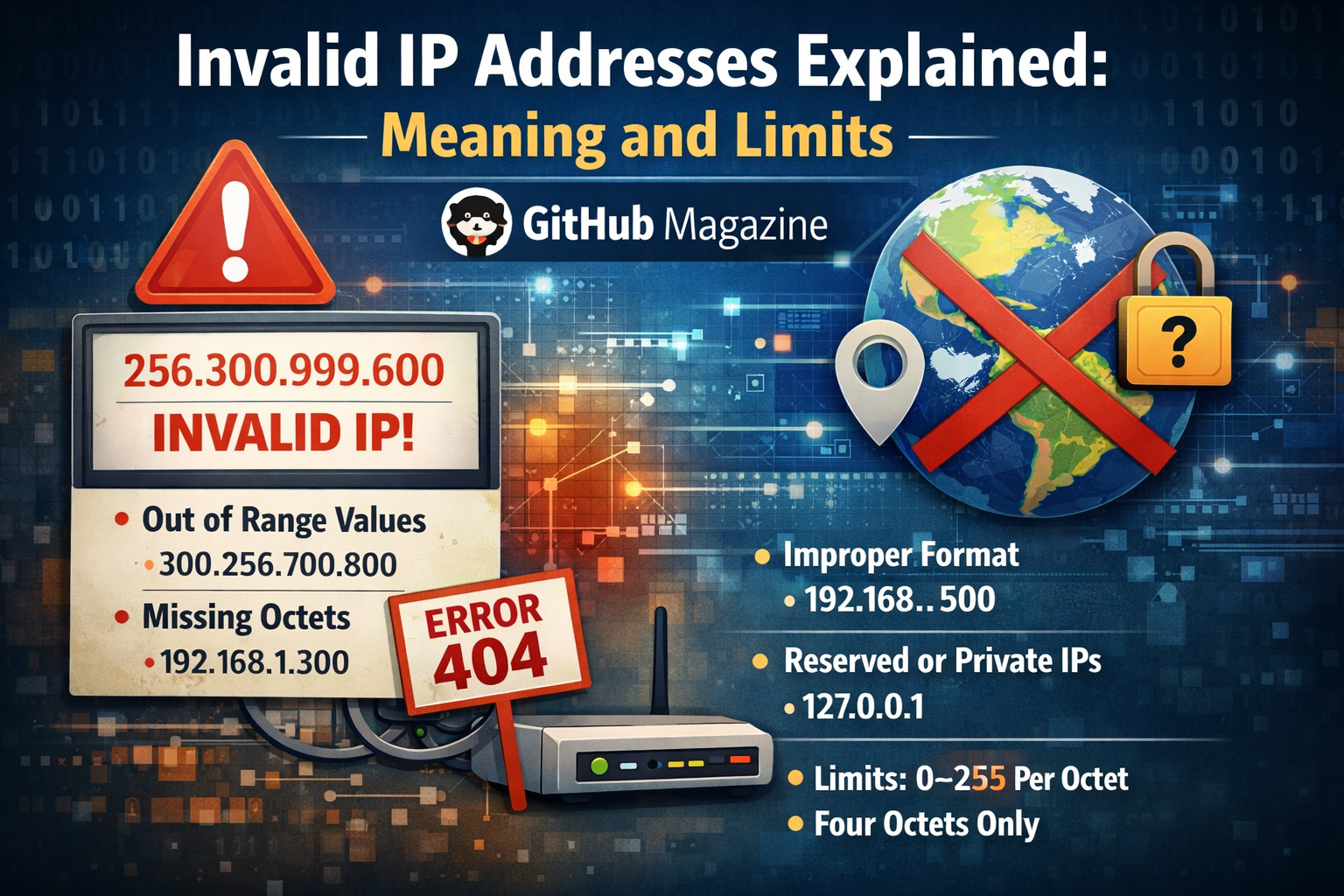
An IPv4 address is not an arbitrary number. It is a tightly constrained structure built from four octets, each ranging from 0 to 255. These limits are not stylistic; they are mathematical and foundational. They exist because each octet represents eight bits, and eight bits can only express 256 values. Any number outside that range breaks the system entirely.
When a number like 264 appears in the first position, the address fails instantly. It cannot be routed, resolved, or interpreted by network hardware. No packet can travel toward it. No server can answer from it. In practical terms, it is digital noise dressed as signal. This distinction matters because the internet depends on shared rules. When those rules are violated, the system does not bend; it simply stops.
For non-technical audiences, these constraints are invisible. The address still looks correct. That visual plausibility is what allows malformed data to circulate. It is also why editors and publishers must increasingly act as translators, explaining not just what something appears to be, but whether it actually functions within its system.
Why Invalid Technical Data Still Spreads
The spread of invalid IP addresses mirrors a broader phenomenon in digital culture: symbolic authority. Certain formats carry weight simply because they resemble real infrastructure. Long numbers suggest databases. Dotted quads suggest networks. Strings of letters and digits suggest cryptography. In an attention economy, resemblance often outruns accuracy.
Social platforms amplify this effect. Content is shared quickly, stripped of context, and rewarded for confidence rather than correctness. A malformed IP address can circulate in a forum, a comment thread, or even an article headline without ever being challenged. To most readers, it is just technical enough to be left alone.
This is not malicious by default. Often it is the byproduct of copy-paste culture, automation, or misunderstanding. But the consequence is the same: technical illiteracy becomes normalized. Over time, readers stop distinguishing between valid and invalid structures, trusting appearance over verification. That erosion of standards has implications far beyond networking.
The Difference Between Appearance and Function Online
One of the internet’s quiet lessons is that appearance means nothing without function. A button that does not click is decoration. A link that does not resolve is theater. An IP address that cannot exist is fiction. Yet modern interfaces blur these distinctions, prioritizing smooth design over visible mechanics.
This separation is why invalid data can feel real. Users are trained to interact, not inspect. They scroll, tap, and move on. In that environment, technical correctness becomes optional unless something visibly breaks. An invalid IP address does not crash a page; it simply sits there, unchallenged.
For a publication like Git-Hub Magazine, this tension is editorially significant. Writing about technology is no longer just about trends and tools. It is about teaching readers how to recognize when the underlying logic holds and when it does not. That educational role is subtle but essential.
A Brief Timeline of IPv4 Constraints
| Era | Development | Significance |
|---|---|---|
| 1980s | IPv4 standardized | Four octets, 0–255 range defined |
| 1990s | Public internet expansion | Address scarcity begins |
| 2000s | NAT and workarounds | Structural limits exposed |
| 2010s | IPv6 adoption starts | Larger address space introduced |
| 2020s | Mixed IPv4/IPv6 world | Literacy gap becomes visible |
This timeline shows that the rules behind IP addresses are not new. They are decades old. What is new is how far removed most users are from them, even as they rely on them daily.
Invalid Addresses as Editorial Red Flags
In professional publishing, an invalid IP address should function as a red flag. It signals that a piece of content has not been technically reviewed. That does not mean every article must become a networking manual, but it does mean obvious structural errors deserve correction or explanation.
For Git-Hub Magazine, which sits at the intersection of technology, digital culture, and systems thinking, this matters deeply. Readers come not just for information, but for interpretation. When a technical artifact is invalid, acknowledging that fact builds trust rather than diminishing authority.
Treating 264.68.111.161 as a real endpoint would mislead. Treating it as an example of misunderstanding educates. The difference lies in editorial intent.
Expert Perspectives on Digital Literacy
“Technical formats have become a kind of visual language,” one network engineer observed in a recent industry discussion. “People recognize the shape without understanding the grammar.” That gap, he noted, is where misinformation quietly lives.
A digital media researcher framed it differently, arguing that “we no longer teach readers how systems work, only how to use them.” In that environment, invalid data feels harmless until it accumulates.
A third perspective from a software educator emphasizes responsibility. “Publications set norms. When they get small technical things right, readers learn to expect correctness elsewhere too.” These views converge on a single point: accuracy at the structural level matters.
Comparing Valid and Invalid IP Structures
| Feature | Valid IPv4 Address | 264.68.111.161 |
|---|---|---|
| Octet range | 0–255 | First octet exceeds limit |
| Routable | Yes | No |
| Technically meaningful | Yes | No |
| Editorially defensible | Yes | Only as an example |
This comparison clarifies the issue without overcomplication. The problem is not subtle. It is structural.
How Readers Can Evaluate Technical Claims
Readers do not need to become engineers to develop healthy skepticism. Simple habits help. When encountering a technical string, ask whether it fits known rules. When unsure, look for explanation rather than assertion. When an article presents technical data without context, note the absence.
These habits align with Git-Hub Magazine’s broader mission: empowering readers to think systemically. The goal is not to catch mistakes for sport, but to understand how systems constrain what is possible. Once those constraints are visible, false authority loses its grip.
Implications for Digital Publishing in 2026
As automation generates more content, the risk of structurally invalid information increases. Language models, scripts, and templates can reproduce patterns without understanding limits. That makes editorial oversight more important, not less.
Publications that thrive will be those that combine narrative fluency with technical grounding. They will explain not only what is trending, but what is valid. In that sense, an invalid IP address becomes a teaching moment rather than an embarrassment.
Takeaways
- Not all technical-looking data is real or functional
- IPv4 addresses follow strict, non-negotiable rules
- Visual plausibility often substitutes for verification online
- Editorial clarity builds trust more than silent authority
- Digital literacy now includes understanding basic system limits
- Invalid examples can educate when framed honestly
Conclusion
The story of 264.68.111.161 is not about a broken address. It is about how easily structure is mistaken for truth in digital spaces. When numbers look right, we stop asking whether they are. That habit is understandable, but it is also risky.
For readers, the lesson is gentle skepticism. For publishers, it is renewed responsibility. Technology is not magic, even when it is complex. It is built on rules, limits, and shared agreements. When those are violated, the correct response is not to look away, but to explain.
Git-Hub Magazine exists to explore the systems beneath culture and the culture that grows atop systems. In that context, an invalid IP address is not a failure. It is an invitation to think more clearly about how the internet actually works, and why understanding that structure matters now more than ever.
FAQs
What is an IPv4 address?
An IPv4 address is a four-part numerical identifier used to route data across the internet, with each part ranging from 0 to 255.
Why is 264.68.111.161 invalid?
Because the first number exceeds the maximum allowed value of 255, making it impossible within IPv4 rules.
Can invalid IP addresses point to real servers?
No. They cannot be routed or resolved by network infrastructure.
Why do invalid addresses still appear online?
They often spread due to misunderstanding, automation, or visual plausibility rather than intent.
How should publications handle invalid technical data?
By correcting it or clearly framing it as an example, preserving accuracy and reader trust.

Related Posts

Directorate of Staff Development Explained

Toro Star: The Complete Guide to El Toro and the Constellation Taurus