
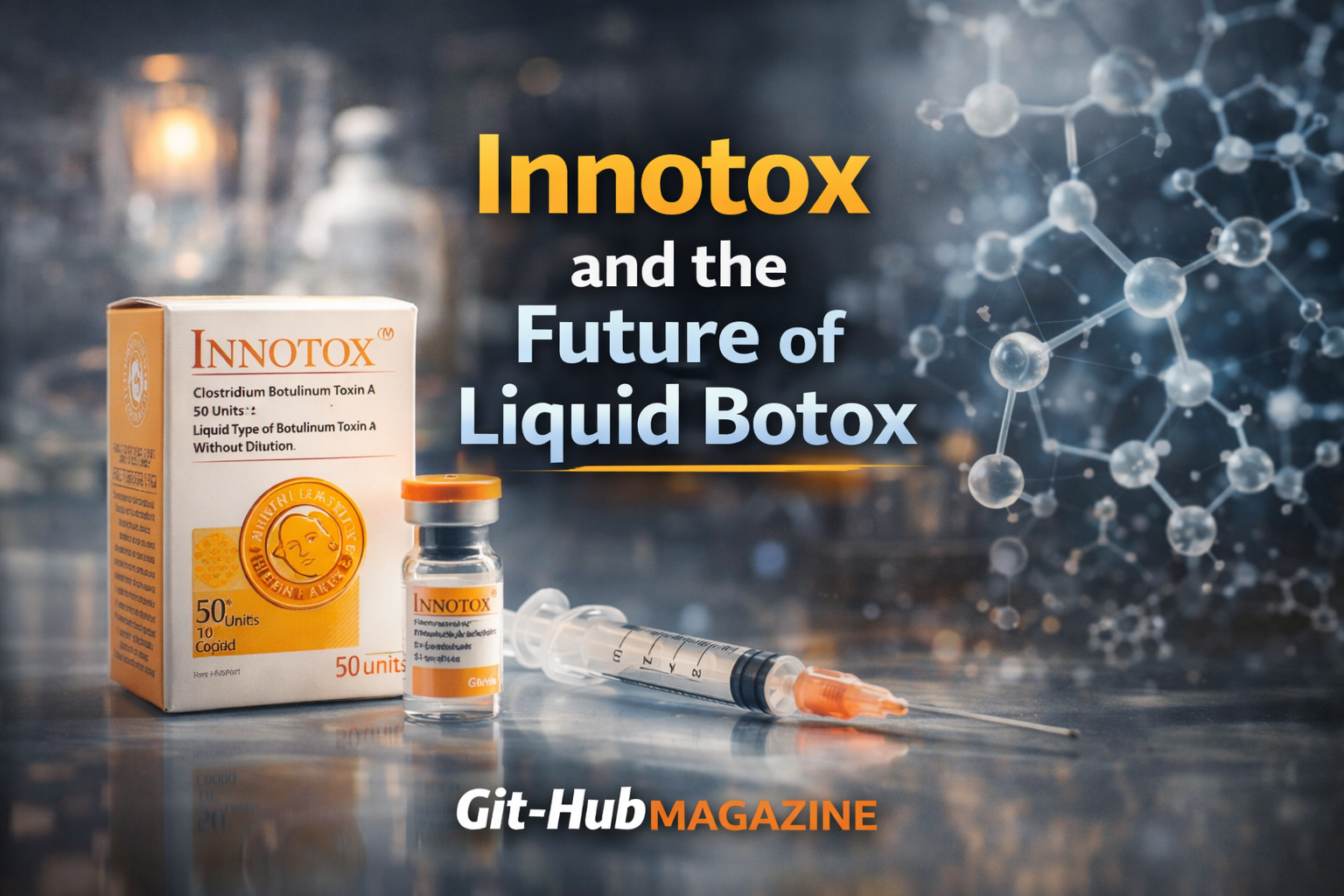
Innotox and the Future of Liquid Botox
Innotox is a liquid formulation of botulinum toxin type A developed by the South Korean biopharmaceutical company Medytox. Unlike traditional botulinum toxin products such as Botox, Dysport and Xeomin, which are supplied as freeze-dried powders requiring reconstitution, Innotox comes pre-diluted and ready for injection. Approved in South Korea in 2013, it was the world’s first commercially available liquid botulinum toxin type A product (Medytox, 2013). Its innovation lies not in a new molecule but in its formulation and manufacturing approach.
When I first began researching Innotox, I wanted to understand a simple question many patients ask: How is it different from Botox? The answer begins with formulation. Traditional botulinum toxin products are lyophilized powders that clinicians must mix with saline before injection. Innotox eliminates that step, reducing preparation time and potential variability in dilution. For aesthetic clinics focused on efficiency, this distinction matters.
But Innotox’s story is not only about convenience. It is about intellectual property disputes, regulatory scrutiny and the expanding global market for cosmetic injectables. The rise of South Korea as a powerhouse in aesthetic medicine provides context. In a country known for advanced skincare and cosmetic procedures, injectable neuromodulators have become mainstream. Innotox represents both technological ambition and the competitive tensions shaping the multibillion-dollar botulinum toxin market.
Understanding Botulinum Toxin Type A
Botulinum toxin type A is a neurotoxin produced by the bacterium Clostridium botulinum. In controlled medical doses, it temporarily blocks nerve signals to muscles, reducing contraction. The U.S. Food and Drug Administration first approved Botox for cosmetic use in 2002 to treat glabellar lines, commonly known as frown lines (U.S. Food and Drug Administration, 2002).
Since then, botulinum toxin has expanded into multiple medical and aesthetic applications, including treatment for chronic migraine, cervical dystonia and hyperhidrosis. According to the American Society of Plastic Surgeons, botulinum toxin injections have consistently ranked among the most performed cosmetic procedures in the United States (ASPS, 2022).
The global botulinum toxin market has grown steadily over the past two decades. Analysts attribute this growth to increased social acceptance of aesthetic treatments, minimally invasive procedure demand and expanding therapeutic indications.
What Makes Innotox Different
Innotox’s primary distinction is its liquid formulation. Traditional products require reconstitution, a process that involves mixing sterile saline into a freeze-dried vial. This step can introduce minor variability depending on dilution practices.
Innotox is supplied as a ready-to-use liquid, eliminating the need for mixing. Medytox has described the product as stable in liquid form through proprietary manufacturing technology (Medytox, 2013).
Below is a comparison of common botulinum toxin products:
| Feature | Botox | Xeomin | Dysport | Innotox |
|---|---|---|---|---|
| Manufacturer | Allergan | Merz | Ipsen | Medytox |
| Formulation | Lyophilized powder | Lyophilized powder | Lyophilized powder | Liquid |
| Reconstitution Required | Yes | Yes | Yes | No |
| Initial Cosmetic FDA Approval | 2002 | 2011 | 2009 | Not FDA approved in U.S. |
Innotox has been marketed in South Korea and other countries but has not received approval from the U.S. Food and Drug Administration. Its regulatory path has been shaped by legal and trade disputes.
The South Korean Aesthetic Industry
South Korea is widely recognized as a global hub for cosmetic procedures. According to the International Society of Aesthetic Plastic Surgery, South Korea ranks among the top countries for aesthetic treatments per capita (ISAPS, 2022).
The country’s biopharmaceutical sector has invested heavily in botulinum toxin development. Companies such as Medytox, Hugel and Daewoong have competed domestically and internationally.
Professor Sang Hoon Kim, a Seoul-based plastic surgeon, has observed that “Korean patients often seek subtle, refined outcomes, which drives innovation in injectables” (Kim, 2021). This consumer demand has encouraged local companies to differentiate products through formulation and pricing strategies.
Innotox emerged from this competitive environment, reflecting South Korea’s push to move beyond manufacturing generics toward technological refinement.
Legal Disputes and Regulatory Scrutiny
Innotox’s expansion into global markets has not been without controversy. In 2020, the Korea Ministry of Food and Drug Safety revoked Medytox’s license for Innotox, citing alleged data manipulation in clinical documents related to export approvals (Korea MFDS, 2020). Medytox disputed the findings and pursued legal appeals.
Additionally, Medytox became involved in intellectual property disputes with Daewoong Pharmaceuticals and Allergan regarding trade secret allegations tied to botulinum toxin strains. The U.S. International Trade Commission issued a limited exclusion order in 2020 related to the dispute between Medytox and Daewoong (U.S. ITC, 2020).
The timeline below summarizes key events:
| Year | Event |
|---|---|
| 2013 | Innotox approved in South Korea |
| 2020 | Korean regulator revokes license citing data concerns |
| 2020 | U.S. ITC ruling in botulinum toxin trade dispute |
| 2021–2022 | Ongoing legal appeals and settlements |
These disputes highlight the competitive stakes in the global neuromodulator market.
Market Size and Growth
The global botulinum toxin market has expanded significantly since the early 2000s. Reports by market research firms estimate that the market was valued in the billions of dollars by the early 2020s, driven by both cosmetic and therapeutic demand.
Aesthetic medicine economist Dr. Christopher Surek has noted that “minimally invasive procedures have grown faster than surgical interventions for over a decade” (Surek, 2019). Botulinum toxin remains central to that growth.
The appeal of a ready-to-use product like Innotox lies in operational efficiency. Clinics may reduce preparation time and minimize reconstitution errors. However, market success depends on regulatory clearance, physician trust and brand recognition.
Clinical Considerations
Clinically, botulinum toxin type A products function similarly at the molecular level. Differences may exist in diffusion characteristics, unit potency measurements and storage requirements.
Safety profiles for botulinum toxin injections are well documented. The FDA has required boxed warnings since 2009 about the risk of toxin spread beyond injection sites, although serious complications are rare when administered properly (FDA, 2009).
Dermatologist Dr. Doris Day has emphasized that “the injector’s skill matters more than the brand name” (Day, 2018). This underscores that formulation differences may influence convenience but not necessarily outcomes.
Innotox’s liquid form may reduce dilution variability, yet practitioners must still calculate correct dosing and injection technique carefully.
Global Expansion and Competition
South Korean toxin manufacturers have increasingly targeted markets in Asia, Latin America and the Middle East. Competitive pricing has been a strategic advantage compared to established Western brands.
However, entry into the United States and European Union requires stringent regulatory approval. Without FDA clearance, Innotox remains unavailable in the U.S. aesthetic market.
Competition among neuromodulator brands continues to intensify. New formulations and longer-lasting toxins are under development worldwide. Pharmaceutical innovation in this category focuses on duration, diffusion control and patient comfort.
Innotox’s innovation in liquid formulation reflects one approach to differentiation, though not necessarily the final stage of product evolution.
Ethical and Safety Implications
The growth of cosmetic injectables raises broader ethical questions about beauty standards and medicalization. As neuromodulators become commonplace, concerns emerge about overuse and unrealistic expectations.
Bioethicist Dr. Arthur Caplan has argued that “cosmetic interventions occupy a space between medicine and consumer choice” (Caplan, 2015). This tension influences regulatory oversight and marketing practices.
In countries where Innotox is available, regulatory agencies monitor safety data, manufacturing compliance and marketing claims. Transparency and adherence to clinical standards remain critical.
The conversation surrounding Innotox therefore intersects not only with innovation but also with responsibility.
Future Outlook
The future of neuromodulators may involve longer-acting toxins, alternative delivery methods or improved molecular stability. Research into recombinant technologies continues.
Innotox’s liquid formulation marked a significant milestone in 2013. Whether it becomes a dominant global product depends on regulatory outcomes and competitive positioning.
The broader trajectory of aesthetic medicine suggests continued demand for minimally invasive procedures. As patient expectations evolve, product innovation will likely follow.
Innotox occupies a distinctive chapter in that evolution, emblematic of South Korea’s growing influence in pharmaceutical aesthetics.
Takeaways
• Innotox is the first commercially available liquid botulinum toxin type A formulation
• Approved in South Korea in 2013 but not in the United States
• Eliminates reconstitution step required by traditional products
• Involved in regulatory and intellectual property disputes
• Reflects South Korea’s expanding role in aesthetic biopharmaceuticals
• Clinical outcomes depend heavily on practitioner expertise
• Competition in the neuromodulator market continues to intensify
Conclusion
Innotox stands at the intersection of pharmaceutical innovation and aesthetic demand. Its liquid formulation challenged conventional preparation methods and highlighted how even incremental changes can reshape clinical workflows.
Yet innovation alone does not guarantee global dominance. Regulatory scrutiny, legal disputes and brand trust shape market trajectories. Innotox’s journey illustrates both ambition and vulnerability within a competitive industry.
As aesthetic medicine continues to expand, products like Innotox signal a shift toward convenience and refinement. Whether through liquid stability or future molecular advancements, the evolution of neuromodulators reflects broader changes in how society approaches aging and self-presentation.
The story of Innotox is therefore not merely about a toxin. It is about globalization, intellectual property and the commercialization of confidence.
FAQs
What is Innotox
Innotox is a liquid formulation of botulinum toxin type A developed by Medytox in South Korea.
Is Innotox approved in the United States
No, Innotox has not received approval from the U.S. Food and Drug Administration.
How is Innotox different from Botox
Innotox is supplied as a ready-to-use liquid, while Botox requires reconstitution before injection.
Is Innotox safe
Like other botulinum toxin products, safety depends on proper dosing and administration by qualified professionals.
Why was Innotox involved in controversy
Regulatory actions and intellectual property disputes affected its licensing and international expansion.

Related Posts

Hywaze Smoke Shop and Modern Retail Trends

Served Bracket Challenge Review and Analysis