
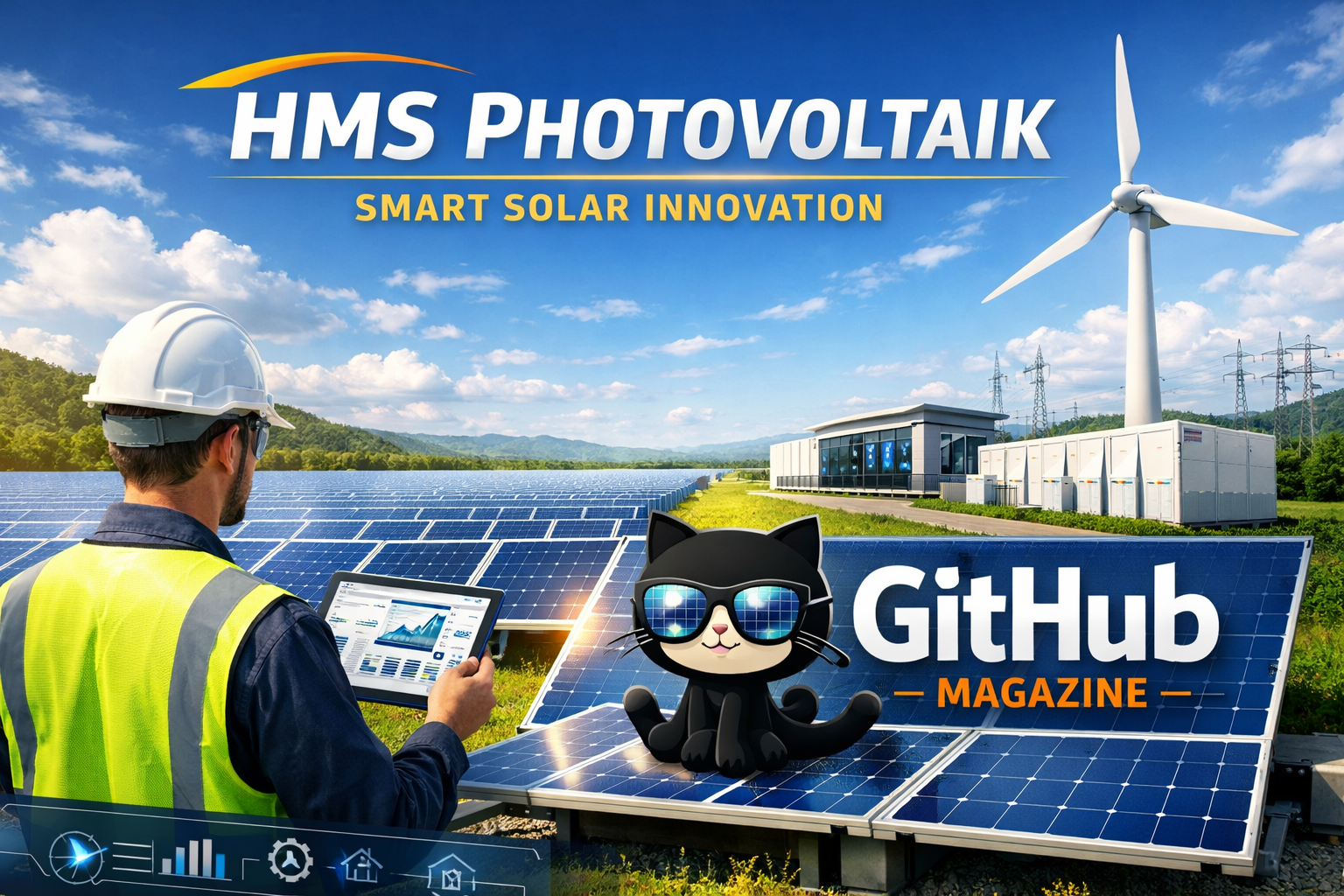
HMS Photovoltaik and the Rise of Smart Solar Systems
HMS Photovoltaik is increasingly used to describe a new class of solar power systems that merge photovoltaic generation with intelligent monitoring, smart inverters, and integrated storage. In practical terms, it refers to solar installations that do more than produce electricity: they measure it in real time, optimize how it is consumed, and store excess power for later use. For homeowners, this can mean lower utility bills and greater independence from the grid. For businesses, it can translate into predictable energy costs and improved sustainability reporting. For cities and communities, it represents a building block of the modern smart-grid future.
Within the first decade of mass solar adoption, photovoltaic systems were largely passive machines. Panels generated power when the sun was available, and households consumed it or sold it back to the grid. HMS Photovoltaik systems alter that relationship. They introduce software and digital management into the heart of solar energy, allowing production, storage, and usage to be coordinated dynamically.
This evolution is especially relevant as electricity demand rises due to electric vehicles, data centers, and digital infrastructure. Traditional grids struggle with peak loads and intermittent renewable sources. Intelligent photovoltaic systems help stabilize this imbalance by smoothing demand curves and increasing local self-consumption.
For a technology-driven publication such as Git-Hub Magazine, which routinely examines how software transforms physical industries, HMS Photovoltaik fits naturally within a broader narrative: code reshaping energy. Solar panels are no longer isolated hardware components on rooftops; they are nodes in a data-rich energy network, monitored through dashboards, optimized by algorithms, and increasingly managed the same way modern IT infrastructure is managed—through visibility, automation, and scalability.
From Conventional Solar to Intelligent Energy Systems
Photovoltaic technology was born in the mid-twentieth century, when researchers discovered that silicon could convert sunlight into electrical current. For decades, its progress was measured mainly in efficiency percentages and manufacturing costs. Each generation of panels promised a few more watts per square meter and slightly cheaper production.
By the early 2000s, solar panels had become commercially viable on a large scale. Rooftops across Germany, California, and later China were covered with blue and black modules connected to centralized inverters. These systems worked reliably, but they were simple. If one panel was shaded, the output of the entire string could drop. If an inverter failed, production stopped entirely. Owners often had little insight into what was happening on their roof beyond a monthly electricity bill.
HMS Photovoltaik marks a shift away from that simplicity toward complexity managed through software. The system still relies on panels, but it replaces the single centralized inverter with microinverters or power optimizers attached to each module. These devices communicate performance data to a central platform, where production patterns can be analyzed minute by minute.
This transformation mirrors what happened in computing. Early computers were monolithic machines; modern systems are distributed, monitored, and continuously optimized. Solar energy is undergoing a similar decentralization. Each panel becomes a data source, and the system as a whole becomes an intelligent network rather than a passive generator.
Core Architecture of HMS Photovoltaik
An HMS Photovoltaik installation is built on three technical pillars: generation, conversion, and management.
Generation begins with high-efficiency photovoltaic panels designed to capture sunlight across a range of conditions. These panels feed electricity to microinverters or optimizers rather than to a single central unit. Each microinverter converts direct current into grid-compatible alternating current at the panel level.
Management software then aggregates data from every component. Through a web interface or mobile application, users can view production curves, identify underperforming modules, and compare energy output against historical averages. Some platforms integrate weather forecasts to predict future generation.
Storage is the third pillar. Lithium-ion batteries, often modular, allow surplus energy to be stored during the day and used at night or during grid outages. In advanced configurations, algorithms decide when to store energy, when to consume it locally, and when to export it to the grid based on price signals.
The result is not merely a solar installation but an energy management system. It behaves more like a data center than a traditional power plant—distributed, monitored, and continuously optimized.
Traditional Photovoltaics vs. HMS Photovoltaik
| Feature | Traditional PV Systems | HMS Photovoltaik Systems |
|---|---|---|
| Inverter design | Single centralized inverter | Microinverters per panel |
| Performance visibility | Limited or none | Real-time digital dashboards |
| Storage integration | Optional add-on | Built-in hybrid design |
| Failure impact | High if inverter fails | Localized, minimal disruption |
| Energy strategy | Passive generation | Active optimization |
This comparison illustrates why the “HMS” concept is less about new panels and more about new architecture. The innovation lies in how electricity is managed after it is generated.
Why Smart Solar Matters in 2026
Energy consumption is becoming increasingly dynamic. Electric vehicles charge overnight. Offices peak during working hours. Data centers operate around the clock. Traditional grids were built for predictable patterns; modern demand is anything but predictable.
HMS Photovoltaik systems help bridge this gap by localizing energy intelligence. Instead of relying solely on centralized utilities to balance loads, buildings become partially self-regulating energy units. They can absorb excess power, release stored energy, and reduce demand during peak hours.
Dr. Laura Schmidt, a renewable-energy systems analyst, has described smart photovoltaic systems as “the missing layer between renewable generation and stable electricity supply.” Her view reflects a broader industry consensus: renewable energy requires digital coordination to scale effectively.
Environmental consultant Markus Weber has similarly argued that “solar panels alone reduce emissions, but intelligent systems multiply that impact by preventing wasted energy.” When electricity is stored and reused locally, fewer fossil-fuel plants are required to cover evening demand.
From an economic standpoint, strategist Sara Liu notes that smart solar installations often pay for themselves faster than traditional systems because they increase self-consumption. Electricity used on site is typically more valuable than electricity sold back to the grid at wholesale prices.
Residential Transformation
For households, HMS Photovoltaik changes daily routines in subtle ways. Homeowners begin to schedule high-energy activities—such as laundry or electric-vehicle charging—during peak solar production. Mobile notifications alert users when batteries are full or when consumption spikes.
In regions with unstable grids, battery-supported systems provide resilience. A short blackout no longer interrupts daily life; lights stay on, routers remain powered, and refrigerators continue operating. Over time, this reliability becomes as important as cost savings.
Smart systems also encourage behavioral change. When users see energy flows visualized in graphs and percentages, electricity becomes tangible rather than abstract. Consumption patterns become something that can be optimized, not merely paid for.
Commercial and Industrial Use
Businesses adopt HMS Photovoltaik for different reasons. For a manufacturing plant, electricity is a major operating expense. Predictable costs and peak-shaving capabilities can significantly improve profit margins.
Warehouses and logistics centers, often equipped with vast rooftop surfaces, generate large volumes of solar energy during the day. Intelligent management allows that energy to be stored and used during evening shifts or exported strategically when market prices are favorable.
Corporate sustainability reporting also plays a role. Companies increasingly track not just how much renewable energy they purchase, but how efficiently they use it. Smart photovoltaic systems provide the data needed for precise carbon accounting.
Agriculture and Remote Infrastructure
Farms and remote installations represent another major application. Irrigation pumps, climate-controlled greenhouses, and refrigeration units consume significant energy. When powered by intelligent solar systems, these operations become less dependent on diesel generators and fuel logistics.
In developing regions, HMS-style systems enable microgrids—small, localized networks that operate independently of national grids. Villages equipped with solar generation, batteries, and smart controllers can maintain stable electricity without large-scale infrastructure projects.
Global Adoption Trends
| Region | Residential Uptake | Commercial Adoption | Policy Environment |
|---|---|---|---|
| Europe | High and accelerating | Strong | Subsidies, net-metering |
| North America | Moderate but rising | Growing | Tax incentives |
| Asia-Pacific | Rapid expansion | Rapid | Manufacturing support |
| Middle East | Emerging | Selective | Utility-scale focus |
These trends reflect both economic and political realities. Where incentives exist, adoption accelerates. Where electricity prices are volatile, consumers seek autonomy.
Barriers to Wider Deployment
Despite its advantages, HMS Photovoltaik remains more expensive than basic solar installations. Microinverters, batteries, and monitoring software add to upfront costs. Although long-term savings often offset these expenses, the initial investment can deter households.
Technical expertise is another constraint. Installing and maintaining intelligent systems requires electricians trained in both power electronics and networking. In some regions, such specialists are scarce.
Regulation can also slow progress. Grid interconnection rules vary widely, and in certain countries, exporting electricity from batteries is restricted. Without clear standards, installers and consumers face uncertainty.
Finally, awareness remains uneven. Many potential users still view solar as a static technology rather than a digital platform.
HMS Photovoltaik in the Context of Git-Hub Magazine
For a publication focused on the intersection of software, infrastructure, and culture, HMS Photovoltaik represents a compelling case study. It illustrates how code migrates into physical systems—how dashboards replace meters, how algorithms manage electrons the same way they manage server workloads.
Just as DevOps transformed software deployment by introducing continuous monitoring and feedback loops, smart photovoltaic systems introduce similar principles into energy production. Electricity becomes observable, debuggable, and optimizable.
This convergence of energy and software signals a broader shift. Tomorrow’s engineers may treat solar installations as programmable assets, configured through interfaces and APIs rather than manual switches.
Takeaways
- HMS Photovoltaik describes intelligent solar systems that integrate panels, microinverters, monitoring, and storage.
- The main innovation lies in digital energy management, not panel efficiency alone.
- Residential users benefit from lower bills and increased reliability.
- Businesses gain predictable costs and detailed sustainability data.
- Adoption depends heavily on policy incentives and technical expertise.
- Smart solar mirrors trends in software engineering: visibility, automation, and scalability.
Conclusion
HMS Photovoltaik represents more than an incremental upgrade to rooftop solar. It reflects a philosophical shift in how energy systems are designed and understood. Electricity is no longer treated as a one-way flow from utility to consumer, but as a dynamic resource that can be measured, optimized, and strategically deployed.
As renewable generation becomes the backbone of global electricity supply, intelligence will become as important as efficiency. Panels will continue to improve, but it is software—quietly orchestrating production and consumption—that will determine how effectively solar power integrates into daily life.
For households, this means autonomy and resilience. For businesses, predictability and data. For societies, a pathway toward cleaner energy systems that function reliably at scale.
In this sense, HMS Photovoltaik is not merely a product category. It is an early expression of what the digital energy era looks like: decentralized, transparent, and algorithmically managed.
FAQs
What does HMS Photovoltaik mean?
It refers to smart photovoltaic systems that combine solar panels with digital monitoring, microinverters, and energy storage.
Is it different from normal solar power?
Yes. Traditional systems focus on generation only, while HMS systems actively manage production and consumption.
Can these systems work during blackouts?
With battery storage, they can supply electricity even when the grid is down.
Are they more expensive?
Initial costs are higher, but long-term savings often compensate.
Who benefits most from HMS Photovoltaik?
Households with high electricity costs, businesses with large rooftops, and remote facilities seeking energy independence

Related Posts
Paymand and the Future of Digital Payments

Bootstrapped Startup Fundraising Strategy Explained