
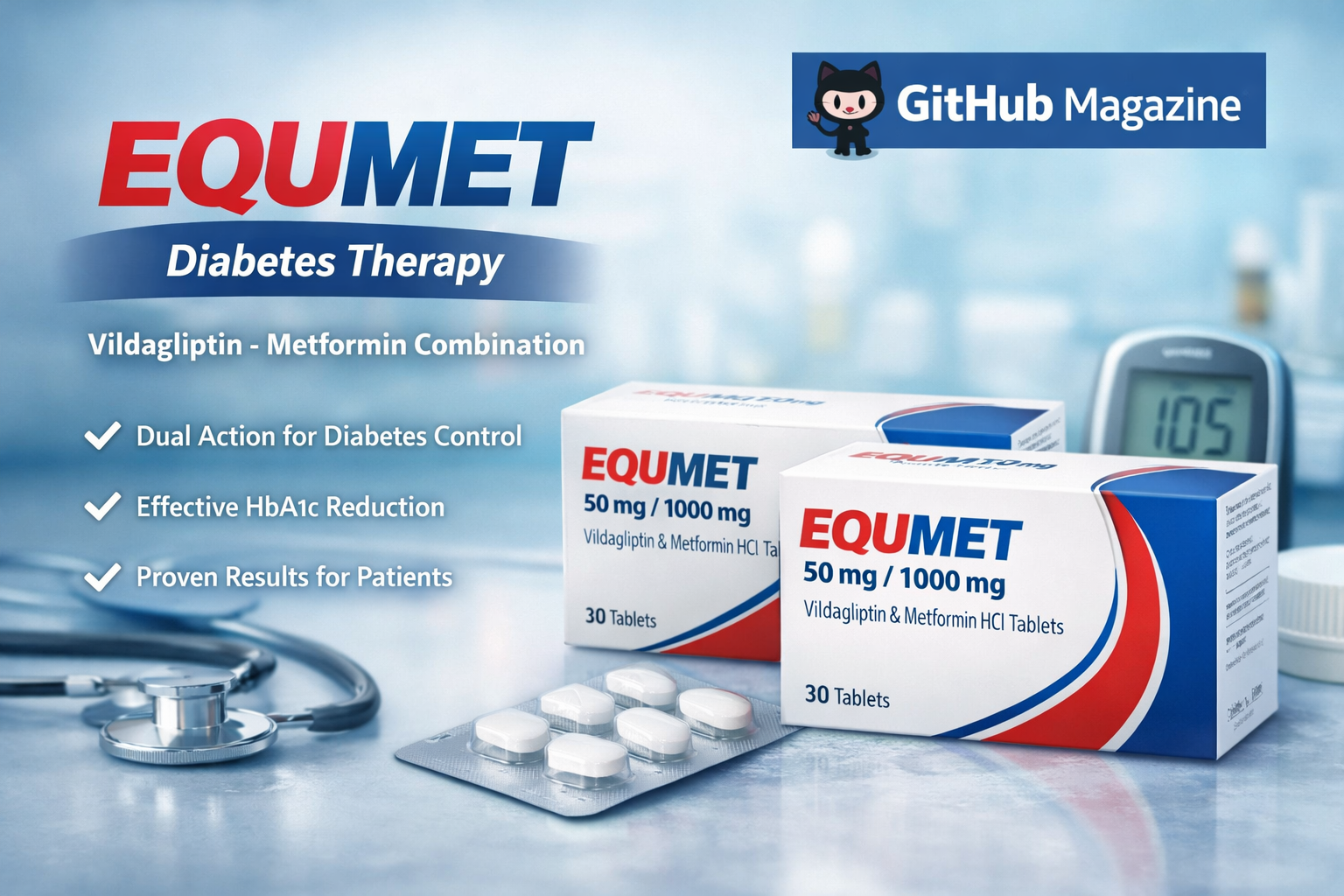
EQUMET: Vildagliptin and Metformin Combination Therapy
EQUMET is a prescription oral medicine that combines two established diabetes drugs—vildagliptin and metformin—into a single tablet designed to improve blood-glucose control in adults with type 2 diabetes when lifestyle measures and metformin alone are not enough. In simple terms, it lowers sugar production by the liver, improves the body’s response to insulin, and enhances meal-time insulin release, all while keeping the risk of dangerous hypoglycemia relatively low.
Type 2 diabetes has become one of the defining chronic illnesses of the 21st century, affecting hundreds of millions worldwide and straining health systems with its long list of complications, from heart disease and kidney failure to blindness and nerve damage. For decades, metformin has been the unchallenged first-line drug, valued for its effectiveness, low cost, and safety profile. Yet many patients eventually drift out of control, their blood sugar creeping upward despite adherence to therapy.
EQUMET emerged from a new clinical philosophy: instead of waiting for single-drug treatment to fail and then layering medications one by one, why not begin earlier with complementary agents that address different biological defects of the disease? By pairing metformin with vildagliptin, a dipeptidyl peptidase-4 (DPP-4) inhibitor, clinicians attempt to protect fragile pancreatic beta cells, stabilize glucose levels over years rather than months, and reduce the need for more complex regimens later.
The story of EQUMET is therefore not just about one pill, but about a broader transition in diabetes care—from reactive escalation to proactive metabolic balance, from short-term glucose targets to long-term durability.
Mechanism of Action: Two Medicines, One Strategy
Metformin and vildagliptin act on different but complementary pathways of glucose regulation. Metformin primarily suppresses the liver’s overproduction of glucose and improves insulin sensitivity in muscle and fat tissue. This addresses one of the earliest abnormalities in type 2 diabetes: excessive hepatic glucose output during fasting and between meals.
Vildagliptin works through the incretin system. By inhibiting the DPP-4 enzyme, it prolongs the activity of natural gut hormones such as GLP-1 and GIP, which stimulate insulin release only when blood sugar is elevated and suppress inappropriate secretion of glucagon. The result is tighter control after meals without forcing the pancreas to release insulin when glucose levels are normal or low.
Together, these mechanisms target both fasting and post-prandial hyperglycemia while minimizing weight gain and hypoglycemia, two common drawbacks of older drug classes.
| Component | Primary biological action | Main clinical benefit |
|---|---|---|
| Metformin | Reduces hepatic glucose production, improves insulin sensitivity | Lowers fasting glucose, modest weight neutrality |
| Vildagliptin | Inhibits DPP-4, increases incretin hormone activity | Improves post-meal glucose control, low hypoglycemia risk |
This pairing reflects a design philosophy that treats diabetes as a multi-system disorder rather than a single defect.
Clinical Evidence and the Rise of Early Combination Therapy
The most influential evidence supporting the vildagliptin–metformin combination came from a long-term, international randomized clinical trial known as VERIFY. Newly diagnosed patients were assigned either to metformin alone or to early combination therapy with metformin plus vildagliptin and followed for five years.
The results were striking: patients receiving the combination therapy experienced a significantly lower risk of “treatment failure,” defined as sustained loss of glycemic control, compared with those who started on metformin alone and added other drugs later. The study introduced the concept of “glycemic durability” into mainstream discussion—how long a therapy can maintain target glucose levels before escalation becomes necessary.
Real-world observational studies later echoed these findings, showing meaningful reductions in HbA1c, good tolerability, and high adherence in routine clinical practice, including in diverse populations outside Western Europe and North America.
The implication was subtle but profound: early metabolic stability might slow the progressive decline of insulin-producing cells, altering the natural history of the disease rather than merely managing its symptoms.
| Evidence source | Population | Key outcome |
|---|---|---|
| VERIFY randomized trial | Newly diagnosed adults | Improved long-term glycemic durability |
| Real-world cohort studies | Broad, multi-ethnic groups | Significant HbA1c reduction |
| Comparative safety analyses | Patients on oral therapies | Low hypoglycemia incidence |
How EQUMET Is Used in Practice
EQUMET is typically prescribed as a tablet taken twice daily with meals, a schedule designed to match the rhythm of glucose intake and reduce gastrointestinal side effects associated with metformin. Dosage is individualized, especially for older patients or those with impaired kidney function, since metformin is cleared through the kidneys.
In everyday clinics, EQUMET is often introduced when patients remain above glycemic targets on metformin alone or, increasingly, at the time of diagnosis in individuals with markedly elevated blood sugar. The fixed-dose formulation reduces pill burden, a factor strongly associated with medication adherence in chronic disease.
Side effects generally mirror those of the component drugs: transient nausea or diarrhea from metformin, mild headache or dizziness from vildagliptin. Severe hypoglycemia is uncommon because the drug combination does not stimulate insulin release when glucose levels are low.
From a health-system perspective, fixed-dose combinations like EQUMET can simplify prescribing and inventory management while supporting standardized treatment pathways.
Expert Perspectives on Combination Therapy
“The combination of metformin and a DPP-4 inhibitor such as vildagliptin addresses two core defects of type 2 diabetes: insulin resistance and impaired incretin response,” said endocrinologist Dr. Sophia Martinez in a review on modern oral therapies.
Professor James L. Fisher, a long-time researcher in metabolic disease, has argued that early combination therapy represents “a philosophical shift from damage control to disease modification,” noting that preserving beta-cell function may delay the need for injectable treatments.
Dr. Ananya Singh, who studies adherence in chronic illness, emphasizes the practical side: “When patients take fewer pills with fewer side effects, they stay on therapy longer, and that consistency matters as much as pharmacology.”
Together, these views frame EQUMET not as a revolutionary molecule but as a strategically engineered tool aligned with contemporary thinking about chronic disease management.
Benefits and Limitations
EQUMET offers several advantages: complementary mechanisms, low hypoglycemia risk, weight neutrality, and evidence for long-term stability of glycemic control. For patients early in the disease course, it may delay the cascade of additional medications that often follows years of fluctuating glucose levels.
Yet limitations remain. The combination does not replace lifestyle intervention, and it is not suitable for patients with severe renal impairment or certain hepatic conditions. It also does not provide the cardiovascular or renal protective effects later demonstrated by some newer drug classes such as SGLT2 inhibitors or GLP-1 receptor agonists.
In this sense, EQUMET occupies a middle ground: more sophisticated than traditional monotherapy, less expansive than modern multi-target regimens, but still highly relevant in large segments of the global diabetic population.
Takeaways
- EQUMET combines vildagliptin and metformin in a single oral tablet for type 2 diabetes management.
- It targets both fasting and post-meal glucose through complementary biological pathways.
- Long-term trials demonstrate improved glycemic durability compared with metformin alone.
- Real-world studies confirm good tolerability and strong patient adherence.
- The combination carries a low risk of hypoglycemia and is generally weight-neutral.
- It reflects a broader trend toward early, proactive combination therapy in chronic disease care.
Conclusion
EQUMET’s significance lies less in novelty than in timing. It arrived as clinicians were beginning to question whether the traditional stepwise approach to diabetes treatment—one drug at a time, added only after failure—was sufficient for a disease defined by gradual, relentless progression. By combining two complementary agents in a single formulation, EQUMET offered a practical embodiment of a new strategy: stabilize early, protect what remains of pancreatic function, and buy time.
For millions of patients, the daily ritual of swallowing a tablet like EQUMET is unremarkable, even mundane. Yet behind that routine stands a careful synthesis of pharmacology, clinical trial evidence, and evolving medical philosophy. As diabetes therapy continues to expand into ever more complex territory, fixed-dose combinations such as EQUMET remain a reminder that sometimes the most effective innovations are those that quietly refine, rather than radically replace, what already works.
FAQs
What is EQUMET?
It is a prescription tablet combining vildagliptin and metformin to improve blood-glucose control in adults with type 2 diabetes.
How does it differ from metformin alone?
It adds incretin-based insulin regulation through vildagliptin, improving post-meal glucose control and long-term stability.
Does EQUMET cause hypoglycemia?
Severe hypoglycemia is uncommon because insulin release is glucose-dependent.
Who should not take it?
Patients with severe kidney impairment or certain liver conditions should avoid metformin-containing drugs.
Can it replace insulin?
No. It is an oral therapy for type 2 diabetes and does not substitute for insulin when insulin is clinically required.

Related Posts

Directorate of Staff Development Explained

Toro Star: The Complete Guide to El Toro and the Constellation Taurus