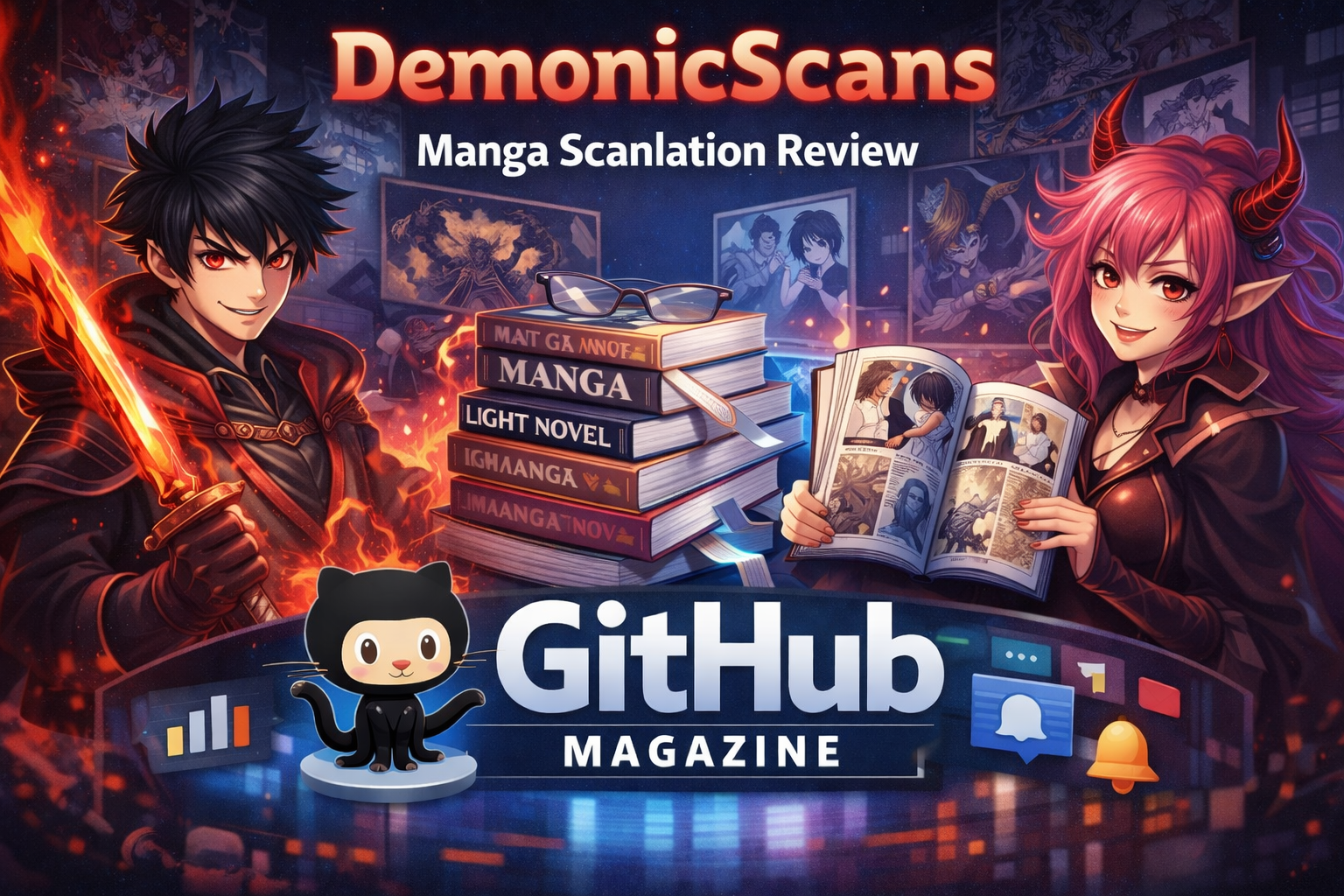
DemonicScans Scanlation Platform Analysis
I first came across DemonicScans while researching how global manga readers access stories that have not yet been officially translated. For anyone searching for clarity, the answer is straightforward: DemonicScans is a fan-driven scanlation group and website that scans, translates, edits, and distributes manga, manhwa, and manhua in English without formal licensing agreements. Readers turn to it for free access, rapid chapter updates, and titles unavailable in their regions. That accessibility explains its growing visibility across online forums and search engines.
Scanlation, a blend of the words scan and translation, emerged decades ago as a grassroots effort by fans who wanted to overcome language barriers. DemonicScans operates within that tradition, organizing volunteers who clean raw comic pages, translate dialogue, typeset text, and publish completed chapters online. Its structure resembles a collaborative digital newsroom powered by fandom rather than profit.
Yet the appeal of DemonicScans exists alongside legal and ethical tensions. Copyright law protects creators’ rights to control reproduction and distribution. Unauthorized scanlations can conflict with those protections. The result is a complicated ecosystem where passion for storytelling intersects with intellectual property law, digital access culture, and the economics of the global manga industry.
This article explores DemonicScans from a systems perspective, examining how it works, why it attracts readers, what risks it presents, and how it fits into the broader evolution of digital comics culture.
Understanding DemonicScans
DemonicScans is best described as a community-driven scanlation platform. Volunteers acquire original-language chapters, digitize or clean existing scans, translate dialogue into English, and reassemble pages for online publication. The process typically includes multiple roles: translators interpret language and cultural nuance, editors refine phrasing, proofreaders ensure clarity, and typesetters integrate text seamlessly into speech bubbles.
Unlike official publishers, DemonicScans does not hold licensing agreements with rights holders. Content is distributed freely to readers without subscription fees. The site’s interface emphasizes accessibility, often allowing users to browse series without account creation.
The appeal lies in immediacy. Fans frequently encounter new chapters soon after original publication. In some cases, scanlations appear before official English releases are scheduled. For readers in regions where certain titles remain unlicensed, scanlation becomes the only accessible gateway.
However, this accessibility also defines the central controversy. Distribution without authorization places scanlation groups in legal gray territory. The platform’s popularity reflects demand, but demand alone does not resolve questions of ownership and compensation.
The History and Culture of Scanlation
To understand DemonicScans, one must examine scanlation’s roots. In the 1990s and early 2000s, international manga fans struggled with limited access. Official English translations were scarce and often delayed by years. Fan communities stepped in, scanning purchased volumes and translating them collaboratively.
This grassroots effort fostered global fandom growth. Online message boards, IRC channels, and early websites became hubs for cultural exchange. Readers in North America, Europe, and Southeast Asia connected through shared enthusiasm for Japanese storytelling traditions.
Scanlation culture developed informal norms. Some groups pledged to stop distributing a series once it received official licensing. Others included disclaimers encouraging readers to support creators when possible. These norms reflected awareness of legal limitations even if they did not eliminate infringement concerns.
DemonicScans exists within that lineage. It reflects the enduring model of volunteer-driven translation networks that view themselves as cultural bridges rather than commercial competitors.
How DemonicScans Operates
The workflow behind DemonicScans mirrors professional publishing processes, albeit without formal authorization.
First, raw material is acquired. Volunteers either purchase official digital copies or access early releases through various means. High-resolution pages are then cleaned to remove original text.
Second, translators convert dialogue and sound effects into English while attempting to preserve tone, humor, and context. Manga often contains culturally specific references that require adaptation rather than literal translation.
Third, editors and proofreaders refine the script for readability. Typesetters insert translated text into speech bubbles using graphic design software. Quality control teams review the finished chapter before release.
Finally, chapters are uploaded to the website, where users can browse series catalogs organized by genre, popularity, or update date.
The efficiency of this pipeline explains how fan groups can sometimes release chapters quickly. Yet speed does not equate to legal clarity. The process still involves distributing copyrighted material without license.
Comparison With Official Platforms
| Feature | DemonicScans | Official Platforms |
|---|---|---|
| Licensing | Unlicensed fan translations | Licensed and authorized |
| Cost | Free | Subscription or purchase |
| Release Speed | Often rapid after raw release | Scheduled and contract-bound |
| Revenue for Creators | None directly | Royalties and licensing revenue |
| Legal Status | Gray area | Legally compliant |
This comparison highlights structural differences. Official services operate within contractual frameworks that compensate creators. Scanlation groups prioritize access and speed over commercial structure.
Why Readers Use DemonicScans
Several motivations drive readership.
Accessibility is primary. Not all regions receive official translations simultaneously. Some niche series never secure international licensing at all. Scanlation fills that gap.
Cost is another factor. Subscription fatigue and economic barriers can limit access to multiple official services. Free alternatives attract users who cannot afford multiple subscriptions.
Speed also matters. Dedicated fans eager to follow ongoing series often seek the earliest available translations.
Community engagement reinforces loyalty. Comment sections and fan discussions create shared spaces where readers debate plot developments and recommend new titles.
These motivations illustrate consumer demand dynamics in digital media. When official distribution lags behind global interest, unofficial channels emerge.
Legal and Ethical Dimensions
Copyright law grants creators exclusive rights to reproduce and distribute their work. Scanlation typically infringes on these rights because permission is not obtained.
Publishers argue that widespread free distribution reduces incentive for readers to purchase official releases. Lost revenue can affect translation budgets, marketing efforts, and long-term sustainability.
Fans counter that scanlations sometimes boost visibility, increasing international interest that later translates into official sales. They argue that exposure can serve as informal marketing.
An intellectual property scholar once remarked, “Access without authorization may build audiences, but it complicates the economics that sustain creative industries.” This observation captures the tension. Cultural enthusiasm does not erase legal frameworks.
The ethical landscape is nuanced. Some readers support official releases after discovering a series through scanlation. Others rely solely on free versions. Outcomes vary by title, region, and consumer behavior.
Security and User Risk
Fan-run websites often lack the infrastructure of corporate platforms. While some maintain clean interfaces, others rely on advertising networks that may display intrusive banners or redirect links.
Users should remain cautious about potential malware, phishing attempts, or misleading download buttons. Unlike regulated services, scanlation sites do not typically provide transparent privacy policies or data management disclosures.
Cybersecurity experts frequently advise using ad blockers, avoiding suspicious links, and maintaining updated antivirus software when browsing unofficial platforms.
The security dimension adds another layer to the evaluation of DemonicScans. Accessibility should be balanced with awareness of technical risk.
Cultural Impact on Global Fandom
DemonicScans contributes to a vibrant cross-cultural exchange. Readers from different continents engage with Japanese, Korean, and Chinese storytelling traditions in near real time.
Fan art, cosplay communities, and online analysis blogs often emerge around series popularized through scanlation. In that sense, the platform functions as a catalyst for global cultural dialogue.
However, this cultural expansion exists alongside structural tension with rights holders. The same mechanism that spreads stories widely can disrupt official release strategies.
A media studies professor observed, “Fan translation networks demonstrate the borderless nature of digital culture, but they also reveal how slowly legal frameworks adapt to global demand.” The observation reflects broader digital transformation patterns.
Economic Implications for the Industry
The manga industry has increasingly expanded official digital distribution to meet global demand. Simultaneous releases, subscription models, and mobile apps attempt to reduce the gap that scanlation once filled.
As official options grow more accessible, the justification for unauthorized distribution weakens. Yet not all titles receive global licensing. Smaller or experimental works may remain unavailable.
Economic impact studies suggest mixed outcomes. Some publishers credit scanlation with building early overseas interest. Others emphasize measurable revenue loss.
Ultimately, the sustainability of creative industries depends on balanced compensation structures. The ongoing coexistence of official and unofficial ecosystems reflects unresolved market dynamics.
Structured Impact Overview
| Dimension | Positive Influence | Potential Drawback |
|---|---|---|
| Cultural Reach | Expands global awareness of titles | Undermines licensing control |
| Community | Encourages cross-border fandom | Normalizes infringement behavior |
| Speed | Rapid access to new chapters | Disrupts official release pacing |
| Economic Effect | May increase exposure | May reduce direct revenue |
This structured overview underscores complexity rather than simple judgment.
Takeaways
• DemonicScans operates as a volunteer-driven scanlation group distributing unlicensed translations
• Its popularity stems from accessibility, speed, and global reach
• Copyright law places scanlation in a legally ambiguous position
• Reader motivations include cost savings and regional access gaps
• Security risks exist due to unofficial hosting environments
• Official platforms continue expanding to address global demand
Conclusion
I view DemonicScans as a revealing case study in digital culture. It highlights the power of fan communities to bridge linguistic divides and distribute stories across borders. At the same time, it underscores unresolved tensions between access and ownership, passion and policy, speed and sustainability.
The rise of simultaneous global releases suggests that the industry is adapting. Yet the persistence of scanlation indicates that unmet demand still exists. Whether future models reconcile these tensions remains uncertain.
What is clear is that DemonicScans reflects a broader truth about the internet: when audiences crave connection to stories, they will find pathways to them. The challenge lies in building systems that honor both that enthusiasm and the creators who bring those stories to life.
FAQs
What is DemonicScans?
DemonicScans is a fan-run scanlation group that translates and distributes manga, manhwa, and manhua without official licenses.
Is using DemonicScans legal?
Scanlation generally involves unauthorized distribution of copyrighted material, placing it in a legal gray area.
Why do readers choose scanlation sites?
Readers often seek faster updates, free access, or titles unavailable in their regions.
Do scanlations harm creators?
They can reduce direct revenue, though some argue they increase global visibility.
Are scanlation sites safe?
Users should exercise caution due to potential security and privacy risks.

Related Posts
Framevuerk Review for Vue Developers
Open Finance Brazil News and Analysis