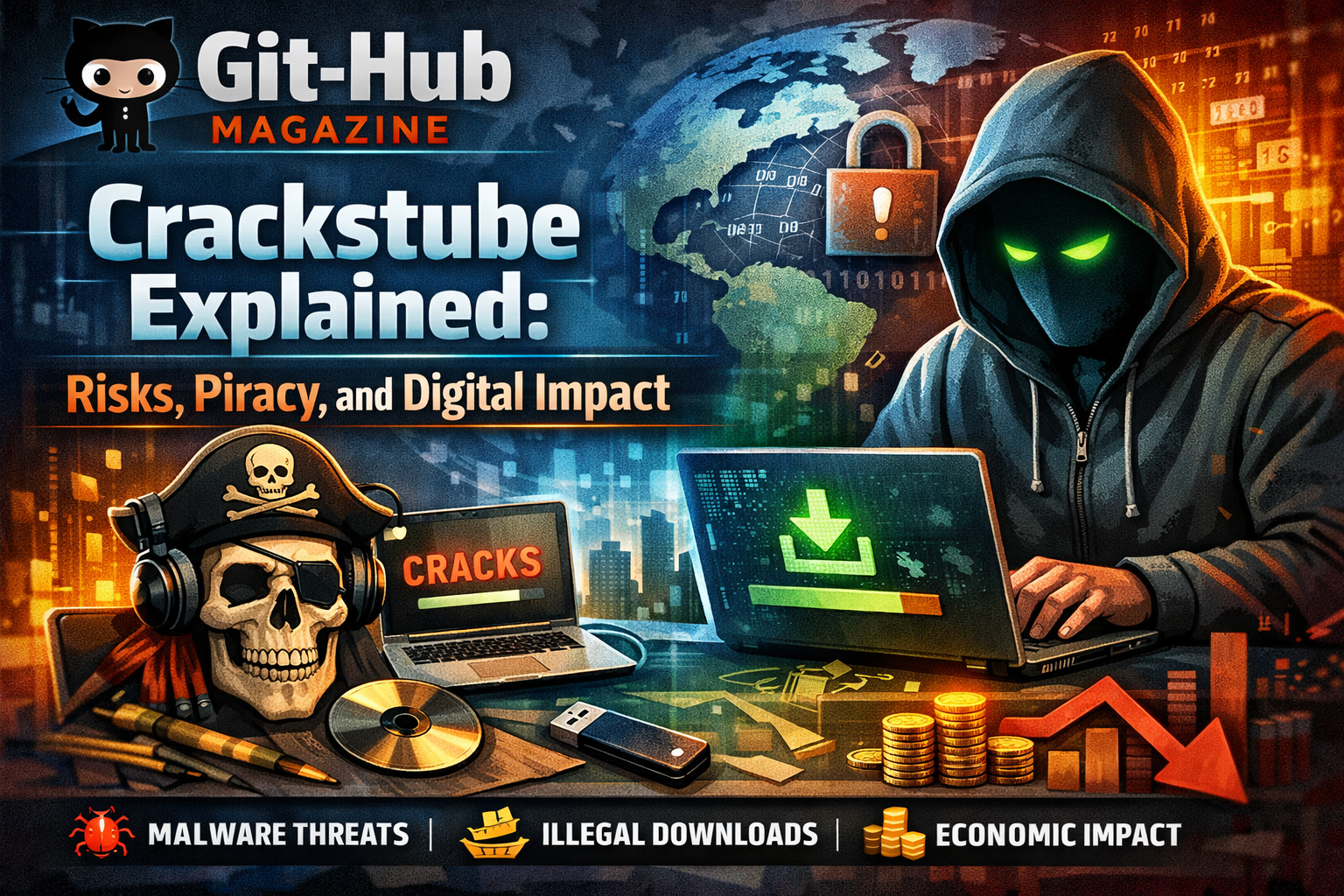
Crackstube Explained: Piracy, Risks, and Digital Reality
People searching for Crackstube usually want clarity before anything else. What is it, how does it work, and why does it keep resurfacing in tech conversations? In plain terms, Crackstube is not a single registered company or a mainstream platform. It is a name commonly used to describe a class of websites that distribute cracked software—applications altered to bypass licensing, activation, or subscription checks. These portals promise free access to paid tools and games, but they operate outside legal distribution channels and sit at the center of ongoing debates about piracy, security, and digital ethics.
Within the first moments of encountering Crackstube-style sites, users see a familiar pattern: large catalogs, popular commercial software titles, and instructions that promise full functionality without payment. That appeal is immediate, especially for students, freelancers, or users in regions where software pricing far outpaces local income. Yet the convenience masks deeper consequences. Cracked software frequently arrives without updates, official support, or security guarantees, leaving systems exposed to vulnerabilities that legitimate versions are designed to patch.
Understanding Crackstube therefore means stepping back from the temptation of “free” and examining the broader system it represents. It is a reflection of how the modern software economy—dominated by subscriptions, cloud verification, and digital rights management—has collided with long-standing internet cultures of sharing and circumvention. For readers of a technology and digital-culture publication, Crackstube is less a destination than a signal: a marker of unresolved tensions between access, ownership, innovation, and risk.
The Roots of Software Cracking and Distribution
Software cracking predates the web itself. In the earliest personal-computer era, copy protection was basic, and hobbyists routinely exchanged modified programs through physical media and bulletin board systems. As software became a commercial industry, protections grew more complex, and so did the communities dedicated to bypassing them. Cracking evolved into a technical challenge, a form of digital rebellion, and eventually a full underground economy.
With broadband internet, cracked software distribution scaled globally. What once required niche knowledge became accessible through centralized websites that indexed cracks, installers, and activation tools. Over time, names like Crackstube emerged as shorthand for these hubs. They borrowed the language of legitimate platforms—libraries, collections, channels—to present themselves as user-friendly alternatives to official stores.
This shift coincided with a major industry change. Software licensing moved from one-time purchases to recurring subscriptions tied to online authentication. While this model benefits developers through predictable revenue and continuous updates, it also increased resistance among users who felt locked into perpetual payments. Crackstube-type sites grew in that gap, offering static, unlocked versions that promised independence from subscriptions, even as they carried new forms of risk.
What Typically Defines a Crackstube-Style Platform
Although domains and designs vary, Crackstube-style sites tend to share common characteristics that distinguish them from legitimate distributors. They focus on popular paid applications, present downloads as turnkey solutions, and provide instructions to disable security checks. Transparency about ownership, hosting, or accountability is usually absent.
A practical comparison helps illustrate the difference between official software channels and cracked-software portals.
| Aspect | Official Distribution | Crackstube-Style Distribution |
|---|---|---|
| Licensing | Paid license or subscription | License bypassed |
| Updates | Automatic, verified | Manual or unavailable |
| Security | Signed and tested | Unverified, high risk |
| Support | Customer and technical support | None |
| Legal status | Lawful | Infringing |
This contrast shows why enterprises and professionals generally avoid cracked software despite its zero price. The absence of updates alone can render tools unreliable over time, while the security implications can extend far beyond a single device.
Legal Realities and Ethical Tensions
From a legal perspective, using cracked software is straightforwardly problematic. Copyright law in most jurisdictions treats software as protected intellectual property. Circumventing licensing mechanisms and distributing modified copies without permission constitutes infringement, regardless of whether money changes hands.
Ethically, the issue is more nuanced but no less consequential. Software development requires sustained investment in design, engineering, testing, and maintenance. When users bypass payment entirely, they remove the economic foundation that supports those efforts. Large corporations may absorb some losses, but independent developers and small teams often cannot.
At the same time, Crackstube’s popularity highlights real frustrations. High subscription costs, limited regional pricing, and restrictive licensing models push some users toward piracy not out of malice but necessity. The ethical debate therefore sits between two truths: creators deserve compensation, and access barriers can be genuinely exclusionary. Crackstube exists in that unresolved space.
Security Risks and Hidden Costs
The most immediate danger associated with Crackstube-style downloads is security. Cracked installers frequently require users to disable antivirus software, modify system files, or run unsigned executables. These steps create ideal conditions for malware infection. Once compromised, a system may leak credentials, personal data, or become part of a larger botnet without obvious signs.
The hidden costs extend beyond individual users. In workplaces or shared environments, a single cracked installation can introduce vulnerabilities that affect entire networks. Data breaches, ransomware incidents, and operational downtime have all been traced back to unauthorized software introduced through seemingly harmless shortcuts.
What makes these risks especially severe is the lack of accountability. There is no trusted publisher to audit, no update channel to fix discovered flaws, and no support line to call when something goes wrong. The responsibility—and the fallout—rests entirely on the user.
Cultural Drivers Behind Crackstube’s Appeal
Crackstube persists because it aligns with certain long-standing internet values: free access, technical mastery, and resistance to centralized control. For some communities, using cracked software is framed as a practical workaround rather than a moral failing. Students share tools, creators experiment with expensive software they could never otherwise afford, and hobbyists explore systems without committing to subscriptions.
Economic disparity amplifies this effect. In regions where average incomes are low and official pricing is uniform, legitimate software can represent months of wages. Crackstube-style sites fill that gap, albeit unsafely and unlawfully.
Understanding these drivers does not justify piracy, but it explains why enforcement alone has never eliminated it. As long as access remains unequal and pricing inflexible, cracked-software hubs will continue to surface.
Industry and Regulatory Responses
Developers and regulators have responded to piracy with a mix of legal, technical, and business strategies. Takedown notices and domain seizures target large distributors, while improved DRM and cloud-based verification make cracking more complex. Subscription services bundle updates, storage, and collaboration features that are difficult to replicate in static cracked versions.
At the same time, some companies have shifted toward more inclusive models. Tiered pricing, regional discounts, student licenses, and freemium tiers aim to reduce the incentive to seek cracked alternatives. These approaches acknowledge that access, not just enforcement, is central to addressing piracy.
Legitimate Alternatives to Cracked Software
For users drawn to Crackstube out of necessity rather than habit, legal alternatives exist and continue to expand. Open-source software offers powerful, community-maintained tools across fields like design, development, data analysis, and media production. Many commercial vendors provide free trials or limited versions that support learning and experimentation without long-term commitment.
Educational licenses remain one of the most effective bridges. By offering students and educators free or heavily discounted access, companies cultivate future professionals while reducing reliance on cracked copies. These pathways demonstrate that lawful access and affordability do not have to be mutually exclusive.
Structured Snapshot of the Crackstube Ecosystem
A timeline view helps place Crackstube within the broader evolution of software distribution.
| Era | Key Shift | Impact |
|---|---|---|
| Early PC era | Physical media sharing | Localized cracking |
| Internet expansion | Centralized download sites | Global distribution |
| Subscription models | Online license verification | Increased cracking demand |
| Modern response | Freemium and open source | Partial mitigation |
This progression shows that Crackstube is not an anomaly but a recurring response to how software is packaged and sold.
Expert Perspectives on Piracy and Access
Security professionals consistently warn that cracked software is among the highest-risk behaviors for individual users. Digital-rights scholars note that piracy spikes when pricing models ignore economic realities. Software developers emphasize that sustainable innovation depends on predictable revenue, not one-time circumvention.
Taken together, these views reinforce a central point: Crackstube is a symptom of systemic friction, not just a collection of rogue websites.
Takeaways
- Crackstube refers to cracked-software portals, not a single official platform.
- Using cracked software carries legal, security, and ethical risks.
- Malware and data loss are common hidden costs of piracy.
- Economic barriers and subscription fatigue fuel demand.
- Developers are responding with flexible pricing and freemium models.
- Legal alternatives reduce risk while supporting innovation.
Conclusion
Crackstube occupies a familiar yet uncomfortable place in digital culture. It represents both a demand for access and a disregard for the systems that make software creation sustainable. For users, the promise of free tools can be tempting, but the trade-offs—legal exposure, security compromise, and ethical ambiguity—are substantial. For developers and policymakers, Crackstube underscores the need to balance protection with accessibility. As the software industry continues to evolve, the long-term solution will not lie solely in enforcement or restriction, but in models that recognize global diversity in income, use cases, and expectations. Until then, Crackstube will remain a reminder that when access feels out of reach, unofficial paths inevitably emerge.
FAQs
What is Crackstube?
It is a commonly used name for websites that distribute cracked software, bypassing licenses and subscriptions.
Is using cracked software illegal?
In most countries, yes. It violates copyright and licensing laws.
Are Crackstube downloads safe?
They are high risk. Many cracked files contain malware or spyware.
Why do people still use these sites?
Cost barriers, subscription fatigue, and limited regional pricing drive demand.
What are safer alternatives?
Open-source tools, free trials, student licenses, and freemium plans.

Related Posts

What Is Open Source and How to Contribute
Sankaku Complex Explained: Culture, Controversy