
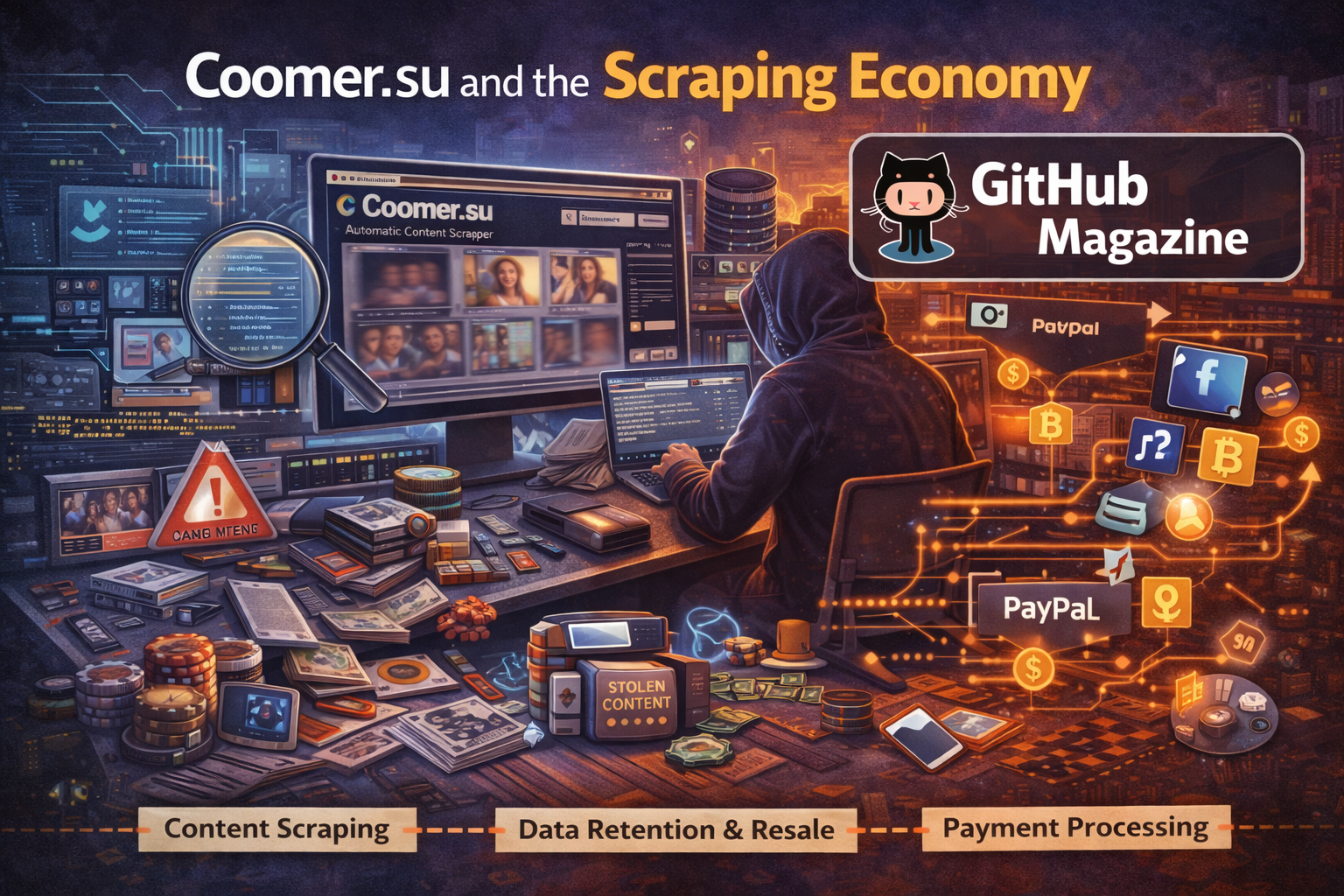
Coomer.su and the Scraping Economy
Coomer.su is widely known as a scraping and archiving website that republishes content originally hosted behind paywalls on subscription platforms, particularly creator-driven adult services. People searching for the site are typically looking to understand what it is, how it operates, whether it is legal, and why it has drawn controversy. In simple terms, Coomer.su aggregates and redistributes subscription-based media without authorization from creators, positioning itself within a gray zone of internet archiving culture and digital piracy.
The site exists within a broader ecosystem of mirror domains and scraping communities that automatically capture posts from subscription platforms and present them in searchable archives. It is frequently associated with similar domains that track creators’ uploads across multiple services. Its emergence reflects the intersection of decentralized hosting, anonymous domain registration, and automated scraping tools that make replication technically easy even when legally questionable.
Yet the conversation about Coomer.su extends beyond infringement claims. It touches on digital labor, platform monetization, copyright enforcement, and the vulnerability of creators whose income depends on subscription exclusivity. In recent years, the rapid growth of creator economies has collided with equally rapid growth in scraping infrastructure, forcing courts, platforms, and policymakers to grapple with questions that are technologically modern but legally familiar.
The Rise of the Creator Economy
The last decade transformed online content monetization. Platforms such as Patreon, OnlyFans, and Fanhouse allowed creators to bypass advertisers and earn directly from subscribers. By 2021, OnlyFans reported over 170 million registered users and more than 1.5 million creators (BBC News, 2021). Subscription-based revenue models promised autonomy and ownership.
This economic shift created a new category of digital labor. Content once distributed freely on social media became gated behind monthly paywalls. For many independent creators, particularly in adult industries, subscription income replaced traditional studio systems. That exclusivity was central to value. If subscribers could access identical content for free elsewhere, the model weakened.
The rise of scraping platforms like Coomer.su coincided with this monetization boom. Automated bots monitor public metadata, download accessible content from compromised accounts or shared links, and republish it in centralized archives. What appears to be a simple website is often part of a decentralized network designed for resilience.
The tension between monetization and replication reflects a long-standing pattern online: whenever digital content becomes valuable, parallel systems emerge to redistribute it.
How Scraping Sites Operate
Coomer.su functions primarily as an aggregator. It organizes creators’ content by username, platform, and update history. While it does not typically host original uploads, it republishes scraped files obtained through various means.
The technical mechanisms often include automated crawlers, credential sharing, or user-submitted archives. Because subscription platforms rely on authenticated sessions, scraping requires either leaked credentials or paying users who download and redistribute files.
Below is a structural overview of how such ecosystems operate:
| Component | Function | Ethical Risk |
|---|---|---|
| Automated Crawlers | Monitor updates and metadata | Systematic copyright violation |
| User Upload Portals | Allow community submissions | Incentivizes redistribution |
| Mirror Domains | Replicate site across jurisdictions | Evasion of takedowns |
| Offshore Hosting | Host in lenient jurisdictions | Limits enforcement effectiveness |
The decentralized nature of hosting complicates enforcement. Domains may shift frequently, and hosting providers may operate in regions where copyright enforcement is slow or inconsistent.
Copyright Law and Enforcement
Copyright law is not new to digital disputes. The Digital Millennium Copyright Act of 1998 established a notice-and-takedown framework that still governs U.S. online enforcement (U.S. Copyright Office, 1998). Platforms hosting user-generated content often rely on safe harbor provisions, provided they respond to takedown notices.
Scraping sites, however, frequently operate outside mainstream hosting environments. Their operators may remain anonymous. Domains are often registered through privacy services. This creates jurisdictional complexity. Even when creators submit takedown notices, mirrors may reappear within days.
Legal scholar Rebecca Tushnet has argued that enforcement mechanisms struggle when anonymity and cross-border infrastructure intersect (Tushnet, 2014). The global nature of the internet means enforcement requires cooperation across legal systems with varying standards.
Creators report significant financial harm when subscription content appears on scraping sites. Because exclusivity underpins subscription value, redistribution directly affects revenue streams.
The Human Cost for Creators
Behind technical debates lie individuals whose income depends on subscription control. Independent creators often invest heavily in production equipment, branding, and audience cultivation. For many, leaked content undermines financial stability.
In 2020 and 2021, multiple creator advocacy groups highlighted widespread scraping and piracy affecting subscription platforms. Creators described spending hours filing takedown notices, monitoring mirrors, and responding to subscriber confusion. The labor of enforcement becomes an unpaid extension of content production.
One digital rights advocate, Cory Doctorow, has observed that “platform asymmetries often leave individuals to bear enforcement burdens themselves.” That imbalance intensifies in adult industries, where stigma may limit legal recourse or public sympathy.
The emotional toll is also significant. Content intended for paying subscribers can circulate widely, eroding a sense of agency. For many creators, the issue is not simply lost income but loss of control over personal image.
The Culture of Archiving and Internet Subcultures
Supporters of scraping sites sometimes frame their activities as archiving rather than piracy. Internet archiving culture has long argued for preservation against platform volatility. Services shut down. Accounts are deleted. Content disappears.
However, archiving without consent raises ethical questions distinct from preservation of public material. Subscription platforms rely explicitly on exclusivity agreements between creator and subscriber. Scraping disrupts that contract.
Digital culture researcher Gabriella Coleman has written about how online subcultures often justify actions through ideological frameworks that prioritize access over ownership (Coleman, 2014). In the case of Coomer.su, rhetoric may blend archiving language with anti-platform sentiment.
The conflict reflects a broader ideological divide about information freedom versus creator rights. Neither perspective exists in isolation from economic realities.
Platform Responses and Countermeasures
Subscription platforms have invested in anti-piracy technology, watermarking, and legal partnerships. Some use digital fingerprinting tools that track redistributed files. Others collaborate with specialized firms to issue mass takedown requests.
The timeline below outlines major shifts in enforcement culture:
| Year | Development | Impact |
|---|---|---|
| 2016 | Expansion of subscription adult platforms | Increased creator participation |
| 2018 | Growth of automated scraping networks | Rising piracy complaints |
| 2020 | Surge in subscription use during pandemic | Rapid revenue growth |
| 2021 | Intensified anti-piracy campaigns | Expanded takedown automation |
The pandemic accelerated both creator signups and piracy rates. As more individuals relied on subscription income, the stakes increased. Platforms responded with stricter authentication controls and monitoring.
Yet enforcement remains reactive. When one mirror disappears, another can surface.
The Legal Gray Zone of Jurisdiction
International hosting complicates enforcement. If a domain is registered in one country, hosted in another, and accessed globally, determining jurisdiction can require complex legal coordination.
Scholars studying digital governance note that decentralized hosting exploits differences in national enforcement priorities. Some jurisdictions may not prioritize copyright claims related to adult content. Others lack robust notice-and-takedown systems.
This fragmentation allows scraping ecosystems to persist even under repeated pressure. The legal tools exist, but their cross-border application is inconsistent.
As digital law evolves, policymakers debate whether stronger international frameworks are necessary. For now, enforcement remains patchwork.
Economic Impact on the Creator Economy
The creator economy thrives on perceived scarcity. Subscription models promise unique access. When redistribution occurs at scale, perceived scarcity declines.
Economic analysts emphasize that piracy rarely eliminates demand entirely, but it can alter pricing power. If free alternatives exist, subscription retention may weaken.
For creators with modest subscriber bases, even small revenue losses matter. Unlike large studios, independent creators lack diversified income streams. Their livelihood often depends on consistent monthly subscriptions.
The long-term sustainability of subscription platforms depends on effective content protection. Without it, trust erodes between platform and creator.
Takeaways
- Coomer.su operates as a scraping and redistribution site targeting subscription-based content.
- Its existence reflects broader tensions between digital replication and monetized exclusivity.
- Copyright enforcement struggles against anonymous, cross-border hosting.
- Creators bear financial and emotional burdens when content is redistributed.
- Platform countermeasures are evolving but remain reactive.
- The debate blends legal, ethical, economic, and cultural dimensions.
Conclusion
Coomer.su represents more than a single website. It symbolizes the friction between digital abundance and creator ownership in the subscription era. Technologically, scraping is simple. Legally, it is contested. Economically, it threatens fragile independent revenue streams. Ethically, it divides those who prioritize open access from those who defend creative labor rights.
The broader lesson extends beyond adult subscription platforms. As more creators rely on gated content models, the stakes of digital replication grow. Policymakers, platforms, and creators must navigate a landscape where copying is effortless and enforcement uneven. Whether the future tilts toward stronger protections or continued cat-and-mouse cycles remains uncertain. What is clear is that the architecture of the internet ensures this conflict will not disappear quietly.
FAQs
What is Coomer.su?
It is a scraping website that republishes subscription-based content from creator platforms without authorization.
Is it legal to access scraping sites?
Legality varies by jurisdiction, but redistribution of copyrighted content without permission generally violates copyright law.
Why do such sites persist?
They often use anonymous registration, offshore hosting, and mirror domains to evade enforcement.
How do creators respond to scraping?
Many file takedown notices, use watermarking tools, and work with anti-piracy services.
Do scraping sites affect subscription platforms?
Yes. Redistribution can reduce exclusivity, which weakens subscription-based revenue models.

Related Posts

Framevuerk Review for Vue Developers

Open Finance Brazil News and Analysis