Chateaubriand Steak History and Cooking Guide
I often think of Chateaubriand as one of those rare dishes where culinary technique, cultural prestige, and historical storytelling meet on a single plate. At its simplest, Chateaubriand is a thick center-cut portion of beef tenderloin prepared carefully to preserve tenderness and flavor. Yet the dish represents far more than a luxurious steak. It reflects centuries of culinary tradition, the rise of French haute cuisine, and the evolution of fine dining around the world.
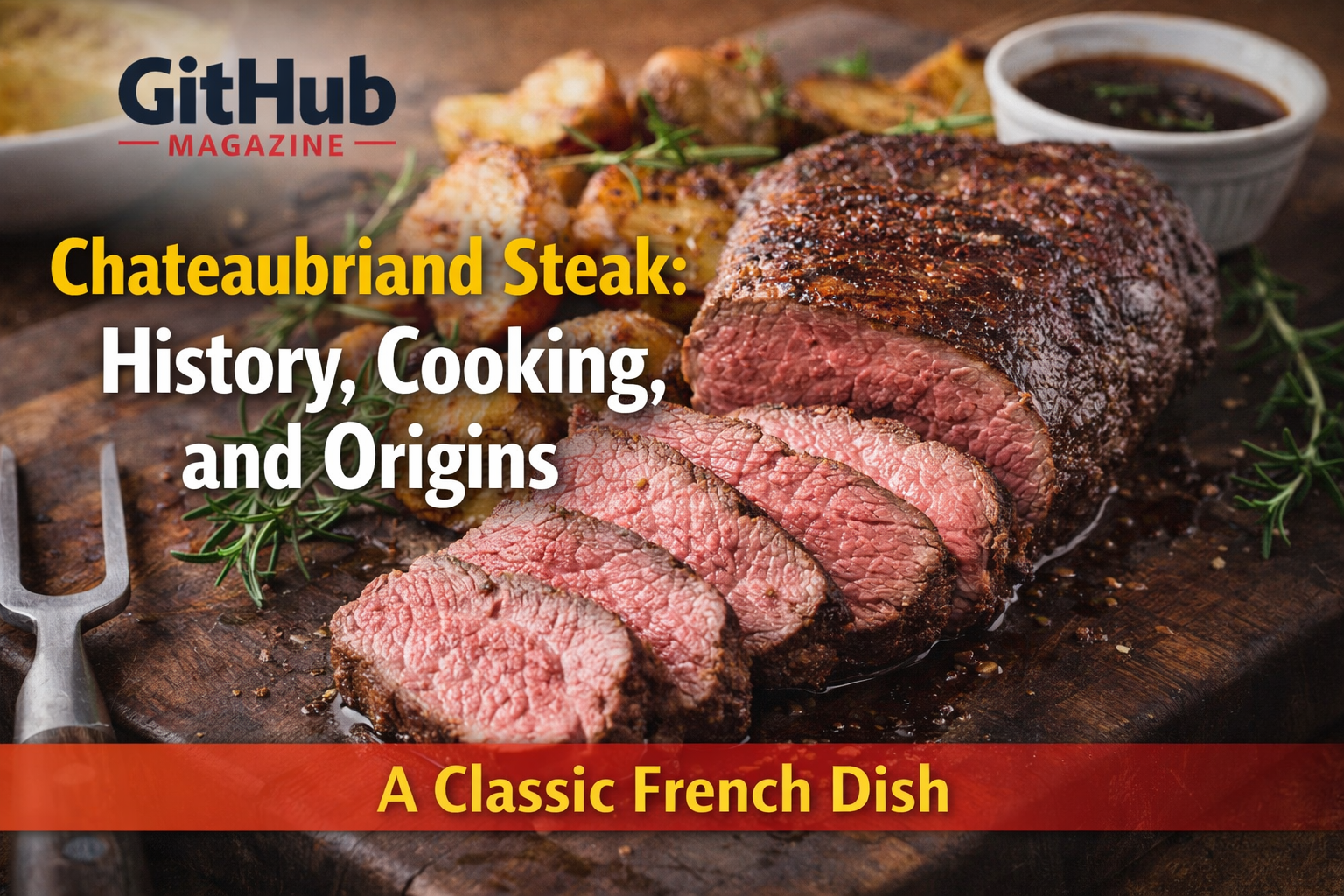
For diners searching for what Chateaubriand truly is, the answer appears immediately in its defining qualities. The dish consists of a large center section of beef tenderloin, typically cooked rare to medium rare, sliced and served with rich sauces and elegant side dishes. It is often prepared for two people, emphasizing both indulgence and shared dining. The cut’s extraordinary tenderness comes from the fact that the tenderloin muscle performs very little physical work in the animal, giving the meat its famously delicate texture.
The story behind the dish traces back to early nineteenth-century France and to François-René de Chateaubriand, a writer, diplomat, and influential political figure. According to culinary history, his chef created the dish in his honor, roasting a thick portion of tenderloin in a technique designed to protect the center of the meat while cooking.
Over time the preparation evolved, but the reputation remained. Chateaubriand became associated with elegant restaurants, refined dining rituals, and celebrations. Today the name continues to evoke luxury and craftsmanship in kitchens and steakhouses across the world.
Aristocratic Origins in Romantic-Era France
The history of Chateaubriand begins in the social and cultural environment of early nineteenth-century France. This was a time when dining had become an important expression of wealth, culture, and intellectual life. Influential figures hosted elaborate meals where food served not only as nourishment but also as a demonstration of refinement.
François-René de Chateaubriand himself was one of the leading writers of the Romantic movement. Born in 1768, he became known for literary works that explored emotion, memory, and the human relationship with nature. At the same time he held diplomatic positions that placed him among the most prominent personalities of his era.
In that world, chefs were expected to innovate constantly. Culinary creativity was part of aristocratic identity. The dish that would eventually bear Chateaubriand’s name reportedly originated with his personal chef, Montmireil. The chef prepared a thick piece of beef tenderloin by placing it between two thinner cuts of meat during roasting.
The outer cuts absorbed the intense heat of the fire, protecting the center portion from overcooking. After roasting, the protective outer pieces were discarded, leaving behind a perfectly tender interior roast. The result was a dish that combined simplicity with technical sophistication.
Over time the cooking method became less important than the cut itself. The name Chateaubriand gradually came to describe the central section of the tenderloin used for the preparation. This shift illustrates how culinary language evolves. A technique once associated with a particular chef eventually became a standardized name for one of the most luxurious steak presentations.
Understanding the Cut of Meat
To fully appreciate Chateaubriand, it helps to understand the anatomy of the tenderloin. The tenderloin runs along the inside of the animal’s spine and remains relatively inactive throughout the animal’s life. Because the muscle experiences minimal movement, the fibers remain fine and delicate.
This lack of physical stress produces meat that is exceptionally tender. Unlike cuts from the shoulder or leg, which develop stronger muscle fibers and deeper flavor through movement, the tenderloin offers a buttery texture that almost melts when cooked properly.
Chateaubriand uses the thickest center portion of this tenderloin. The size of the cut makes it suitable for roasting or thick grilling rather than quick pan cooking. Its thickness allows chefs to sear the exterior while maintaining a rosy interior.
The distinctive qualities of Chateaubriand can be summarized clearly.
| Feature | Description |
|---|---|
| Cut location | Center portion of beef tenderloin |
| Average weight | Approximately 400 to 600 grams |
| Texture | Extremely tender and fine-grained |
| Serving size | Typically designed for two diners |
| Cooking preference | Rare to medium rare |
Because the cut is relatively lean, it relies heavily on precise cooking and complementary sauces to enhance flavor. The success of the dish depends on maintaining moisture while building a flavorful crust on the outside.
The Traditional Cooking Technique
Preparing Chateaubriand correctly requires careful control of heat and timing. The technique developed in classical French kitchens remains influential even today.
The process usually begins with a high-temperature sear. The steak is placed in a hot pan or on a grill where the surface quickly browns. This stage creates the caramelized crust that gives the dish its depth of flavor.
After searing, the steak finishes cooking at a lower temperature. This slower stage allows heat to move gradually through the meat without burning the exterior. The goal is an evenly cooked interior with a warm pink center.
Once the steak reaches the desired temperature, it must rest before slicing. Resting allows juices to redistribute throughout the meat, preventing them from spilling out when the steak is cut.
The essential steps of the process are often described as follows.
| Step | Purpose |
|---|---|
| Initial searing | Develops a flavorful browned crust |
| Controlled roasting | Ensures even internal cooking |
| Resting period | Preserves moisture inside the meat |
| Final slicing | Prepares the steak for presentation |
Historically, Chateaubriand was sometimes served on a heated wooden plank or platter surrounded by vegetables and decorative potatoes. This presentation emphasized both visual elegance and the theatrical nature of fine dining.
The Role of Sauces in the Dish
While the tenderloin itself provides exceptional texture, sauces play a central role in defining the character of Chateaubriand. Because the cut is relatively lean, the sauce introduces richness and complexity.
One traditional accompaniment is Chateaubriand sauce. This preparation often includes shallots, white wine, herbs, and a concentrated meat glaze known as demi-glace. Butter and lemon juice are added to create a balanced flavor that enhances the meat without overwhelming it.
Another widely recognized pairing is Béarnaise sauce. This classic French emulsion combines egg yolks, clarified butter, vinegar, tarragon, and shallots. Its silky texture and herbal brightness complement the delicate nature of tenderloin.
Culinary experts often emphasize the relationship between sauce and steak. A well-prepared sauce should enhance the natural flavor of the meat rather than dominate it. The balance between richness and acidity helps maintain harmony on the plate.
This philosophy reflects a broader principle in French cuisine: strong ingredients are paired with sauces that highlight their best qualities.
From French Dining Rooms to Global Steakhouses
As French culinary influence spread throughout Europe and North America during the nineteenth and twentieth centuries, Chateaubriand traveled with it. Chefs trained in French techniques opened restaurants abroad and introduced diners to dishes that had once belonged primarily to aristocratic households.
In the United States, the dish became particularly popular during the mid-twentieth century. Elegant steakhouses and hotel dining rooms often presented Chateaubriand as a specialty entrée. The steak was sometimes carved tableside, allowing guests to watch the final stage of preparation.
This theatrical presentation transformed the meal into a shared experience. Diners did not simply eat the dish; they participated in a ritual of service and hospitality.
Over time the dish became associated with romantic dinners, anniversaries, and celebratory occasions. Its size made it ideal for sharing, reinforcing the idea that fine dining could be both luxurious and social.
Even as global culinary trends evolved, Chateaubriand retained its status as a symbol of refined dining.
Cultural Meaning and Culinary Prestige
Food often carries symbolic meaning beyond taste. Chateaubriand represents more than a steak because it embodies a tradition of culinary excellence.
The dish reflects the legacy of French haute cuisine, a culinary philosophy that emphasizes technique, presentation, and balance. During the nineteenth century French chefs helped establish many of the professional cooking standards still used in restaurants today.
As these standards spread internationally, certain dishes became ambassadors of French culinary prestige. Chateaubriand was one of them.
The steak’s association with elegance and sophistication continues to shape its reputation. Many diners order it not only for its flavor but also for the experience it promises. The ritual of slicing, sharing, and savoring the dish reinforces its role as a centerpiece of celebratory meals.
In this way, Chateaubriand occupies a unique position in culinary culture. It bridges the gap between history, craftsmanship, and the pleasure of dining.
Modern Interpretations by Contemporary Chefs
Although the traditional preparation remains widely respected, contemporary chefs often reinterpret Chateaubriand using modern techniques.
One increasingly popular method is sous-vide cooking. In this approach the steak is sealed in a vacuum bag and cooked slowly in a precisely controlled water bath. After reaching the desired internal temperature, the meat is briefly seared to create a crust.
This technique offers remarkable consistency because it prevents overcooking and ensures uniform doneness throughout the steak.
Other chefs experiment with different sauces or accompaniments. Mushroom reductions, peppercorn sauces, herb butters, and seasonal vegetables often appear alongside the classic preparation.
Despite these innovations, the fundamental philosophy of the dish remains unchanged. The focus continues to be on highlighting the tenderness and natural flavor of the beef.
Modern interpretations therefore build upon tradition rather than replacing it.
Chateaubriand Compared With Filet Mignon
Because both cuts come from the tenderloin, many diners confuse Chateaubriand with filet mignon. The two steaks share the same source but differ in size, presentation, and dining context.
Filet mignon is typically served as an individual steak. It is smaller, thinner, and cooked quickly. Chateaubriand, by contrast, is a larger centerpiece cut designed to be shared between two diners.
The comparison can be summarized clearly.
| Feature | Chateaubriand | Filet Mignon |
|---|---|---|
| Portion size | Large cut designed for two | Single-person steak |
| Thickness | Very thick center cut | Moderately thick |
| Presentation | Usually sliced before serving | Served whole |
| Dining context | Fine-dining centerpiece | Standard steak entrée |
Understanding this distinction helps explain why Chateaubriand is often associated with special occasions and formal dining environments.
Why Chateaubriand Is Considered a Luxury Dish
Several factors contribute to the premium status of Chateaubriand.
First, the tenderloin itself represents a small portion of the entire animal. Only a limited number of servings can be produced from each cut of beef, which increases its value.
Second, the preparation requires skill and precision. Achieving the correct balance between seared exterior and tender interior demands careful temperature control.
Third, the dish is usually served in high-end dining environments where presentation and service elevate the experience. Tableside carving, elegant plating, and classic sauces all contribute to the perception of luxury.
The combination of rarity, craftsmanship, and tradition ensures that Chateaubriand continues to command high prices and high expectations.
Key Takeaways
• Chateaubriand originated in nineteenth-century France and is named after the writer and diplomat François-René de Chateaubriand.
• The dish uses the thick center portion of beef tenderloin known for its exceptional tenderness.
• Traditional cooking methods involve searing followed by gentle roasting to preserve moisture.
• Classic sauces such as Béarnaise or wine reductions enhance the flavor of the lean cut.
• The dish became a symbol of luxury dining in twentieth-century steakhouses.
• Modern chefs experiment with techniques like sous-vide while maintaining traditional principles.
Conclusion
Chateaubriand remains one of the most enduring symbols of refined culinary tradition. What began as a chef’s tribute to a prominent French writer evolved into a global icon of elegant dining. The dish reflects centuries of gastronomic knowledge, from the precise handling of tenderloin to the careful balance of sauces and presentation.
For me, the fascination of Chateaubriand lies in its ability to combine simplicity with sophistication. At its heart it is simply beef prepared with care. Yet the history behind the dish, the craftsmanship required to cook it properly, and the ritual of sharing it transform that simplicity into something extraordinary.
Even in an era defined by rapidly changing food trends, Chateaubriand retains its timeless appeal. Restaurants continue to serve it as a centerpiece dish for celebrations, and chefs continue to refine its preparation.
The dish endures because it represents the essence of great cooking: respect for ingredients, mastery of technique, and the joy of bringing people together around a memorable meal.
FAQs
What is Chateaubriand made from
Chateaubriand comes from the center section of the beef tenderloin. This portion is extremely tender and usually thick enough to serve two people.
How is Chateaubriand usually cooked
The steak is typically seared at high heat and then finished in an oven or over lower heat until the interior reaches rare or medium rare.
Why is Chateaubriand served for two
The cut is thicker and larger than standard steaks. Restaurants traditionally present it as a shared dish for two diners.
What sauces are commonly served with Chateaubriand
Classic accompaniments include Béarnaise sauce, wine reductions, or traditional Chateaubriand sauce made with herbs and shallots.
Is Chateaubriand the same as filet mignon
No. Both come from the tenderloin, but filet mignon is a smaller individual steak while Chateaubriand is a larger centerpiece cut.

Related Posts

Vitamin D and Modern Health Science

Surviving Dejon and the Mystery of Viral Stories