
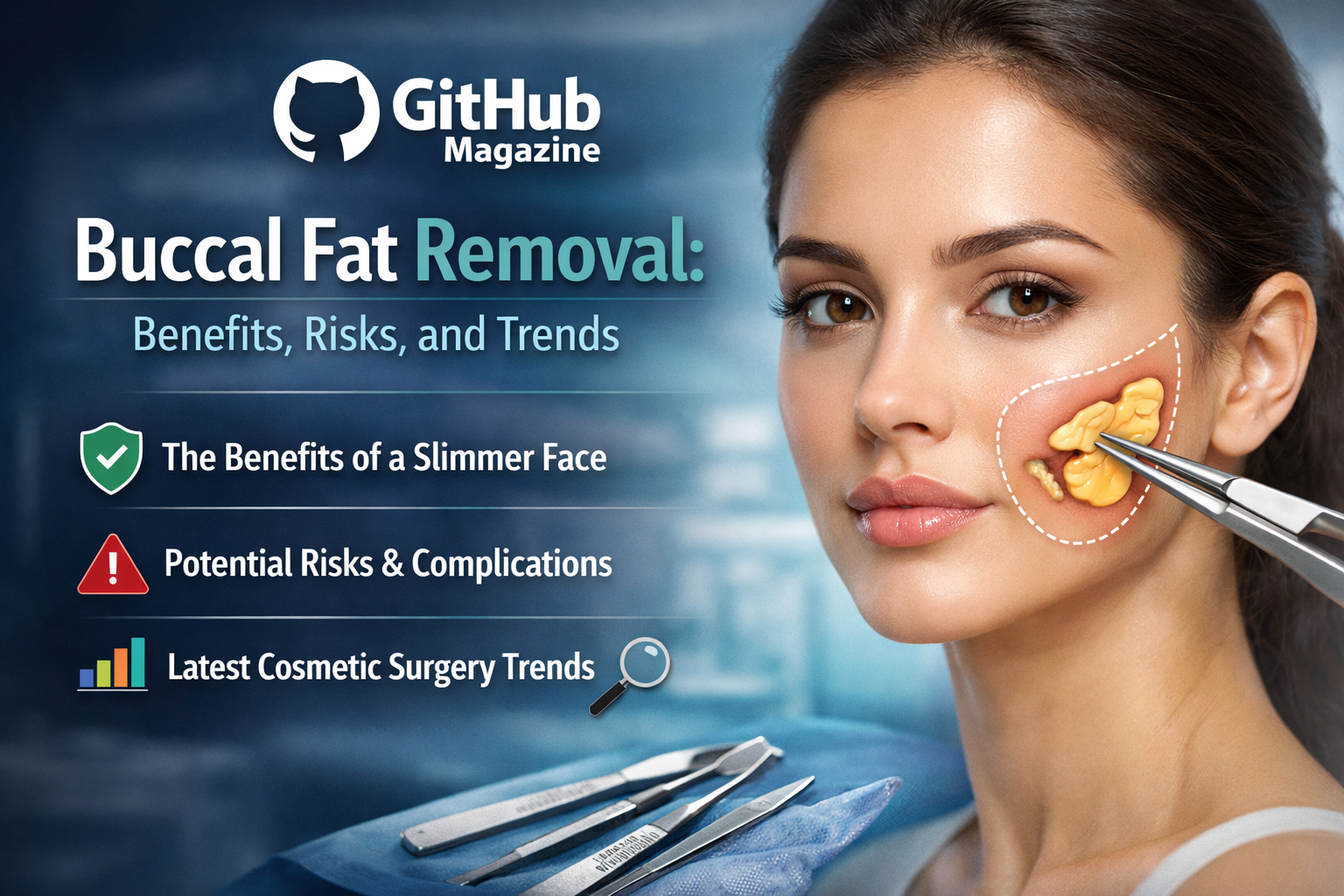
Buccal Fat Removal: Benefits, Risks, and Trends
I often begin with the same question many people quietly ask themselves while scrolling through images of sculpted faces online: what exactly is buccal fat removal, and why has it become so popular? Buccal fat removal is a cosmetic surgical procedure that removes fat pads from the lower cheeks to create a slimmer, more contoured facial appearance. Within moments of exploring the topic, it becomes clear that while the procedure itself is relatively simple, the decision to undergo it is anything but.
In the first glance, the appeal is straightforward. The surgery promises sharper cheekbones, a defined jawline, and a refined facial silhouette. It is typically performed as an outpatient procedure, with no visible scars and a relatively short recovery period. Yet beneath that simplicity lies a deeper conversation about permanence, aging, and identity.
What draws people toward buccal fat removal is not merely aesthetics, but a desire to align their appearance with modern ideals of beauty. In a world shaped by high-definition cameras and curated digital personas, the face has become a focal point of self-expression. Buccal fat removal offers control over that expression, but it also raises questions about how far one should go to achieve it.
Understanding Buccal Fat and Facial Anatomy
I find it essential to first understand what buccal fat actually is before considering its removal. Buccal fat pads are naturally occurring pockets of fat located deep within the cheeks, positioned between facial muscles. They play a structural role, contributing to facial fullness and supporting functions like chewing and facial movement.
Unlike surface-level fat, buccal fat does not significantly change with weight fluctuations. This means that even individuals with low body fat may still have fuller cheeks due to genetics. This characteristic is often what leads people to consider surgical removal.
Medical experts emphasize that buccal fat is not excess tissue but a normal component of facial anatomy. It contributes to a youthful appearance, particularly in early adulthood. As time passes, natural aging leads to a gradual loss of facial volume, especially in the midface region.
Understanding this natural progression is crucial. Removing buccal fat early in life may enhance contours initially, but it can also amplify hollowing later. The decision to alter this structure should be grounded in both anatomical awareness and long-term thinking.
The Rise of Buccal Fat Removal in Modern Culture
I have observed how buccal fat removal has transitioned from a relatively obscure procedure to a widely discussed trend. While it has existed for years, its visibility has grown significantly in recent times, largely due to social media and celebrity culture.
Digital platforms have played a major role in shaping beauty standards. Images of sharply contoured faces circulate widely, often setting unrealistic expectations. Many individuals now seek to replicate these looks, sometimes bringing filtered images as references during consultations.
The influence of public figures has also contributed to the procedure’s rise. Whether openly discussed or speculated, the association between celebrities and sculpted facial features has fueled curiosity and demand.
Another factor is the increased self-awareness brought on by video calls and constant digital exposure. People now see their faces more frequently and from different angles, leading to heightened scrutiny. This environment has made subtle facial changes feel more significant, pushing procedures like buccal fat removal into mainstream consideration.
Procedure Overview: What Actually Happens
I like to break down the procedure step by step, as its simplicity often surprises people. Buccal fat removal is typically performed under local anesthesia, sometimes with sedation, and usually takes less than an hour.
| Step | Description | Duration |
|---|---|---|
| Consultation | Facial assessment and candidacy evaluation | 30–60 minutes |
| Incision | Small incision inside the cheek | Few minutes |
| Fat Removal | Buccal fat pad gently extracted | 20–30 minutes |
| Closure | Dissolvable sutures placed | 10 minutes |
| Recovery | Swelling subsides over weeks | 2–6 weeks |
The surgeon makes a small incision inside the mouth, ensuring no external scarring. Through this incision, a portion of the buccal fat pad is carefully removed. The area is then closed with dissolvable stitches.
Recovery is generally smooth, with most individuals returning to daily activities within a week. Swelling may persist for several weeks, and final results become visible gradually as the face settles into its new contour.
Despite its straightforward nature, the procedure requires precision. Removing too much fat can lead to an overly hollow appearance, which may be difficult to correct later.
Risks, Complications, and Long-Term Effects
I cannot overlook the risks associated with buccal fat removal, even though it is considered a low-risk procedure. Like all surgeries, it carries potential complications that patients should fully understand.
| Risk | Explanation | Frequency |
|---|---|---|
| Infection | Rare due to intraoral incision | Low |
| Nerve Damage | May affect facial movement | Very rare |
| Asymmetry | Uneven fat removal | Moderate risk |
| Overcorrection | Excessive hollowing | Increasing concern |
| Aging Acceleration | Premature gaunt appearance | Long-term |
One of the most significant concerns is overcorrection. Removing too much fat can create a sunken look that may become more pronounced with age. Since facial fat naturally decreases over time, early removal can accelerate visible aging.
Another issue is asymmetry, where uneven removal leads to imbalanced facial contours. While experienced surgeons take precautions, no procedure is entirely free of risk.
Long-term outcomes remain a key consideration. Unlike temporary treatments, buccal fat removal is permanent. This permanence requires careful planning and realistic expectations.
Who Is an Ideal Candidate?
I often notice that not everyone seeking buccal fat removal is suited for it. Ideal candidates are typically individuals with naturally fuller cheeks who desire subtle contouring rather than dramatic transformation.
Suitable candidates generally include healthy adults with thicker lower cheek fat and stable expectations. They understand that the goal is refinement, not complete facial alteration.
On the other hand, individuals with already narrow or thin faces may not benefit from the procedure. In such cases, removing fat can create an aged or overly gaunt appearance.
Age also plays a role. Older individuals experiencing natural fat loss may not be ideal candidates, as further reduction could exaggerate signs of aging.
The most important factor is thoughtful decision-making. Patients should pursue the procedure for personal reasons, not external pressure or fleeting trends.
Cost and Accessibility
I have found that the cost of buccal fat removal varies depending on location, surgeon expertise, and facility standards.
| Region | Average Cost (USD) |
|---|---|
| United States | $2,000–$5,000 |
| United Kingdom | $2,500–$6,000 |
| South Asia | $1,000–$3,000 |
| Middle East | $2,000–$4,500 |
Because it is considered a cosmetic procedure, insurance typically does not cover it. Additional expenses may include consultation fees, anesthesia, and follow-up visits.
The rise of medical tourism has made the procedure more accessible, with patients traveling abroad for lower costs. However, this approach requires careful consideration of safety standards and postoperative care.
Accessibility has increased, but so has the responsibility to make informed choices. Cost should never outweigh safety and expertise.
Ethical Questions and Beauty Standards
I often reflect on the broader implications of buccal fat removal beyond the operating room. The procedure is closely tied to evolving beauty standards, many of which are shaped by digital culture.
The preference for hollow cheeks and sharp contours often aligns with specific aesthetic ideals. This raises questions about cultural influence and whether such trends promote diversity or uniformity in appearance.
Younger individuals, in particular, may feel pressure to conform to these ideals. The normalization of cosmetic procedures through social media has lowered the barrier to entry, making surgery seem routine rather than significant.
There is also an ethical responsibility on the part of medical professionals. Surgeons must balance patient desires with long-term well-being, ensuring that procedures are appropriate and beneficial.
Ultimately, buccal fat removal is not just about appearance. It reflects deeper conversations about identity, self-perception, and the influence of modern media.
Expert Perspectives on the Trend
I have come across a range of expert opinions that highlight both the benefits and concerns surrounding the procedure. Some surgeons emphasize its ability to create refined, natural-looking contours when performed conservatively.
Others caution against its growing popularity as a trend-driven choice. They stress the importance of considering how the face will change over time, rather than focusing solely on immediate results.
A recurring theme among professionals is the need for restraint. The goal should be enhancement, not transformation, and decisions should be guided by long-term outcomes rather than short-term aesthetics.
These perspectives reinforce the idea that buccal fat removal is as much an art as it is a science. The best results come from careful planning, skilled execution, and a deep understanding of facial anatomy.
Takeaways
- Buccal fat removal permanently alters facial structure by removing deep cheek fat pads
- The procedure is minimally invasive but carries long-term aesthetic implications
- Ideal candidates have naturally fuller faces and realistic expectations
- Risks include asymmetry, overcorrection, and accelerated facial aging
- Social media and celebrity influence have driven its recent popularity
- Ethical concerns focus on beauty standards and informed decision-making
Conclusion
I return to the central idea that buccal fat removal is both simple and complex at the same time. The procedure itself may take less than an hour, but the decision to undergo it carries implications that last a lifetime.
It offers a solution for those seeking defined facial contours, yet it also requires a careful understanding of aging and individuality. What appears desirable today may not hold the same appeal decades later.
The growing popularity of this procedure reflects broader cultural shifts in how beauty is perceived and pursued. As these standards continue to evolve, so too must the conversations around them.
In the end, buccal fat removal is not just about changing a face. It is about navigating the delicate balance between personal choice, medical responsibility, and the ever-changing definition of beauty.
FAQs
What is buccal fat removal?
It is a cosmetic procedure that removes fat pads from the cheeks to create a slimmer, more contoured facial appearance.
Is the procedure permanent?
Yes, the removed fat does not return, making the results permanent.
How long does recovery take?
Most individuals recover within two to three weeks, though full results may take several months.
Can it make you look older?
Yes, especially over time, as natural fat loss combined with removal may create a hollow appearance.
Who should avoid it?
People with thin faces or those already experiencing facial volume loss are generally not ideal candidates.

Related Posts

Primal Queen: Inside the Viral Women’s Wellness Supplement

Navy Aviation Electrician Career Overview