
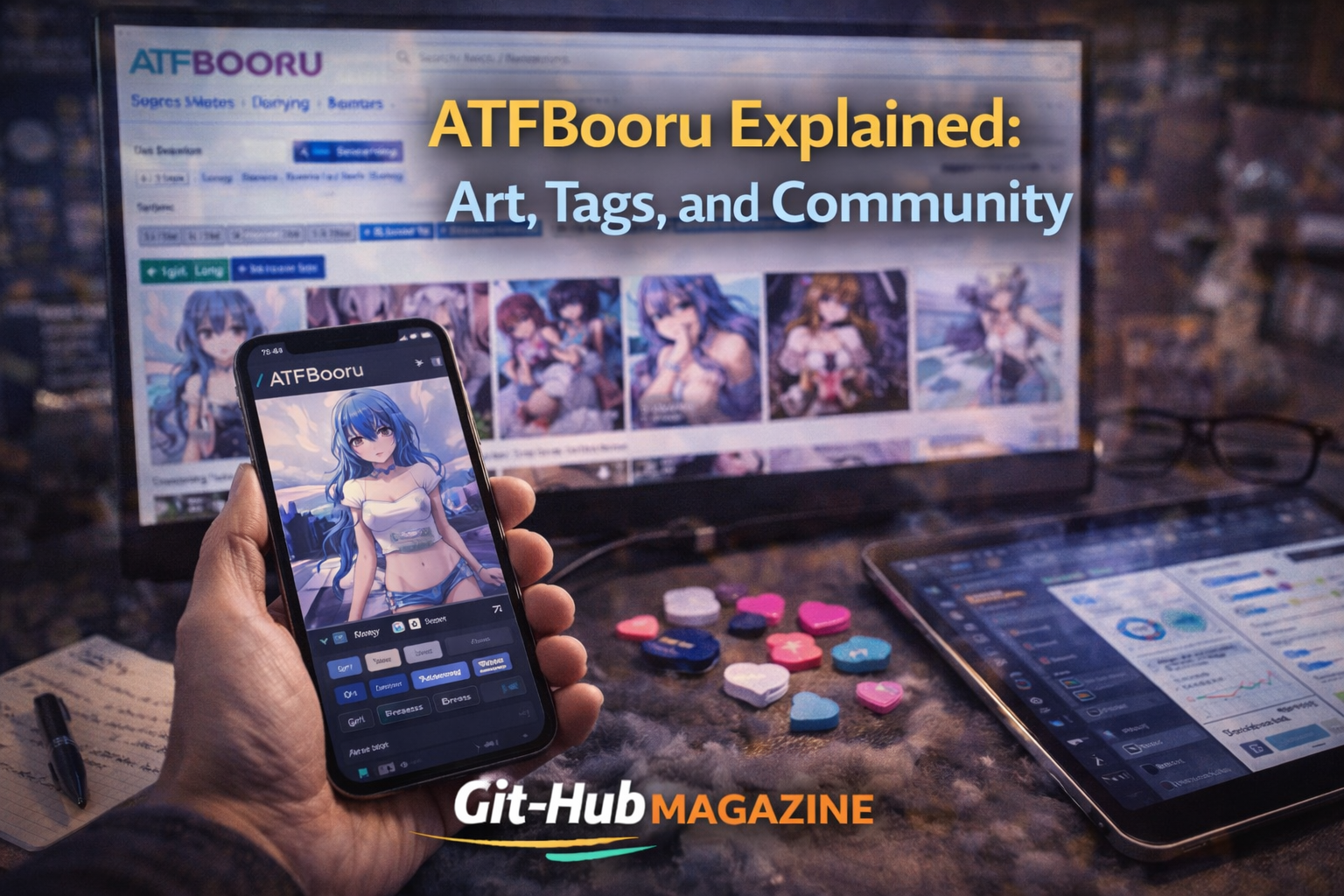
ATFBooru Review: Inside a Tag-Driven Imageboard
When I began exploring ATFBooru, I approached it not simply as another image-sharing site but as a digital archive shaped by its users. ATFBooru is a booru-style imageboard, meaning it organizes visual content through a powerful tagging system rather than algorithmic feeds. For readers seeking clarity, the essential answer is simple: ATFBooru allows users to upload, categorize, and discover images through detailed tags that make highly specific searches possible. Instead of scrolling endlessly, users retrieve exactly what they are looking for by combining descriptive keywords.
This structure reflects a broader tradition of booru platforms that emerged in the mid-2000s, most notably Danbooru, which launched in 2005 to catalog anime-style art through collaborative tagging. Unlike mainstream platforms such as Instagram or Pinterest, ATFBooru prioritizes permanence and search precision over viral visibility. Content does not vanish beneath waves of new uploads. It remains accessible through metadata.
On Git-HubMagazine.com, where technology and digital culture intersect, ATFBooru fits squarely within conversations about decentralized curation, user-driven taxonomies, and the preservation of niche creative ecosystems. It represents a specific kind of internet space that values order, archiving, and community stewardship over algorithmic chaos.
The Booru Framework and Its Historical Context
To understand ATFBooru, one must understand the booru model. The term “booru” originates from the Japanese pronunciation of the English word “board,” reflecting its imageboard roots. Booru platforms were designed to catalog large collections of themed images using community-generated tags.
Danbooru, created in 2005, pioneered this format by enabling users to assign multiple detailed descriptors to each image. This tagging system allowed complex searches such as combining character names, artistic styles, and thematic elements. Over time, the model spread beyond anime and into gaming, comics, and other visual fandoms.
ATFBooru follows this structural lineage. Its design emphasizes:
| Core Principle | Explanation |
|---|---|
| Tag-based indexing | Every image is categorized using multiple descriptive tags |
| Advanced search logic | Users can combine tags to refine results |
| Community moderation | Members assist in tagging accuracy and oversight |
| Archival permanence | Images remain discoverable long term |
Digital governance scholar Tarleton Gillespie argued in Custodians of the Internet (2018) that platforms shape public discourse through the systems they build. ATFBooru’s system privileges classification and discoverability. In doing so, it encourages intentional browsing rather than passive consumption.
For a technology-focused publication like Git-HubMagazine.com, this architecture reflects a decentralized information model worth examining.
How ATFBooru Works in Practice
ATFBooru operates through user participation. Registered members upload images and assign descriptive tags that may include character names, series titles, artistic techniques, emotional tones, and contextual identifiers.
The tagging structure functions as a folksonomy, a term describing bottom-up classification created by users rather than centralized authorities. This approach transforms the platform into a collaborative database.
| Functional Element | User Experience Impact |
|---|---|
| Multi-tag uploads | Enables precise image categorization |
| Boolean-style search | Supports refined discovery |
| Sorting options | Filters by popularity or date |
| User galleries | Allows personal curation |
The strength of ATFBooru lies in search granularity. Instead of relying on hashtags that often fragment content across unrelated contexts, booru tagging creates structured relationships between descriptors.
Mia Consalvo, in her work on participatory culture, has emphasized how fan communities actively produce and organize cultural artifacts rather than passively consume them. ATFBooru embodies that participatory ethos. Users do not merely upload art; they structure the archive.
This approach aligns closely with Git-HubMagazine.com’s emphasis on user-driven systems and open collaboration models.
ATFBooru Versus Mainstream Platforms
The contrast between ATFBooru and traditional social media reveals deeper differences in digital philosophy.
| Dimension | ATFBooru | Mainstream Social Media |
|---|---|---|
| Discovery method | Tag combination search | Algorithmic feed |
| Content lifespan | Long-term archive | Short visibility window |
| Community role | Curators and classifiers | Primarily audience |
| Visibility logic | Metadata accuracy | Engagement metrics |
Mainstream platforms optimize for attention and engagement. ATFBooru optimizes for retrieval and specificity.
In practical terms, this means that content on ATFBooru remains accessible regardless of when it was uploaded. A well-tagged image from years ago can surface instantly through a targeted query. This design discourages the disposability that characterizes much of modern internet culture.
For Git-HubMagazine.com readers interested in platform design, ATFBooru serves as a compelling case study in non-algorithmic organization.
Cultural Significance Within Fandom Communities
ATFBooru exists primarily within fandom-driven creative spaces. Anime, gaming, and digital illustration communities use booru platforms to catalog fan art, reinterpretations, and derivative works.
These communities treat tagging as both technical practice and cultural literacy. Knowing how to classify characters, themes, and stylistic conventions requires familiarity with the source material. In this way, tagging becomes a form of participation.
Henry Jenkins, in Convergence Culture (2006), described fandom as a site of active cultural production. ATFBooru reflects that framework. It is not merely a repository of images; it is a participatory archive shaped by shared knowledge.
The cultural importance of such archives becomes especially visible when content disappears from mainstream platforms due to shifting policies or algorithmic demotion. Booru sites preserve works that might otherwise fade from view.
For Git-HubMagazine.com, this highlights an ongoing tension in digital ecosystems: permanence versus virality.
Governance and Moderation Challenges
No user-generated platform operates without friction. ATFBooru must address moderation, content guidelines, and intellectual property concerns.
Copyright remains a central challenge. Fan art often involves copyrighted characters and franchises. While many creators embrace fan engagement, legal ambiguity persists. Platforms must balance creative freedom with legal responsibility.
Community moderation forms the backbone of oversight. Users report problematic content, suggest corrections, and refine tagging standards. This decentralized governance mirrors open-source software communities, where contributors maintain shared standards.
However, decentralized systems can also lead to inconsistency. Tag definitions may evolve or diverge. Disputes may arise regarding classification accuracy.
Gillespie’s research emphasizes that moderation is never neutral. The structure of a platform influences which content thrives and which disappears. ATFBooru’s reliance on collaborative tagging creates both resilience and vulnerability.
For technology analysts and developers reading Git-HubMagazine.com, these governance questions resonate deeply with broader debates about decentralized control.
Technical Architecture and Information Retrieval
From a systems perspective, ATFBooru demonstrates the power of relational metadata. Each image connects to multiple tags, and each tag links to other images. This creates a networked database structure rather than a linear timeline.
The advantages of this architecture include:
- Scalability without chronological clutter
- Search precision
- Thematic clustering
- Long-term accessibility
The database logic resembles structured query systems found in software repositories and knowledge bases. Rather than surfacing content based on popularity alone, ATFBooru allows intentional discovery.
This model parallels GitHub’s repository tagging and issue labeling systems, where metadata determines navigability. Readers of Git-HubMagazine.com will recognize this as a familiar principle: structured data enhances retrieval efficiency.
ATFBooru effectively applies database thinking to visual media.
Community Identity and Digital Memory
As I continued examining ATFBooru, what stood out most was not the interface but the sense of shared stewardship. Users treat the archive as collective memory.
Digital memory is fragile. Platforms shut down. Policies shift. Algorithms change. In contrast, booru-style systems emphasize archival continuity.
This preservation instinct distinguishes ATFBooru from ephemeral social spaces. Instead of chasing trends, users contribute to a cumulative repository. Over time, this creates a cultural map of evolving artistic styles and fandom interests.
Consalvo’s scholarship highlights how digital communities construct identity through shared artifacts. ATFBooru functions as such an artifact space.
For Git-HubMagazine.com, which documents technology’s cultural intersections, ATFBooru demonstrates how infrastructure shapes identity formation online.
Ethical Considerations and Platform Responsibility
Ethics remain inseparable from infrastructure. The open upload model demands safeguards.
Key concerns include:
- Copyright infringement
- Consent for depicted subjects
- Content appropriateness
- Attribution accuracy
While ATFBooru relies on community reporting, platform administrators retain ultimate responsibility. Transparent policies and consistent enforcement determine long-term credibility.
Technology platforms increasingly face scrutiny regarding content governance. ATFBooru exists within that broader ecosystem, navigating similar pressures on a smaller scale.
The site’s emphasis on tagging transparency offers partial mitigation. Clear metadata improves accountability. Yet metadata alone cannot resolve ethical dilemmas.
For developers and digital policy observers, ATFBooru provides insight into how small platforms adapt to global governance debates.
Takeaways
- ATFBooru is a booru-style imageboard centered on tag-based organization.
- Its structure prioritizes search precision over algorithmic feeds.
- The platform reflects participatory fan culture and collaborative classification.
- Long-term archiving distinguishes it from mainstream social networks.
- Governance challenges mirror broader debates in digital moderation.
- Metadata architecture enhances retrieval and scalability.
Conclusion
In reflecting on ATFBooru, I see more than a niche imageboard. I see an example of how communities design systems to preserve what matters to them. Through structured tagging and collaborative stewardship, ATFBooru resists the disposability that defines much of today’s internet.
Its significance lies not in scale but in structure. By prioritizing metadata and participatory governance, it demonstrates that discoverability can be community-driven rather than algorithmically imposed.
For Git-HubMagazine.com, which explores technology’s evolving cultural frameworks, ATFBooru offers a valuable lens into decentralized archiving and fandom infrastructure. It shows that even small platforms can shape digital memory through thoughtful design.
As digital ecosystems continue to centralize around algorithmic feeds, platforms like ATFBooru remind us that alternative models remain viable. Organization, not virality, can define value.
FAQs
What is ATFBooru primarily used for?
ATFBooru is used to upload, categorize, and discover images through a collaborative tagging system that enables precise searches.
How does ATFBooru differ from Instagram?
ATFBooru relies on tag combinations for discovery, while Instagram emphasizes algorithmic feeds and engagement metrics.
Is ATFBooru community moderated?
Yes, users contribute to tagging accuracy and report problematic content, though administrators maintain oversight.
What makes the booru model unique?
The booru model centers on structured metadata, enabling long-term archival access and complex search filtering.
Why is ATFBooru relevant to technology discussions?
It illustrates decentralized classification, participatory governance, and metadata-driven information retrieval systems.

Related Posts

Streameast.ms Explained: Legality, Risks, Future

Veee VPN Review and Privacy Analysis