
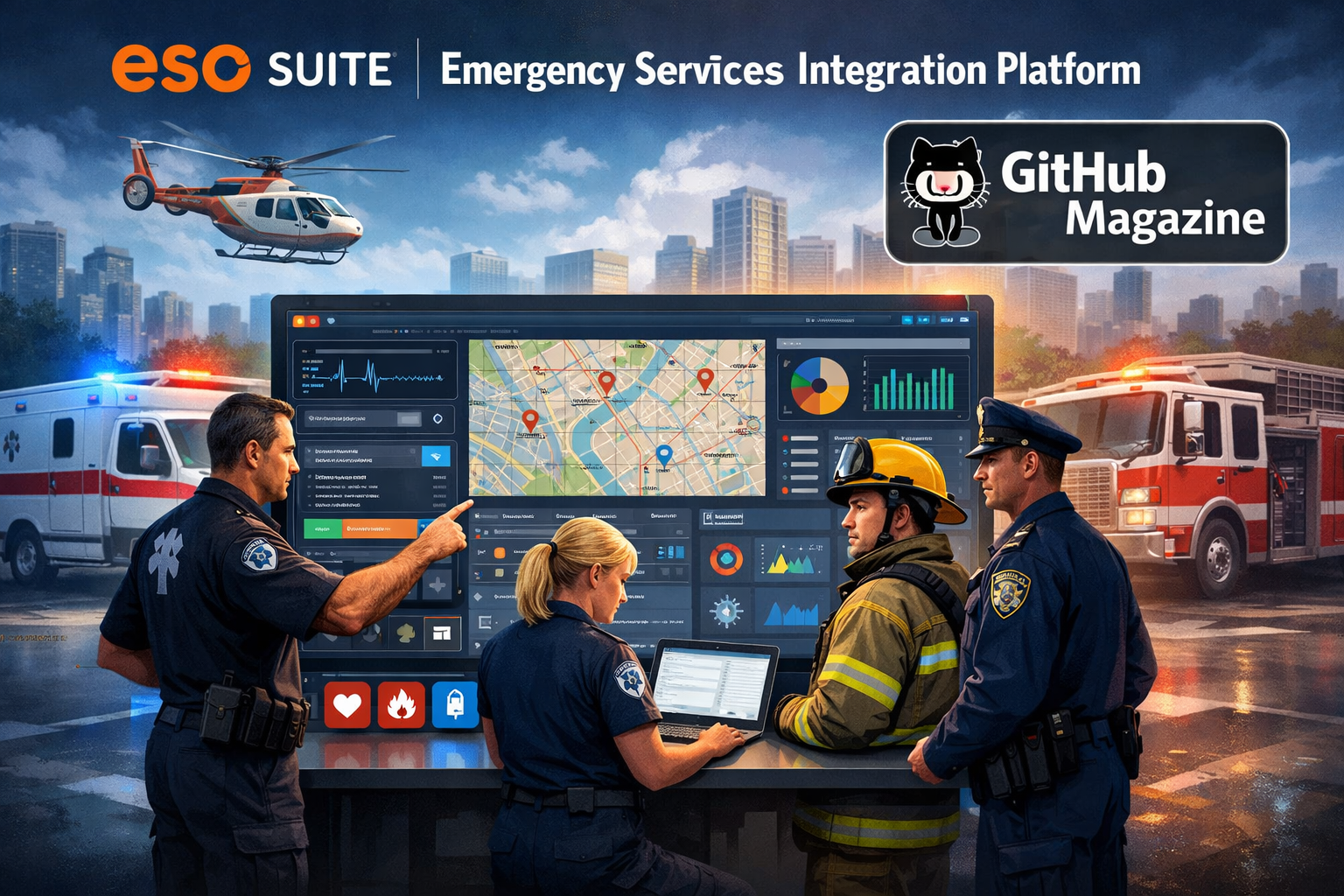
ESO Suite for Modern Emergency Response
When emergencies unfold, information can matter as much as oxygen or advanced airway equipment. In the first moments of a cardiac arrest, a multi vehicle collision, or a structure fire, responders must capture details quickly and communicate them clearly. ESO Suite is built to meet that need. It is a modular, cloud based software ecosystem that unifies emergency medical services, fire departments, and hospital systems into a shared digital environment. By connecting field documentation, incident reporting, analytics, and health data exchange in one platform, it improves care coordination and operational oversight.
From my vantage point studying public safety technology, what stands out most about ESO Suite is its focus on integration. Instead of forcing agencies to juggle separate systems for patient care reports, fire inspections, scheduling, and compliance, the suite consolidates these functions under one umbrella. EMS clinicians can document care at the scene using electronic health records. Fire departments can manage incident logs and inspections. Hospitals can receive prehospital data in real time. Leaders can analyze trends across the entire system. In a field where fragmented data once slowed decision making, this kind of cohesion represents a significant shift.
The Architecture Behind ESO Suite
ESO Suite is structured as a collection of interconnected modules that operate on a shared cloud infrastructure. This modular design allows agencies to adopt specific tools while maintaining seamless data continuity across the system. Rather than installing isolated applications that struggle to communicate, departments work within a unified database that supports consistent reporting and analysis.
The Electronic Health Record module anchors the clinical side of the platform. It enables EMS professionals to document assessments, interventions, medications, and outcomes directly in the field using mobile friendly interfaces. Because the system is cloud based, those records are stored securely and can be accessed by authorized hospital staff before the ambulance doors open. This reduces transcription errors and eliminates redundant data entry.
On the operational side, the Fire Records Management System centralizes incident reports, inspections, apparatus tracking, and personnel certifications. By digitizing these workflows, departments gain clearer visibility into compliance requirements and resource utilization. Data that once lived in paper binders or disconnected spreadsheets becomes searchable and reportable in seconds.
Core Modules and Their Functions
| Module | Primary Function | Operational Impact |
|---|---|---|
| Electronic Health Record | Field patient documentation | Improves clinical accuracy and reporting speed |
| Fire Records Management | Incident and inspection tracking | Strengthens compliance and accountability |
| Health Data Exchange | Secure EMS to hospital data sharing | Enhances continuity of care |
| Analytics | Performance dashboards and trend analysis | Enables data driven leadership decisions |
| Scheduling and Staffing | Workforce and shift management | Optimizes coverage and reduces overtime gaps |
Each module contributes to a single objective: replacing fragmentation with coordinated intelligence. The shared architecture means that performance metrics, compliance data, and clinical outcomes can be analyzed across departments rather than in isolation.
Why Interoperability Changes Outcomes
For decades, emergency response systems relied on patchwork technology. EMS agencies often used one software tool for patient care reports, another for billing, and yet another for quality improvement. Fire departments maintained separate inspection databases. Hospitals operated on entirely different electronic medical records. Communication between these systems was limited or manual.
ESO Suite addresses this structural gap by emphasizing interoperability. When EMS clinicians complete a patient record, that information can flow directly to the receiving hospital. Emergency department teams gain early visibility into patient history, vital signs, and interventions performed in the field. This shared insight supports faster triage and informed clinical decisions.
Jennifer Lee, a public safety technology consultant, observes that integration is no longer optional. She notes that modern emergency systems depend on accurate and timely data exchange to maintain operational readiness and meet evolving regulatory standards. When information moves fluidly across organizations, leaders can identify patterns, allocate resources intelligently, and strengthen community health strategies.
Analytics as a Strategic Tool
Beyond documentation and reporting, ESO Suite transforms raw data into actionable insight. The analytics module aggregates information from EHR entries, fire incident logs, inspections, and staffing schedules into visual dashboards. Leaders can monitor response times, track compliance metrics, and evaluate clinical performance indicators in real time.
Dr. Michael Barnes, an EMS medical director, explains that shared analytics create a feedback loop that was once difficult to achieve. According to him, field clinicians benefit from understanding patient outcomes after hospital admission. When outcome data returns to EMS agencies, training programs can be refined and protocols adjusted based on measurable results rather than anecdotal experience.
The strategic value extends further. Administrators can analyze call volume trends across neighborhoods, identify peak staffing needs, and assess the effectiveness of community risk reduction programs. In an era of constrained budgets and rising demand, data driven leadership is becoming a defining feature of resilient emergency systems.
Compliance and Reporting Efficiency
Compliance with national reporting standards is a core responsibility for EMS and fire departments. Historically, meeting these requirements demanded significant manual effort. Staff spent hours compiling reports for federal and state databases, often re entering information from paper forms.
ESO Suite automates much of this process. By capturing standardized data at the point of entry, the platform streamlines submission to recognized reporting frameworks. This reduces duplication and minimizes the risk of inconsistent documentation. Departments can generate required reports quickly and with greater confidence in data integrity.
Operational efficiency improves as well. When documentation workflows are simplified, frontline personnel spend less time completing paperwork and more time preparing for response. Supervisors gain instant access to performance summaries, allowing them to address trends proactively rather than reactively.
Implementation and Organizational Change
Adopting a unified software ecosystem is not merely a technical decision; it is a cultural shift. Agencies transitioning from legacy systems must invest in training and change management. Field personnel accustomed to paper charts or older digital tools may require structured onboarding to build proficiency.
ESO Suite’s cloud deployment reduces infrastructure complexity. Agencies do not need to maintain local servers or perform extensive hardware upgrades. However, successful implementation still depends on leadership commitment and sustained support. Training programs, internal champions, and clear communication are essential to ensuring that staff embrace the platform rather than resist it.
Maria Gonzales, a former fire chief who now advises departments on digital transformation, emphasizes that technology adoption succeeds when it aligns with mission values. She argues that when personnel see how streamlined documentation improves patient care and operational clarity, they are more likely to engage fully with new systems.
ESO Suite Within the Emergency Ecosystem
| Stakeholder | Primary Interaction | Benefit Realized |
|---|---|---|
| EMS Agencies | Field care documentation and reporting | Stronger clinical continuity |
| Fire Departments | Incident management and inspections | Improved transparency and compliance |
| Hospitals | Prehospital data reception | Enhanced preparedness before arrival |
| Public Health Authorities | Aggregated analytics review | Better planning and policy evaluation |
The table illustrates how different stakeholders interact with the suite. Each gains value from the same integrated foundation. Rather than operating in silos, these groups contribute to and benefit from shared intelligence.
Challenges and Risk Considerations
No technology platform is without challenges. Data security remains paramount. Because ESO Suite handles protected health information and sensitive operational records, agencies must enforce strict access controls and adhere to privacy regulations. Cloud based systems require robust cybersecurity protocols and ongoing monitoring.
There is also the risk of overreliance on digital infrastructure. In high pressure environments, system downtime or connectivity issues can disrupt workflows. Contingency planning, offline capabilities, and reliable support structures are essential components of responsible deployment.
Budget considerations may also influence adoption. While cloud solutions reduce hardware costs, subscription models and training investments require careful financial planning. Agencies must evaluate long term return on investment alongside immediate implementation expenses.
The Broader Significance
ESO Suite reflects a broader trend in public safety technology: the movement toward integrated, data centric ecosystems. As communities grow and emergencies become more complex, the ability to coordinate across disciplines becomes increasingly vital. Digital platforms that unify clinical, operational, and administrative information can serve as foundational infrastructure for modern response systems.
From my perspective, the true impact of ESO Suite lies not only in its features but in its philosophy. By prioritizing shared data and collaborative workflows, it encourages agencies to see themselves as interconnected parts of a larger continuum of care. That mindset has implications beyond software. It influences how responders train, how hospitals prepare, and how leaders measure success.
Takeaways
• ESO Suite integrates EMS, fire, and hospital systems into one cloud based ecosystem
• Modular architecture allows scalable adoption across agencies of different sizes
• Real time data exchange improves patient care continuity and clinical preparedness
• Analytics tools support evidence based leadership and resource allocation
• Automated reporting strengthens compliance and reduces administrative burden
• Successful implementation requires training, cybersecurity vigilance, and cultural alignment
Conclusion
ESO Suite represents a decisive step toward unified emergency response infrastructure. By replacing fragmented tools with a shared digital environment, it enhances documentation accuracy, accelerates information exchange, and empowers leaders with actionable insight. The platform’s modular design allows agencies to adapt at their own pace while preserving interoperability across departments.
As public safety organizations confront rising call volumes, evolving health challenges, and tighter regulatory scrutiny, the importance of integrated data systems will continue to grow. ESO Suite does not eliminate every operational challenge, but it provides a cohesive framework for addressing many of them. In the high stakes world of emergency response, where clarity and coordination can shape outcomes, that framework may prove indispensable.
FAQs
What is ESO Suite primarily used for?
It is used to document patient care, manage fire incidents, analyze operational data, and enable secure data exchange between EMS and hospitals within one integrated platform.
Is ESO Suite suitable for small departments?
Yes. Its modular structure allows smaller agencies to adopt specific components while maintaining scalability as they grow.
How does ESO Suite improve patient care?
By transmitting field documentation to hospitals in real time, it enhances continuity of care and supports faster clinical decision making.
Does the platform support compliance reporting?
Yes. It standardizes data entry and automates reporting processes to help agencies meet regulatory requirements efficiently.
What are key implementation considerations?
Agencies should focus on staff training, cybersecurity safeguards, leadership engagement, and contingency planning for system reliability.

Related Posts

SOA OS23 Explained Across Technology and Construction

Sesame Motor CEO Profile and Industrial Strategy