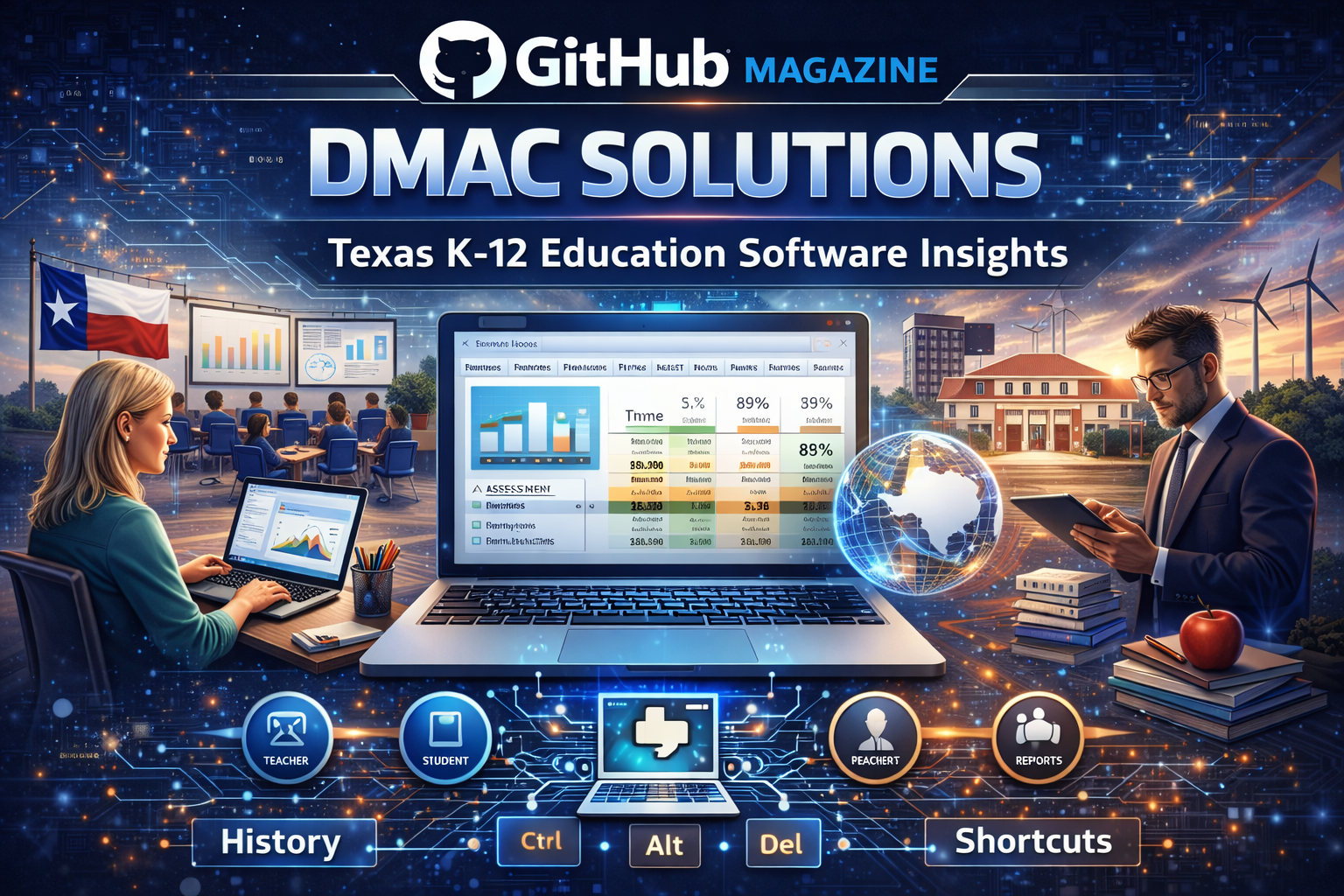
DMAC Solutions Review for K-12 Schools
I have spent years watching education technology promise transformation, yet few platforms quietly embed themselves into the daily routines of teachers the way DMAC Solutions has. At its core, DMAC Solutions is a web-based education software platform built to help K-12 schools manage assessment, curriculum alignment, and data analysis with precision and clarity. Designed primarily for Texas districts, it provides tools for online testing, real-time performance tracking, graduation planning, and compliance documentation. For educators searching for a streamlined way to align classroom instruction with state accountability standards, DMAC offers an integrated solution that reduces paperwork while amplifying insight.
When I first examined DMAC’s structure, what stood out was its deliberate focus on state alignment. Rather than attempting to serve every district in the country with a generalized product, DMAC concentrates on the Texas accountability environment. This specialization allows its dashboards, reports, and assessment tools to mirror the expectations educators face daily. In an era when teachers often feel overwhelmed by fragmented systems and disconnected data, DMAC positions itself as a unified hub. It is not flashy technology. It is operational technology. And that distinction explains why it has become embedded in so many district workflows.
What DMAC Solutions Actually Does
DMAC, commonly understood as Data Management for Assessment and Curriculum, delivers a suite of web-based tools that support instruction from planning through evaluation. The platform centers on four primary pillars: assessment creation, analytics reporting, student planning, and documentation management.
Teachers can design local assessments aligned with state standards, administer them online, and receive immediate data breakdowns. Administrators can examine multi-year trends across campuses or demographic groups. Counselors and instructional coordinators can manage graduation plans and intervention documentation within the same ecosystem.
The system functions less like a single tool and more like a structured environment for instructional decision making. Its modular approach allows districts to license components that match their priorities while maintaining unified data architecture across departments.
Core Functional Areas
| Feature Category | Primary Purpose | End Users |
|---|---|---|
| Online Assessment | Create and administer digital tests | Teachers |
| Data Dashboards | Analyze performance trends | Administrators |
| Planning Tools | Graduation and intervention tracking | Counselors |
| Documentation | Compliance forms and digital records | Campus Leaders |
Each feature integrates with the others, reducing the need to export data into spreadsheets or external tools.
Assessment and Instructional Alignment
Assessment has shifted from periodic evaluation to continuous measurement. DMAC reflects this shift by enabling teachers to create custom local tests that mirror the structure and rigor of state assessments. This alignment supports both formative and summative strategies.
The real strength lies in real-time reporting. After an assessment is administered, teachers can immediately review item analysis, performance by standard, and subgroup comparisons. This immediacy transforms assessment from a static event into a dynamic feedback mechanism.
Instead of waiting weeks for district reports, educators gain instant visibility into which standards require reteaching and which students need targeted intervention. In classrooms where time is limited, that responsiveness matters.
Data Analytics and Decision Making
Modern school accountability systems require layered data reporting. District leaders must track campus trends, teacher effectiveness, and student subgroup performance while maintaining compliance documentation.
DMAC’s analytics dashboards centralize this information. Administrators can filter by year, subject, grade level, demographic category, or assessment type. Multi-year tracking supports strategic planning rather than reactive decision making.
The platform’s structure encourages evidence-based leadership. Instead of anecdotal impressions, principals and curriculum directors can rely on visualized data sets to inform professional development, resource allocation, and instructional adjustments.
As one veteran instructional coach noted, “When the data is accessible and visual, conversations shift from opinion to strategy.” That shift represents one of DMAC’s most meaningful contributions.
Planning Tools and Student Pathways
Beyond testing and analytics, DMAC integrates planning modules that support student progress from middle school through graduation. These tools assist with personal graduation plans, intervention documentation, and tracking progress toward academic benchmarks.
For counselors and support staff, having these systems embedded within the same data ecosystem reduces duplication. Student assessment performance connects directly to intervention planning. Graduation tracking connects to course completion data.
This integration reinforces continuity. Instead of isolated systems for testing and advising, DMAC creates a shared data language across departments. That consistency helps schools coordinate responses to academic risk more effectively.
Technical Infrastructure and Usability
DMAC operates as a cloud-based platform accessible through modern web browsers. Its architecture prioritizes compatibility and simplicity, requiring standard broadband connectivity and contemporary operating systems.
District technology teams typically oversee integration with student information systems. Once connected, data flows between systems, minimizing manual entry. The platform’s user interface emphasizes clarity rather than design complexity. Navigation menus remain straightforward, with dashboards organized around user roles.
From a usability perspective, DMAC avoids overwhelming educators with excessive customization. Instead, it provides structured workflows that mirror existing instructional processes. This design choice reduces training time and supports faster adoption across campuses.
Comparing DMAC to Broader EdTech Platforms
While national education technology companies often emphasize adaptive learning or AI-driven personalization, DMAC’s differentiation lies in localized precision. It is built for specific accountability frameworks rather than universal deployment.
| Criteria | DMAC Solutions | Generic EdTech Platforms |
|---|---|---|
| State Alignment | Highly specific | Broad, multi-state |
| Assessment Tools | Integrated with state standards | Customizable but generalized |
| Analytics Depth | Focused on accountability metrics | Often broader but less policy specific |
| Market Scope | Primarily Texas | National or global |
This focus allows DMAC to respond quickly to state-level changes. When standards shift or reporting requirements evolve, the platform adapts without the delays sometimes experienced in larger national systems.
The Broader Context of Data Driven Education
Education policy over the past two decades has emphasized measurable outcomes. Accountability systems require disaggregated data reporting, progress monitoring, and documentation of interventions.
DMAC fits squarely within this environment. Its dashboards reflect the realities of performance monitoring. Its planning tools mirror compliance expectations. Its assessment modules support readiness for standardized evaluations.
Yet this data-driven culture has sparked debate. Critics argue that excessive focus on metrics can narrow instruction. Supporters contend that informed data usage enhances equity by identifying gaps early.
DMAC does not resolve that philosophical debate. Instead, it provides infrastructure. The ethical and instructional application of that infrastructure remains in the hands of educators.
Adoption Challenges and Professional Development
No technology succeeds without training. DMAC provides onboarding resources and ongoing support for districts implementing the system. Workshops, webinars, and help documentation aim to reduce friction during transition periods.
However, adoption challenges often stem less from technical barriers and more from cultural resistance. Teachers accustomed to paper-based assessments may initially resist digital workflows. Administrators balancing multiple platforms may hesitate to consolidate systems.
Successful implementation typically involves phased rollouts, campus champions, and consistent leadership messaging. When schools position DMAC as a support tool rather than a compliance instrument, adoption rates improve significantly.
Data Security and Privacy Considerations
Handling student data demands rigorous security protocols. As a cloud-based platform, DMAC relies on encrypted connections and role-based access controls. District IT teams maintain oversight of user permissions and data integration points.
Educational institutions operate within federal and state privacy regulations. Any data management platform must comply with those standards. The structured nature of DMAC’s user roles helps limit exposure and maintain accountability.
In a climate where cybersecurity concerns grow annually, platforms that emphasize secure architecture gain institutional trust. Trust remains essential for sustained adoption.
Operational Impact on Teachers
Teachers often describe data systems as burdensome. When poorly implemented, they become additional tasks layered onto already demanding schedules. DMAC attempts to reverse that dynamic by consolidating assessment creation, grading analytics, and documentation in one location.
By automating scoring and generating immediate reports, the system reduces manual workload. Instead of spending evenings compiling spreadsheets, educators can review standardized dashboards.
The value lies not only in saved time but also in clarity. Teachers can identify trends without advanced data training. That accessibility broadens participation in instructional planning conversations.
Administrative Strategy and Resource Allocation
For district leaders, data aggregation supports strategic planning cycles. Multi-year trend analysis informs staffing decisions, curriculum purchases, and professional development priorities.
DMAC’s reporting capabilities allow leadership teams to compare campuses, evaluate intervention effectiveness, and allocate resources based on measurable need. This capacity aligns with accountability frameworks that require documented improvement strategies.
In districts facing budget constraints, targeted allocation becomes essential. Data visibility enhances decision precision.
Long Term Sustainability and Future Outlook
As education technology evolves, platforms must adapt to shifting expectations. Artificial intelligence, predictive analytics, and interoperability standards increasingly shape procurement decisions.
DMAC’s sustainability will likely depend on maintaining its policy alignment advantage while expanding integration capabilities. The demand for seamless data exchange across learning management systems, student information systems, and analytics platforms continues to grow.
At the same time, educator fatigue with overly complex software underscores the importance of simplicity. Systems that remain intuitive while expanding functionality stand the best chance of long-term relevance.
Takeaways
• DMAC Solutions provides a Texas-focused platform integrating assessment, analytics, and planning tools.
• Its strength lies in alignment with state accountability standards and reporting requirements.
• Real-time analytics transform assessments into actionable instructional insights.
• Integrated planning modules support graduation tracking and intervention documentation.
• Successful adoption depends on training, leadership support, and cultural alignment.
• Data security and structured user roles enhance institutional trust.
• The platform’s sustainability will depend on adaptability and continued policy responsiveness.
Conclusion
After examining DMAC Solutions through the lens of classroom practice and administrative strategy, I see a platform defined by practicality rather than spectacle. It does not attempt to reinvent instruction through novelty. Instead, it organizes the complex machinery of modern accountability into a structured digital environment.
In schools where data expectations grow annually, such structure becomes indispensable. Teachers need clarity. Administrators need visibility. Counselors need continuity. DMAC’s value emerges from connecting those needs into a shared system.
Education technology often promises transformation through innovation. DMAC demonstrates that transformation can also emerge from refinement. By aligning software design with policy realities and classroom workflows, it quietly reshapes how schools interpret and respond to data.
For districts navigating accountability pressures while striving to preserve instructional integrity, platforms like DMAC represent both a tool and a strategic framework. The future of data-driven education may not belong solely to the largest national brands. It may belong to the platforms that understand local classrooms most intimately.
FAQs
What is DMAC Solutions used for
DMAC Solutions is used by K-12 schools to create assessments, analyze student performance data, manage graduation planning, and streamline compliance documentation within one integrated platform.
Is DMAC only for Texas schools
The platform is primarily designed for Texas districts due to its alignment with state standards and accountability systems, though its structure reflects broader data management principles.
Does DMAC replace student information systems
No. DMAC typically integrates with existing student information systems while focusing on assessment analytics, planning, and reporting functions.
How does DMAC support teachers directly
Teachers benefit from online assessment tools, automated scoring, real-time analytics, and structured dashboards that simplify instructional decision making.
What makes DMAC different from national edtech companies
Its specialization in state-aligned reporting and accountability metrics distinguishes it from broader platforms designed for multi-state deployment.

Related Posts

BumpDots.com: Tactile Accessibility Tools Explained

Liftje and the Future of Shared Mobility