
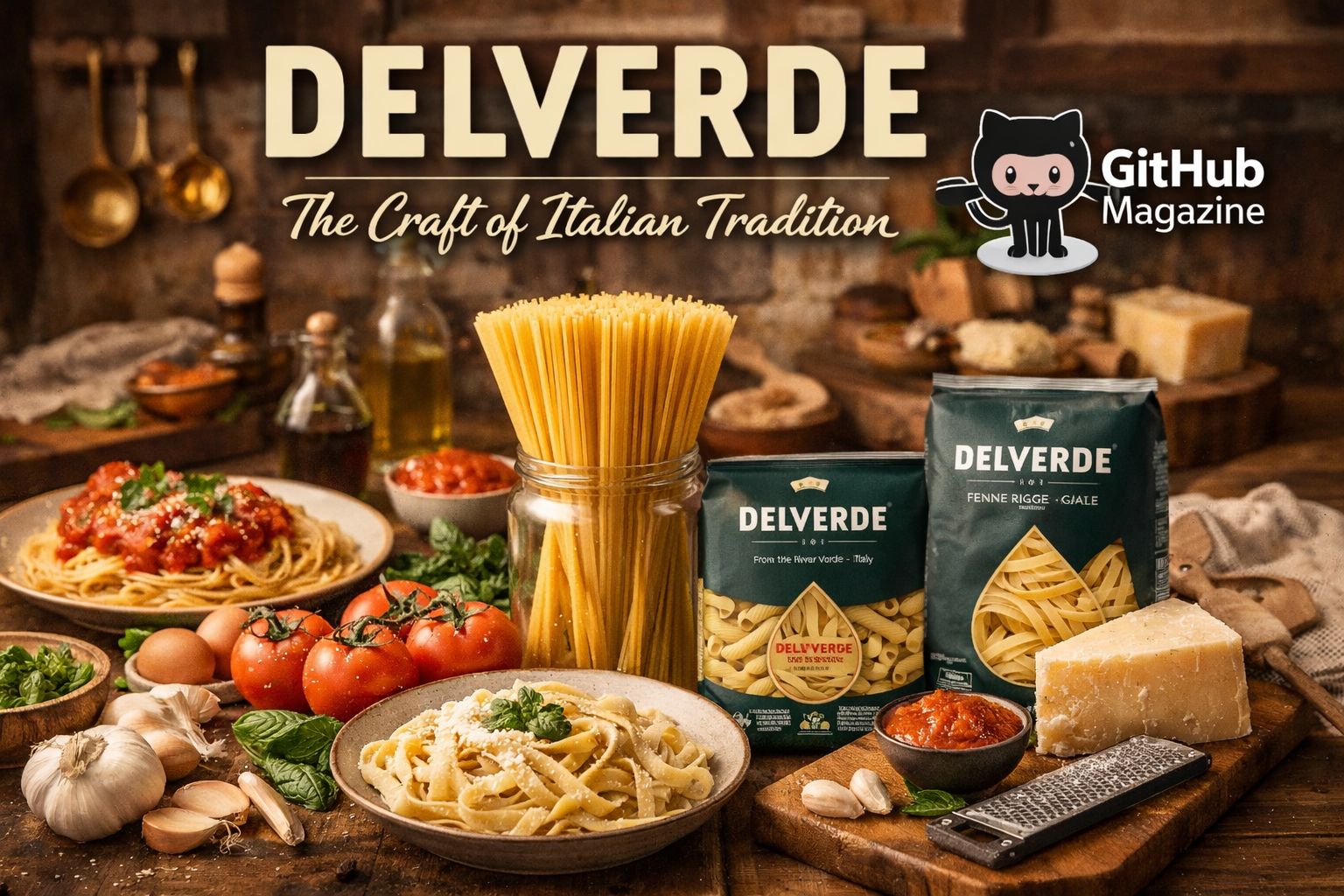
Dalverde: How the Italian Pasta Brand Uses Spring Water, Bronze Dies, and Slow Drying to Define Premium Quality
Delverde occupies a distinctive place in the modern food landscape, not because it is loud or ubiquitous, but because it is quietly precise. In the crowded world of dried pasta, where branding often overwhelms substance, Delverde answers a simple but enduring question: why does some pasta taste unmistakably better? The answer begins with water, wheat, and patience. Within the first moments of understanding the brand, its identity becomes clear—this is pasta defined by origin and method rather than scale.
Founded in 1967 in Fara San Martino, a small town set against the limestone cliffs of Italy’s Abruzzo region, Delverde emerged from a place where pasta making was already a deeply rooted tradition. The surrounding Majella mountains and the Verde River shaped not only the geography of the region but also the philosophy of its food producers. Delverde’s founders understood that pasta is not merely a shelf-stable carbohydrate; it is a cultural artifact that reflects landscape, climate, and restraint.
Over decades, Delverde evolved from a local producer into an internationally distributed brand, while preserving techniques that many competitors abandoned in favor of speed. Bronze-die extrusion, slow drying, and reliance on pure spring water remain central to its production. These choices, though less efficient, produce pasta with superior texture and structural integrity. Today, Delverde stands as an example of how a heritage food product can remain relevant in a globalized economy without surrendering its identity.
The Roots in Abruzzo: Place as an Ingredient
Fara San Martino is often described as the “capital of pasta,” a title earned through centuries of grain cultivation and water access. Delverde’s location is not incidental; it is foundational. The Verde River provides exceptionally pure water, filtered naturally through mountain rock, and this water is used directly in pasta production. In Italian food culture, water quality is as critical as flour, influencing gluten development, dough elasticity, and final texture.
Durum wheat semolina, the other essential ingredient, is selected for its protein content and milling consistency. Delverde’s approach emphasizes balance rather than excess: no additives, no bleaching, no shortcuts. This restraint reflects a broader Italian culinary philosophy in which fewer ingredients demand higher standards. The Abruzzo climate, marked by cold winters and dry summers, historically supported grain preservation and slow processing, reinforcing the region’s alignment with traditional pasta making.
The concept of terroir, more commonly associated with wine, applies just as clearly to Delverde. The physical environment shapes not only raw materials but also the decisions producers make about time, temperature, and technique. In this sense, Delverde pasta carries the imprint of its place of origin in every stage of production.
Craft Over Speed: How Delverde Makes Pasta
Modern food manufacturing often prioritizes efficiency, but Delverde deliberately resists that logic. One of its defining practices is bronze-die extrusion, a method in which pasta dough is pushed through bronze molds rather than smooth industrial ones. This creates microscopic abrasions on the pasta’s surface, allowing sauces to adhere more effectively.
Equally important is slow drying at low temperatures. While high-temperature drying can reduce production time dramatically, it alters the protein structure of the pasta, often resulting in brittle texture and uneven cooking. Delverde’s slower approach preserves the integrity of the gluten network, producing pasta that cooks evenly and maintains firmness without becoming chalky or soft.
These methods are not nostalgic gestures; they are functional choices grounded in culinary science. The result is pasta that performs consistently across cooking environments, from professional kitchens to home stoves. In an industry driven by volume, Delverde’s commitment to process over speed defines its identity.
Corporate Evolution Without Identity Loss
Like many family-rooted food companies, Delverde has navigated periods of financial strain and ownership transition. Economic pressures in the early 2000s forced restructuring, but these changes did not dismantle the brand’s core production philosophy. Instead, new ownership provided capital stability and broader distribution while retaining established manufacturing standards.
Under the stewardship of a larger Italian food group, Delverde expanded its reach across Europe and beyond. Germany, in particular, emerged as a strong market, demonstrating that consumers outside Italy increasingly value authenticity and traceability in staple foods. Rather than repositioning itself as a mass-market brand, Delverde remained firmly within the premium segment.
This balance between corporate structure and artisanal identity is rare. Many heritage brands lose credibility when scaled; Delverde’s continued emphasis on method and origin has allowed it to grow without dilution.
Comparing Traditional and Industrial Pasta Production
| Aspect | Delverde Approach | Typical Industrial Approach |
|---|---|---|
| Water | Natural spring water | Treated municipal water |
| Extrusion | Bronze dies | Teflon or steel dies |
| Drying | Slow, low temperature | Rapid, high temperature |
| Texture | Rough, sauce-binding | Smooth, less adhesive |
| Cooking | Even, resilient | Variable, often soft |
This comparison illustrates how technical decisions translate directly into sensory outcomes. The differences are subtle but cumulative, shaping flavor, mouthfeel, and cooking reliability.
Global Presence and Culinary Reputation
Delverde’s expansion beyond Italy has been measured rather than aggressive. The brand is commonly found in specialty food shops, gourmet grocers, and professional supply chains rather than discount supermarkets. This positioning reinforces its identity as a product chosen deliberately, not incidentally.
In professional kitchens, consistency matters as much as flavor. Chefs rely on pasta that behaves predictably under pressure, whether cooked in small batches or large volumes. Delverde’s structural integrity makes it suitable for such environments, contributing to its reputation among culinary professionals.
Home cooks, meanwhile, often discover Delverde through recommendations or comparison. The difference becomes apparent not through marketing claims but through cooking experience: clearer cooking water, firmer bite, and better sauce integration. These qualities build brand loyalty organically.
Expert Perspectives on Quality and Technique
“Good pasta should disappear into the dish, not fight it,” notes one Italian culinary historian, emphasizing that quality pasta enhances rather than dominates a recipe. This philosophy aligns closely with Delverde’s understated presence.
A professional chef describes Delverde as “technically honest,” meaning that its performance reflects its ingredient list without hidden enhancements. Another food educator highlights its value in teaching fundamentals, noting that students can clearly observe the effects of proper extrusion and drying through Delverde pasta.
These perspectives converge on a single idea: Delverde is respected not because it is rare, but because it is reliable.
Timeline of Delverde’s Development
| Year | Milestone |
|---|---|
| 1967 | Founded in Fara San Martino, Abruzzo |
| 1980s–1990s | Expansion into European export markets |
| Early 2000s | Financial restructuring period |
| 2019 | Acquisition by Italian food group |
| 2020s | Strong growth in premium European markets |
This timeline underscores how Delverde’s identity persisted through structural change, anchored by consistent production values.
Cultural Meaning Beyond the Plate
In Italy, pasta is not a trend or a novelty; it is a daily ritual. Brands like Delverde matter because they preserve continuity in a rapidly changing food economy. Their existence allows consumers to participate in a tradition that values patience, simplicity, and respect for raw materials.
Internationally, Delverde functions as a cultural ambassador. It communicates a version of Italian food culture that resists exaggeration. There are no novelty shapes or artificial flavorings, only refined variations on established forms. This restraint appeals to consumers increasingly skeptical of over-engineered foods.
Delverde’s cultural relevance lies in its refusal to chase attention. Instead, it relies on repetition, familiarity, and trust.
Takeaways
- Delverde is defined by origin, not branding
- Water quality plays a central role in its identity
- Traditional techniques remain central despite scale
- Ownership changes did not alter production philosophy
- The brand thrives in premium, not mass, markets
- Culinary professionals value its consistency
- Delverde reflects a broader Italian approach to food restraint
Conclusion
Delverde’s story is not one of reinvention but of continuity. From its beginnings in Abruzzo to its presence on international shelves, the brand has remained anchored to a simple idea: quality emerges from patience and respect for process. In a global food system increasingly shaped by speed and uniformity, Delverde offers an alternative model—one where tradition and modern distribution coexist without contradiction.
The brand’s endurance suggests that there is still room for products that do not chase novelty. Instead, Delverde invites consumers to slow down, to notice texture, and to value subtlety. In doing so, it reinforces a broader lesson about food and culture: that progress does not always require abandonment of the past. Sometimes, it requires deeper commitment to it.
FAQs
What distinguishes Delverde from other pasta brands?
Its use of pure spring water, bronze-die extrusion, and slow drying methods produces superior texture and cooking performance.
Where is Delverde pasta made?
It is produced in Fara San Martino, in Italy’s Abruzzo region.
Is Delverde considered artisanal?
While produced at scale, its methods reflect artisanal principles rooted in traditional pasta making.
Why does Delverde pasta hold sauce better?
Bronze extrusion creates a rough surface that allows sauces to adhere more effectively.
Who typically uses Delverde pasta?
Both professional chefs and home cooks seeking reliable, high-quality Italian pasta.

Related Posts

MacVG Explained: macOS Volume Architecture Guide

BestShoesEverShop Fake vs Real Guide