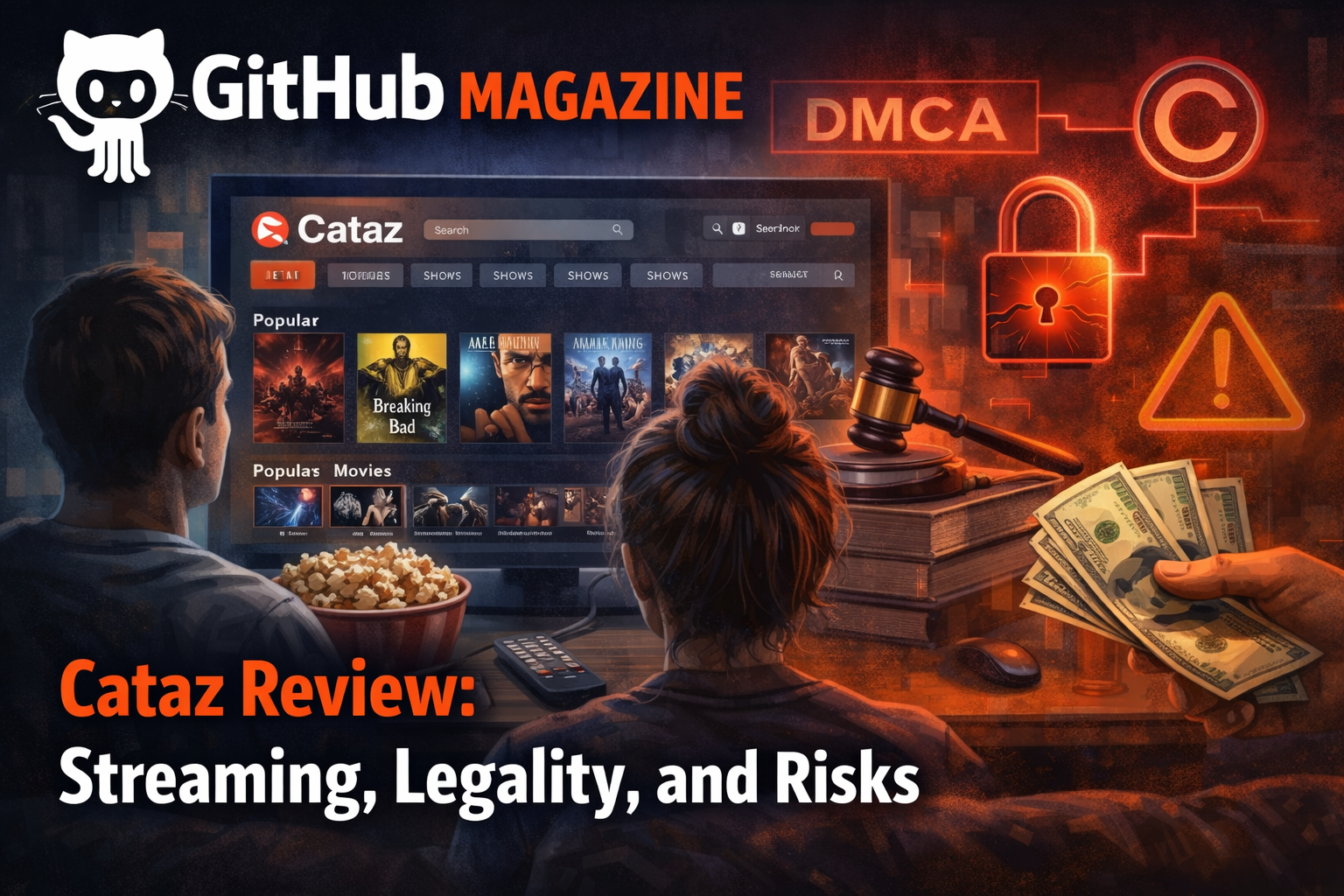
Cataz Review: Streaming, Legality, and Risks
Cataz is widely known as a free online streaming website that allows users to watch movies and television shows without subscriptions, logins, or payment barriers. For readers searching what Cataz is and how it works, the answer is straightforward: it aggregates and streams film and TV content at no direct cost to viewers, offering an interface similar to paid platforms but without licensing fees. That simplicity explains its popularity. In an era of rising subscription fatigue, fragmented streaming libraries, and escalating monthly costs, platforms like Cataz attract audiences who want instant, unrestricted acces
Yet beneath its convenience lies a complicated ecosystem shaped by copyright law, cybersecurity concerns, and economic consequences for creators. Cataz does not operate like established services such as Netflix or Disney+, which negotiate distribution rights and pay royalties. Instead, it sits within a shadow network of online streaming sites that distribute or link to copyrighted works without authorization. Its growth reflects a broader digital tension: consumers demand frictionless access, while legal frameworks and content industries insist on compensation and protection. Understanding Cataz requires examining technology, economics, law, and culture together rather than in isolation.
The Architecture of Free Streaming
Websites like Cataz are typically built using standard front-end frameworks, search indexing systems, and embedded video players that draw content from distributed hosting services. From a user’s perspective, the experience is seamless: search for a title, click play, and stream. The platform’s strength lies not in proprietary technology but in aggregation and presentation.
Feature | Description | User Impact
Content Library | Large catalog of films and series | Broad appeal across genres
Cost | Free | Eliminates subscription barriers
Registration | Usually optional | Immediate access
Interface | Search and category browsing | Familiar streaming experience
Revenue Model | Advertising-based | Pop-ups and redirects
This architecture mirrors legitimate streaming design but removes licensing structures. That absence is central to its legal controversy.
Copyright and the Legal Framework
Copyright law protects creative works from unauthorized reproduction and distribution. The U.S. Copyright Office (2021) explains, “Copyright law protects original works of authorship fixed in a tangible medium of expression.” Motion pictures and television programs fall squarely within that definition. In the United States, the Digital Millennium Copyright Act of 1998 strengthened enforcement tools against digital infringement, allowing rights holders to request takedowns and pursue liability.
Legal scholars consistently emphasize that distributing copyrighted films without authorization violates these protections. As the U.S. Department of Justice has stated in public materials, intellectual property theft harms creators and the broader economy by undermining lawful markets. While enforcement varies globally, most jurisdictions recognize similar principles under international agreements such as the Berne Convention.
Legal Dimension | Implication for Platforms Like Cataz
Distribution Rights | Required for lawful streaming
DMCA Takedowns | Enable content removal requests
Civil Liability | Potential lawsuits for infringement
Criminal Penalties | Possible in severe cases
Domain Shifts | Used to evade enforcement
Sites operating without licenses often change domains or rely on offshore hosting, complicating enforcement efforts.
Economic Impact on the Entertainment Industry
The Motion Picture Association’s annual THEME Report documents billions in global box office revenue and streaming growth (Motion Picture Association, 2023). These revenues fund production budgets, creative labor, and distribution infrastructure. When unlicensed platforms distribute films freely, studios and independent creators lose potential income.
Dr. Michael D. Smith, a professor at Carnegie Mellon University who studies digital markets, has argued in academic research that piracy can reduce legitimate sales, particularly when access barriers are high. While some analysts contend piracy reflects unmet demand, the financial impact remains significant for smaller producers who depend on licensing revenue.
Free streaming platforms thus exist within a paradox. They highlight consumer dissatisfaction with rising subscription bundles, yet they also threaten the sustainability of the very industry that produces the content viewers seek.
Cybersecurity and User Risk
Beyond legality, safety concerns shape the Cataz discussion. Free streaming sites often rely on aggressive advertising networks. The Federal Trade Commission regularly warns consumers about malicious pop-ups, phishing links, and deceptive downloads in unregulated online environments. Without formal oversight, users risk exposure to malware or data harvesting.
Cybersecurity researchers note that streaming pages with multiple embedded players increase the attack surface for malicious scripts. Users who click through deceptive “play” buttons may encounter redirects to unrelated or harmful sites. While ad blockers and antivirus tools can reduce risk, they cannot guarantee complete protection.
“Unauthorized streaming sites frequently monetize traffic through ad networks that lack robust vetting,” notes cybersecurity analyst Brian Krebs in discussions on online fraud. The absence of transparent security standards distinguishes these platforms from licensed services that comply with privacy regulations and content safeguards.
Cultural Demand and Subscription Fatigue
The rise of Cataz cannot be separated from changing viewer behavior. Over the past decade, streaming fragmented across numerous platforms. Consumers who once paid for a single cable package now face multiple monthly subscriptions to access diverse libraries. This phenomenon—often called subscription fatigue—creates space for alternatives.
Sociologists of media consumption observe that audiences prioritize convenience and breadth. When content becomes siloed, viewers seek centralized access. Free streaming sites offer that consolidation, albeit illegally. Their popularity reflects economic realities in lower-income regions as well, where subscription prices may represent a disproportionate share of income.
At the same time, legal ad-supported models such as Tubi and Pluto TV demonstrate that audiences will accept advertising in exchange for free access—provided the content is licensed and secure. The contrast suggests that affordability, not necessarily illegality, drives demand.
Technology Infrastructure and Global Distribution
Free streaming platforms leverage global cloud infrastructure, content delivery networks, and embedded players to maintain uptime and evade shutdowns. These technical strategies mirror legitimate services. Cloud-based proxies distribute traffic and obscure server origins, complicating jurisdictional enforcement.
The technological neutrality of these tools underscores a broader point: the same digital infrastructure can support lawful innovation or unlawful distribution. Regulation therefore targets usage rather than technology itself.
Technology Layer | Function | Ethical Divide
CDNs | Accelerate global access | Used by both legal and illegal platforms
Embedded Players | Deliver streaming content | Source licensing determines legality
Ad Networks | Monetize traffic | Quality and oversight vary widely
Domain Registration | Brand and access point | Often frequently changed
This dual-use reality makes enforcement complex and sometimes reactive rather than preventive.
Expert Perspectives on Piracy and Policy
Outside formal interviews, policy experts have repeatedly framed digital piracy as both a legal violation and a market signal. The U.S. Copyright Office (2021) underscores that copyright exists to “promote the progress of science and useful arts” by incentivizing creation. When revenue channels erode, so does that incentive.
Meanwhile, economists studying digital markets suggest that reducing friction—through competitive pricing and broader access—can reduce piracy rates. Empirical studies have shown declines in piracy in markets where legal streaming options expanded affordably.
These perspectives are not mutually exclusive. Cataz embodies the tension between enforcement and adaptation. Policymakers face a challenge: strengthen copyright protection while encouraging industry models that meet evolving consumer expectations.
Ethical Considerations
For users, the ethical dimension often feels abstract. Clicking “play” does not visibly harm a filmmaker. Yet the cumulative effect of widespread unauthorized streaming can reduce funding for independent projects, documentary films, and niche storytelling that depend on licensing revenue.
At the same time, ethical analysis must consider accessibility. In regions with limited legal streaming availability, audiences may perceive piracy as the only option. The solution may lie less in punishment and more in equitable global distribution strategies.
The Digital Future and Platform Evolution
Streaming technology will continue to evolve. Artificial intelligence-driven recommendations, dynamic pricing models, and global simultaneous releases may reshape access patterns. If legal platforms address affordability and library fragmentation, the appeal of sites like Cataz could diminish.
Conversely, as long as demand for unrestricted access persists, shadow platforms are likely to adapt technologically. Domain shifts, decentralized hosting, and mirror sites allow rapid reconstitution after takedowns. The cat-and-mouse dynamic between enforcement agencies and site operators shows no sign of disappearing.
Takeaways
• Cataz offers free, barrier-free access to movies and TV content.
• It operates outside standard licensing frameworks, raising legal concerns.
• Copyright law protects audiovisual works under national and international agreements.
• Users may face cybersecurity risks on unregulated streaming sites.
• Subscription fatigue and affordability issues fuel demand for free platforms.
• Legal, ad-supported services demonstrate viable alternatives.
• The future of streaming depends on balancing accessibility with creator compensation.
Conclusion
Cataz represents more than a website; it is a symptom of digital transformation. Its popularity reveals dissatisfaction with fragmented streaming ecosystems and rising subscription costs. Yet its existence also highlights enduring legal principles that protect creative labor and economic sustainability. Copyright law, cybersecurity safeguards, and ethical responsibility converge in the debate.
The challenge moving forward is not simply shutting down one domain after another. It is building a media environment where access is broad, pricing is reasonable, and creators are compensated fairly. If the industry succeeds in aligning these goals, the cultural space occupied by platforms like Cataz may shrink. If not, the demand for frictionless, free streaming will continue to test the boundaries of law and innovation.
FAQs
What is Cataz primarily used for?
Cataz is used to stream movies and television shows online without subscription fees or registration requirements.
Is streaming on Cataz legal?
Streaming copyrighted content without authorization generally violates copyright law in most jurisdictions.
Does Cataz pose security risks?
Unregulated streaming sites may expose users to malware, deceptive ads, and phishing attempts.
Why are free streaming sites popular?
Rising subscription costs, fragmented content libraries, and global affordability challenges drive demand.
Are there legal free alternatives?
Yes. Ad-supported platforms such as Tubi and Pluto TV offer licensed content without subscription fees.

Related Posts

What Is Open Source and How to Contribute
Sankaku Complex Explained: Culture, Controversy