
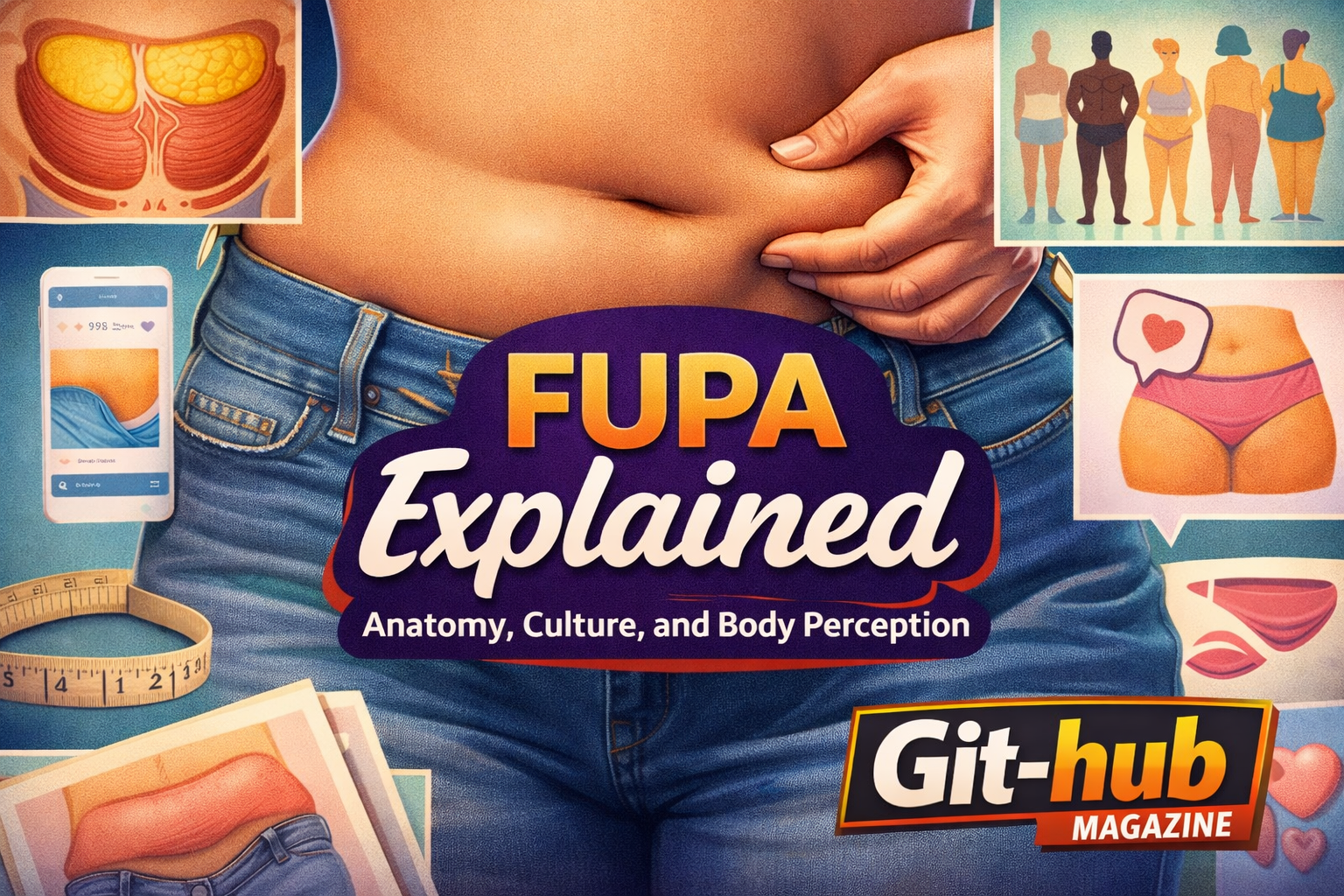
FUPA Explained: Anatomy, Culture, and Body Perception
In contemporary digital culture, few body-related terms have traveled as quickly—or as controversially—as “FUPA.” Short for “fat upper pubic area,” the word began as crude internet slang and evolved into a widely recognized label for a specific area of the human body. Search engines, social media platforms, and lifestyle blogs are filled with references to it, often framed as a problem to be fixed or a flaw to be hidden. Yet beneath the bluntness of the term lies a far more nuanced reality, one rooted in anatomy, biology, and cultural storytelling.
At its most basic level, FUPA describes a concentration of subcutaneous fat located above the pubic bone and below the lower abdomen. This area exists on all human bodies, regardless of gender, age, or size. The prominence of the fat pad varies widely and is influenced by genetics, hormones, life events such as pregnancy, and overall body composition. Importantly, it is not a medical diagnosis, nor is it inherently unhealthy.
What makes FUPA significant is not the tissue itself, but the language used to describe it. The rise of the term reflects how modern societies talk about bodies in public, often through humor, shame, or self-deprecation. It also reveals the tension between health discourse and aesthetic ideals, especially in an era where bodies are constantly displayed, edited, and judged online.
This article examines FUPA from multiple angles: anatomical reality, linguistic history, scientific understanding, cultural representation, and psychological impact. By doing so, it aims to move the conversation away from ridicule and toward clarity, context, and informed understanding—an approach aligned with the editorial voice of Git-Hub Magazine, where technology, culture, and human experience intersect.
Anatomy Behind the Term
Although FUPA is not a clinical word, it corresponds to a clearly defined anatomical region. Medically, the area is known as the mons pubis—a rounded mound of fatty tissue that sits over the pubic symphysis. Its biological purpose is protective, cushioning the pubic bone and surrounding structures. The mons pubis naturally contains fat, and its size and shape change throughout a person’s life.
During puberty, hormonal shifts often increase fat storage in this region. Pregnancy can stretch and redistribute tissue, while aging may alter skin elasticity and fat placement. Weight gain or loss affects the mons pubis just as it does other parts of the body, but not always proportionally. This uneven change is one reason people notice the area more after major life transitions.
Crucially, the fat associated with a FUPA is subcutaneous, meaning it lies just beneath the skin. This distinguishes it from visceral fat, which accumulates around internal organs and is linked to metabolic conditions. From a health standpoint, subcutaneous fat in the upper pubic area does not pose the same risks.
Understanding this anatomical context helps dismantle the idea that a FUPA is abnormal or pathological. It is, instead, a normal variation in human bodies—one that has been reframed by language and culture rather than biology.
Language, Slang, and Digital Origins
The word FUPA emerged from informal online spaces, likely in forums and early social media communities where humor and exaggeration were common tools for discussing body image. As an acronym, it offered a shorthand that was simultaneously descriptive and provocative. Over time, it spread through meme culture, fitness discussions, and lifestyle content, gaining traction precisely because of its shock value.
Unlike medical terminology, slang carries emotional weight. FUPA is often used jokingly, but humor can blur into ridicule, especially when repeated in contexts that frame the body as a collection of problems to be solved. The term’s popularity reflects a broader trend in internet culture: naming and isolating specific body parts as aesthetic liabilities.
At the same time, some individuals have reclaimed the term, using it openly as a way to normalize their bodies and push back against unrealistic standards. This dual use—both stigmatizing and empowering—illustrates how language is never neutral. Words shape perception, and repeated exposure can influence how people see themselves.
For a digital publication like Git-Hub Magazine, which examines how online systems shape human behavior, FUPA is a case study in how language spreads through networks and acquires meaning far beyond its original intent.
The Science of Fat Distribution
Fat distribution in the human body is governed by a complex interaction of genetics, hormones, and environmental factors. While overall calorie balance influences whether fat is gained or lost, where that fat appears is largely predetermined. Some bodies store more fat in the hips and thighs, others in the abdomen, and some in the upper pubic area.
Hormones play a significant role. Estrogen, for example, promotes fat storage in the lower body, including the mons pubis. Changes in hormonal levels during pregnancy or menopause can make this area more pronounced. Stress hormones such as cortisol can also influence fat retention patterns, particularly in the lower abdomen.
One persistent myth surrounding FUPA is the idea of spot reduction—the belief that targeted exercises can eliminate fat from a specific area. Scientific consensus has consistently shown that spot reduction is not possible. Exercise and nutrition can reduce overall body fat, but the body decides where fat is lost first.
From a health perspective, the presence of fat in the upper pubic area is not a reliable indicator of fitness, discipline, or wellbeing. Focusing exclusively on its appearance often distracts from more meaningful measures of health, such as cardiovascular function, strength, and mental resilience.
Comparative Overview of Related Terms
| Term | Description | Context |
|---|---|---|
| FUPA | Slang for fat in the upper pubic area | Informal, cultural |
| Mons pubis | Anatomical term for fatty tissue over pubic bone | Medical |
| Panniculus | Layer of dense subcutaneous fat | Surgical/clinical |
| Lower belly fat | General term for abdominal fat | Popular health media |
Cultural Representation and Media Influence
The mainstreaming of the term FUPA accelerated when public figures began acknowledging it in conversations about body image. When celebrities spoke openly about post-pregnancy bodies or natural weight fluctuations, the term shifted from a punchline to a symbol of authenticity for some audiences.
Media coverage, however, has been inconsistent. While certain outlets frame FUPA as a normal bodily feature, others continue to market products and procedures designed to eliminate it. This contradiction mirrors a larger cultural struggle between body positivity and commercialized insecurity.
Social media platforms amplify these messages through algorithms that reward visually striking content. Images labeled “before and after” or tagged with transformation narratives often reinforce the idea that certain body features require correction. In this environment, FUPA becomes less about anatomy and more about perceived failure to conform.
Yet counter-movements exist. Online communities dedicated to body neutrality and acceptance use candid language to challenge these norms, arguing that not every physical feature needs a narrative of improvement. These spaces demonstrate how digital culture can also be a site of resistance.
Psychological Impact and Body Perception
The way people talk about their bodies directly affects mental health. Labels like FUPA can lead individuals to fixate on a single area, magnifying its importance beyond proportion. This hyper-focus often results in dissatisfaction, even among those who are otherwise healthy and confident.
Psychologists note that body dissatisfaction rarely originates from the body itself. Instead, it emerges from comparison, social conditioning, and repeated exposure to narrow ideals. When a term becomes ubiquitous, it can create a sense that a normal feature is a defect shared by many but acceptable in none.
Conversely, reframing language can reduce shame. When individuals learn the anatomical facts behind a FUPA and understand its normalcy, anxiety often decreases. Education, in this sense, becomes a form of empowerment.
For digital audiences accustomed to constant visual comparison, this reframing is particularly important. Understanding that bodies are systems, not collections of isolated flaws, helps restore perspective.
Factors Influencing Upper Pubic Fat
| Factor | Influence Level | Explanation |
|---|---|---|
| Genetics | High | Determines baseline fat storage patterns |
| Hormones | Moderate | Affects fat distribution across life stages |
| Age | Moderate | Changes skin elasticity and metabolism |
| Weight fluctuation | Variable | Alters fat volume but not distribution order |
| Pregnancy/surgery | Moderate | Can change tissue structure and contour |
Health, Aesthetics, and Ethical Questions
The commercialization of body dissatisfaction raises ethical concerns. Procedures marketed specifically to remove a FUPA often blur the line between medical necessity and aesthetic preference. While adults have the autonomy to make choices about their bodies, informed consent requires accurate information and realistic expectations.
From a public health standpoint, emphasizing localized fat removal can distract from broader wellness goals. Physical activity, balanced nutrition, and mental wellbeing offer benefits that extend far beyond appearance. Reducing health to aesthetics risks oversimplifying complex biological systems.
Publications that review technology, health trends, and digital culture have a responsibility to contextualize these issues. Presenting anatomy and science alongside cultural critique allows readers to make informed decisions rather than reactive ones.
Takeaways
- FUPA is a slang term, not a medical diagnosis.
- The anatomical area involved is the mons pubis, which exists on all bodies.
- Fat in this region is subcutaneous and not inherently unhealthy.
- Genetics and hormones largely determine fat distribution.
- Spot reduction is a myth; overall changes affect the whole body.
- Language shapes body perception as much as biology.
Conclusion
The story of FUPA is ultimately a story about language, perception, and power. A single acronym, born in informal digital spaces, came to influence how countless people view a normal part of their bodies. By examining its anatomical basis and cultural journey, it becomes clear that the discomfort surrounding the term says more about societal expectations than about health.
In an era defined by visibility and comparison, reclaiming accurate language matters. Understanding the body as an integrated system rather than a set of isolated flaws can shift conversations toward respect and realism. For readers navigating digital culture and identity, this perspective offers a quieter, steadier form of confidence—one grounded in knowledge rather than judgment.
FAQs
What does FUPA mean?
It is an acronym for “fat upper pubic area,” commonly used in informal contexts.
Is having a FUPA unhealthy?
No. It refers to subcutaneous fat, which is not linked to the same health risks as visceral fat.
Can exercise target this area specifically?
No. Fat loss occurs systemically, not in isolated spots.
Is the term medically recognized?
No. Medical professionals use terms like mons pubis or panniculus.
Why does the term affect body image?
Because language frames perception, and repeated labeling can create unnecessary focus and shame.
.

Related Posts

Rowdy Oxford Lawsuit Explained

Stevens Disposal and Waste Management Systems