Sportzorg Explained: The Dutch Sports Health System
Sportzorg is not a clinic, a product, or a brand. It is a system. In the Netherlands, the word simply means “sports care,” yet in practice it represents one of Europe’s most structured approaches to keeping people healthy through movement. At its core, sportzorg describes a coordinated model of medical, physical, nutritional, and psychological support designed for people who exercise, train, compete, or simply want to remain active throughout their lives.
For readers searching to understand what sportzorg actually is, the short answer is this: it is a multidisciplinary form of health care built specifically around the realities of physical activity. It treats injuries, but it also tries to prevent them. It restores function, but it also improves performance. It serves Olympic athletes, amateur footballers, aging cyclists, and office workers training for their first 10-kilometer race.
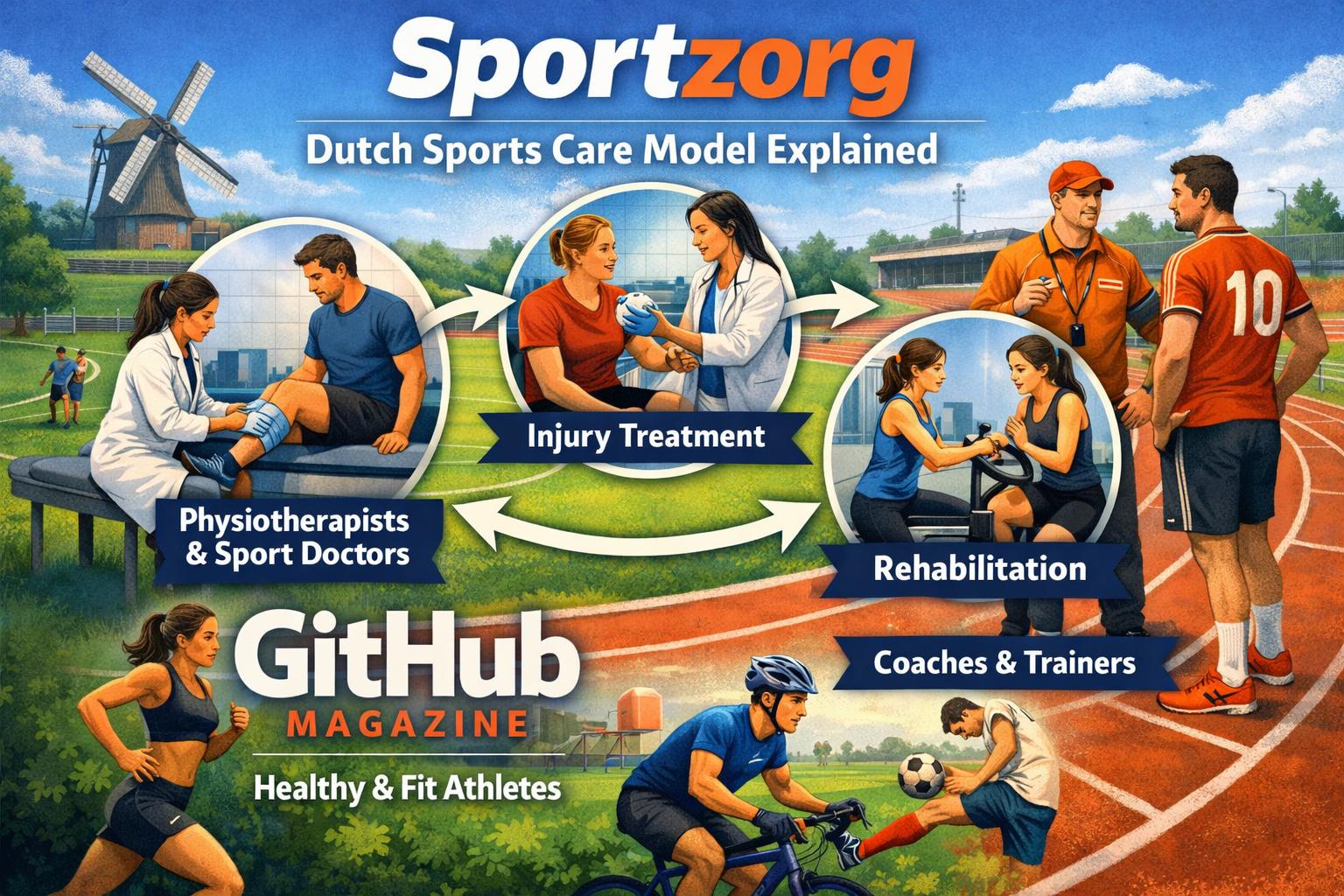
In the Dutch system, sportzorg brings together sport physicians, physiotherapists, dietitians, psychologists, and movement scientists into a single care pathway. Rather than isolating pain or illness, it looks at how the entire body moves, adapts, and recovers over time. The goal is not only to remove symptoms but to return people safely to activity and help them stay there.
This philosophy has grown alongside the Netherlands’ deep culture of cycling, community sports clubs, and public health planning. Today, sportzorg influences how injuries are treated, how training loads are monitored, how recovery is structured, and how long-term physical health is protected. It is a quiet system, rarely marketed internationally, yet it has become one of the most practical examples of how medicine and sport can function as one discipline.
What Sportzorg Means in Practice
Sportzorg emerged from the realization that traditional health care often struggles to meet the needs of active bodies. A runner with chronic Achilles pain, a teenager with overuse injuries, and a semi-professional footballer returning from surgery all require more than a prescription and rest advice. They require understanding of biomechanics, training volume, recovery cycles, and psychological pressure.
In practical terms, sportzorg is organized around three core principles: specialization, prevention, and continuity. Specialized clinicians study sports medicine as a discipline of its own. Prevention is treated as seriously as treatment. Continuity ensures that patients do not disappear after symptoms fade but remain supported as they return to activity.
This makes sportzorg different from casual sports treatment. It is not reactive care delivered only after injury. It is structured around monitoring risk factors, identifying movement inefficiencies, and managing physical stress before damage accumulates.
One Dutch sports medicine review summarized the approach simply: sportzorg bridges classic clinical medicine with performance science, turning recovery into a planned process rather than an improvised one.
A Multidisciplinary System Rather Than a Single Doctor
Sportzorg operates through collaboration. Instead of one professional managing everything, a network of specialists contributes to each case.
A typical team includes a sport physician who evaluates medical risk, diagnoses injury mechanisms, and oversees treatment planning. Physiotherapists guide rehabilitation through progressive movement and strength rebuilding. Podiatrists analyze foot mechanics and gait. Sports dietitians optimize fueling and recovery nutrition. Sports psychologists address fear of re-injury, motivation loss, and performance anxiety.
This structure reflects a belief that injuries rarely exist in isolation. A knee problem may involve hip weakness, footwear issues, training overload, and psychological stress simultaneously. Sportzorg treats these connections as essential data, not background noise.
| Dimension | Traditional Healthcare | Sportzorg Model |
|---|---|---|
| Primary goal | Reduce symptoms | Restore and optimize function |
| Team structure | Mostly single physician | Coordinated specialist network |
| Prevention focus | Limited | Central priority |
| Use of performance data | Rare | Standard |
| Follow-up care | Episodic | Continuous |
This team-based design reduces misdiagnosis, shortens recovery timelines, and lowers reinjury rates, particularly in endurance and team sports.
Institutional Roots in the Netherlands
Sportzorg developed alongside formal sports medicine organizations and national public health planning. Platforms such as Sportzorg.nl were created to centralize educational resources for athletes and practitioners. These platforms provide structured information on injuries, exercises, nutrition, mental resilience, and safe return-to-sport guidelines.
Importantly, Dutch sportzorg resources are not designed to replace medical professionals. They exist to raise literacy about injury risk, self-monitoring, and recovery planning while encouraging clinical consultation when warning signs appear.
This balance between self-education and professional oversight reflects a broader Dutch health philosophy: empower citizens, but anchor decisions in evidence-based medicine.
Over time, sportzorg became embedded into amateur sports clubs, cycling associations, and rehabilitation centers, gradually forming a national ecosystem rather than a single institution.
How a Typical Sportzorg Pathway Works
Although each case is personalized, most sportzorg pathways follow a consistent structure.
First comes screening and assessment. This often includes cardiovascular checks, movement analysis, joint stability testing, and fitness measurements such as VO₂ max for endurance athletes. These evaluations identify underlying risk factors before major injury occurs.
Next comes diagnosis and planning. Rather than labeling pain generically, clinicians map contributing elements: muscle imbalances, training history, footwear choices, recovery habits, and psychological stress.
Intervention follows. Physiotherapy programs are tailored week by week. Nutrition plans support tissue repair and energy balance. Training loads are modified using objective thresholds.
Finally, reintegration occurs. Patients return to sport gradually under monitoring, not abruptly after symptoms disappear. Long-term prevention plans continue after formal treatment ends.
This structured progression distinguishes sportzorg from ad-hoc recovery methods that rely on rest alone.
Evidence and Real-World Impact
Research from Dutch universities and rehabilitation centers has shown that runners and recreational athletes who undergo structured risk assessment and prevention planning experience significantly fewer repeat injuries than those who self-manage recovery.
One large dissertation study from Erasmus University found that individualized load monitoring combined with biomechanical screening reduced time lost to injury by more than one third in recreational runners.
These findings echo what clinicians observe daily: early identification of overload patterns prevents chronic damage.
An expert in sports rehabilitation summarized it this way: “Systematic injury profiling transforms uncertainty into measurable risk. When athletes understand how and why their bodies fail, recovery becomes predictable rather than emotional.”
Expert Perspectives Outside the Clinic
Dr. Eva Janssen, a sport physician in Utrecht, describes sportzorg as “health care that respects ambition.” “People do not just want to be pain-free,” she explains. “They want to move confidently again. Sportzorg treats movement itself as the outcome.”
Professor Mark de Vries, an exercise physiologist, emphasizes data integration. “Heart rate variability, training volume, sleep quality, and biomechanics are no longer separate domains. Sportzorg connects them into one decision system.”
Clinical researcher Dr. Clara Vos highlights the psychological dimension. “Fear of reinjury often delays return to sport more than physical weakness. Integrating mental recovery shortens rehabilitation more than any single exercise protocol.”
Together, these views reflect how sportzorg reframes injury as a complex systems problem rather than a simple mechanical failure.
Sportzorg Compared With Conventional Sports Medicine
| Feature | Conventional Sports Medicine | Sportzorg |
|---|---|---|
| Focus | Injury diagnosis and repair | Lifelong movement health |
| Patient role | Passive recipient | Active participant |
| Data usage | Clinical tests | Clinical + performance metrics |
| Prevention | Secondary | Primary |
| Care continuity | Limited | Ongoing |
Sportzorg does not replace sports medicine. It extends it into a broader framework that continues beyond clinic walls.
Community Health and Public Benefit
Sportzorg’s influence extends beyond elite performance. It supports national goals related to aging populations, cardiovascular disease prevention, and mental well-being.
In cycling-dense cities and amateur football leagues, early access to sportzorg principles reduces long-term disability from untreated injuries. It keeps older adults mobile, workers productive, and young athletes safe from burnout.
Educational initiatives associated with sportzorg teach proper warm-up routines, progressive training planning, and realistic recovery timelines. These small interventions accumulate into large population-level health benefits.
Technology and the Modern Sportzorg Toolkit
Wearable sensors, GPS training logs, motion capture systems, and tele-rehabilitation platforms increasingly shape sportzorg practice.
These tools allow clinicians to detect overload before pain begins, adjust training remotely, and observe rehabilitation quality outside clinical settings.
The model is evolving from appointment-based care into continuous monitoring.
As one Dutch physiotherapist remarked, “We are moving from treating injuries to predicting them.”
Challenges Inside the System
Despite its success, sportzorg faces structural limitations.
Access varies by region. Not all communities have specialized clinics. Insurance reimbursement for preventive services remains inconsistent. Coordinating large multidisciplinary teams requires administrative resources.
Public understanding is also uneven. Many recreational athletes still view sports health as optional rather than essential, delaying care until damage is severe.
Addressing these gaps will determine whether sportzorg remains a national specialty or becomes an international blueprint.
Takeaways
• Sportzorg is a structured Dutch system for sports-focused health care.
• It integrates medicine, physiotherapy, nutrition, psychology, and performance science.
• Prevention is treated as seriously as injury treatment.
• Data-driven screening reduces reinjury risk significantly.
• The model benefits everyday exercisers, not only professionals.
• Technology is expanding sportzorg beyond clinic walls.
Conclusion
Sportzorg represents a quiet revolution in how societies think about health and movement. It rejects the idea that physical activity should be medically invisible until something breaks. Instead, it treats motion itself as a vital sign worth protecting.
By combining clinical expertise with performance science and long-term monitoring, sportzorg transforms recovery into a process and prevention into a discipline. Its success in the Netherlands shows that sports health does not have to live on the margins of medicine.
As populations age and sedentary lifestyles increase chronic disease, systems like sportzorg offer a practical alternative: treat movement as infrastructure, protect it systematically, and allow people to remain active not just for seasons, but for decades.
In that sense, sportzorg is less about sport than about sustainability of the human body.
FAQs
What does sportzorg mean?
It means “sports care” and refers to a coordinated health system for active individuals.
Is sportzorg only for professional athletes?
No. It serves recreational exercisers, older adults, and anyone who trains regularly.
Does sportzorg prevent injuries?
Yes. Screening and training analysis reduce overload and recurrence risk.
Is sportzorg available outside the Netherlands?
Similar models exist, but the term and structure are most formalized in Dutch health systems.
Does sportzorg replace normal doctors?
No. It complements general medicine with specialized movement-focused care.

Related Posts

Rowdy Oxford Lawsuit Explained

Stevens Disposal and Waste Management Systems