
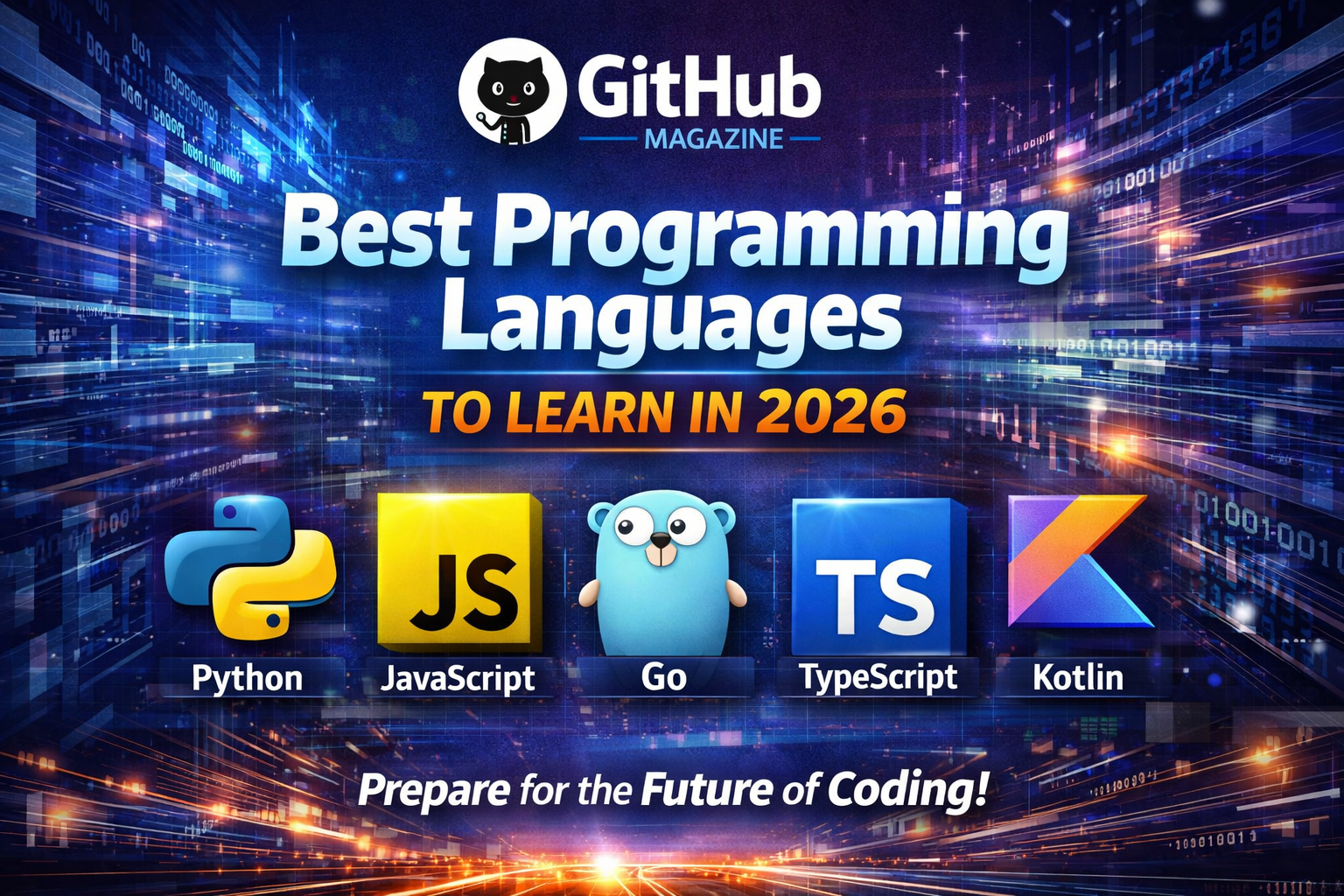
Best Programming Languages to Learn in 2026
I often hear the same urgent question repeated across classrooms, forums, and workplaces: which programming languages truly matter in 2026? The answer, at its core, revolves around five dominant forces shaping the digital world today. Python leads the charge in artificial intelligence and data science. JavaScript continues to power the web. TypeScript strengthens large-scale development. Rust introduces safer performance for critical systems. Go drives the infrastructure behind cloud computing.
Within the first glance, the answer appears straightforward. Yet the deeper reality is more layered. Programming languages are no longer chosen simply for syntax or ease of use. They are chosen for ecosystems, scalability, and alignment with the future of technology. Artificial intelligence, distributed systems, and real-time applications have redefined what developers must prioritize.
As industries evolve, so do expectations. Employers are not just seeking developers who can write code, but professionals who understand how systems interact, scale, and adapt. The languages explored here are not just popular choices; they are reflections of where technology is heading. Each represents a different dimension of modern development, from intelligence to infrastructure.
Python: The Language of Intelligence
Python has grown far beyond its reputation as a beginner-friendly language. In 2026, it stands at the center of artificial intelligence, machine learning, and data science. Its clean syntax and vast ecosystem make it accessible while remaining powerful enough for complex systems.
The strength of Python lies in its libraries. Tools like TensorFlow, PyTorch, and Pandas allow developers to build advanced models and analyze massive datasets with relative ease. This has made Python the default choice for AI research and implementation.
Guido van Rossum once described Python as a language designed for readability and productivity, a philosophy that continues to define its success. Its ability to bridge simplicity with capability has positioned it as a foundational tool in modern computing.
Despite its advantages, Python is not without limitations. Its performance can lag behind compiled languages, particularly in high-performance scenarios. Still, its dominance in AI and automation ensures its continued relevance in the years ahead.
JavaScript: The Universal Web Engine
JavaScript remains the backbone of the internet. Nearly every interactive website relies on it, and its reach extends far beyond the browser. In 2026, JavaScript powers servers, mobile applications, and even desktop software.
Frameworks such as React and Next.js have transformed how developers build user interfaces, while Node.js enables server-side development using the same language. This unification has simplified workflows and accelerated development cycles.
Brendan Eich once noted that JavaScript’s greatest strength is its universality. It runs everywhere, making it indispensable for developers working across platforms. Its ecosystem, particularly the npm registry, provides access to an enormous range of tools and libraries.
However, JavaScript’s flexibility can also lead to inconsistencies, especially in large applications. This challenge has paved the way for TypeScript, which adds structure without sacrificing compatibility.
TypeScript: Structure in a Dynamic World
TypeScript has become a cornerstone of modern software development. Built as a superset of JavaScript, it introduces static typing, enabling developers to detect errors early and maintain complex codebases more effectively.
Its adoption has surged in enterprise environments where reliability and scalability are critical. Companies rely on TypeScript to manage large applications with multiple contributors, reducing the risk of bugs and improving code clarity.
Developers appreciate TypeScript for its balance between flexibility and discipline. It allows teams to write robust code while still leveraging JavaScript’s ecosystem.
Surveys among developers consistently show high satisfaction with TypeScript, reflecting its growing importance. As applications become more complex, tools that enhance maintainability are no longer optional. They are essential.
Rust: Performance Meets Safety
Rust represents a shift in how developers approach performance and security. It offers the speed of traditional systems languages while eliminating common memory-related errors.
Its unique ownership model ensures memory safety without requiring a garbage collector. This makes Rust particularly valuable in systems programming, game development, and blockchain technologies.
Graydon Hoare emphasized that Rust was designed to provide control without compromising safety. This philosophy has resonated with developers working on critical systems where reliability is paramount.
The learning curve can be steep. Concepts like borrowing and lifetimes require a new way of thinking. Yet those who invest the time often find Rust to be one of the most rewarding languages to master.
Go: The Language of the Cloud
Go was created to address the challenges of modern computing at scale. Its simplicity, combined with powerful concurrency features, makes it ideal for cloud-based systems and distributed architectures.
In 2026, Go is widely used in backend development and DevOps. Tools like Docker and Kubernetes rely on Go, highlighting its importance in infrastructure.
Rob Pike described Go as a language built for clarity and efficiency. Its straightforward syntax reduces complexity, allowing developers to focus on solving problems rather than managing intricate language features.
While it lacks some advanced abstractions, its strengths in speed and scalability make it a preferred choice for building reliable systems.
Comparative Overview of Top Languages
| Language | Primary Use Case | Strengths | Weaknesses |
|---|---|---|---|
| Python | AI, Data Science | Easy syntax, vast libraries | Slower performance |
| JavaScript | Web Development | Universal, flexible | Inconsistent structure |
| TypeScript | Enterprise Applications | Strong typing, scalable | Learning overhead |
| Rust | Systems Programming | Memory safety, performance | Steep learning curve |
| Go | Cloud & Backend Systems | Fast, simple, concurrent | Limited abstractions |
Industry Demand and Salary Trends
| Language | Average Salary (USD) | Industry Demand Level | Growth Trend |
|---|---|---|---|
| Python | $120,000 | Very High | Rising |
| JavaScript | $110,000 | Extremely High | Stable |
| TypeScript | $125,000 | High | Rising |
| Rust | $135,000 | Moderate | Rapid |
| Go | $130,000 | High | Rising |
The Shift Toward Specialized Development
I have noticed that the programming world is becoming increasingly specialized. Developers are no longer expected to master every language. Instead, they focus on areas that align with their interests and industry demands.
AI engineers gravitate toward Python. Backend engineers often choose Go or Rust. Frontend developers rely on JavaScript and TypeScript. This specialization reflects the complexity of modern systems.
Martin Fowler observed that depth of knowledge is becoming more valuable than breadth. As technology evolves, expertise in a specific domain offers a competitive advantage.
This shift encourages continuous learning. Developers must adapt to new tools and frameworks while deepening their understanding of chosen languages.
The Role of Community and Ecosystem
The success of a programming language depends not only on its technical features but also on its community and ecosystem. Active communities provide support, resources, and innovation.
Python’s extensive libraries, JavaScript’s npm ecosystem, and Rust’s growing community have all contributed to their widespread adoption. These ecosystems enable faster development and foster collaboration.
Open-source contributions play a crucial role in this process. Developers contribute to projects, share knowledge, and build tools that benefit the entire community.
In 2026, choosing a language often means choosing a community. The strength of that community can significantly impact a developer’s experience and success.
Takeaways
- Python leads in artificial intelligence and data-driven applications
- JavaScript remains essential for web and cross-platform development
- TypeScript enhances scalability and maintainability in large projects
- Rust offers unmatched safety and performance for critical systems
- Go powers modern cloud infrastructure and backend services
- Specialization is shaping career paths in software development
- Strong ecosystems and communities drive language adoption
Conclusion
I see 2026 as a pivotal year in the evolution of programming languages. The focus has shifted from general-purpose tools to specialized solutions that address real-world challenges. Each language discussed here represents a different aspect of modern computing, from intelligent systems to scalable infrastructure.
The decision to learn a programming language is no longer about following trends. It is about understanding where technology is heading and aligning skills accordingly. Python opens doors to AI. JavaScript and TypeScript dominate application development. Rust and Go redefine performance and scalability.
What stands out most is the need for adaptability. Technology will continue to evolve, and so will the tools we use. The most successful developers will be those who remain curious, flexible, and willing to learn. The future of programming is not defined by a single language but by the ability to navigate an ever-changing landscape.
FAQs
Which programming language should I learn first in 2026?
Python is the most recommended starting point due to its simplicity and wide range of applications, especially in AI and data science.
Is JavaScript still relevant today?
Yes, JavaScript remains essential for web development and continues to be one of the most widely used languages globally.
Why is TypeScript becoming popular?
TypeScript improves code reliability and scalability, making it ideal for large and complex applications.
Is Rust difficult to learn?
Rust has a steep learning curve, but its benefits in performance and safety make it highly valuable for systems programming.
Should I learn Go for my career?
Go is an excellent choice for backend and cloud development, particularly in modern infrastructure environments.

Related Posts

Why Your Computer Says System Repairing Itself
Multitenant Database Containers Explained