
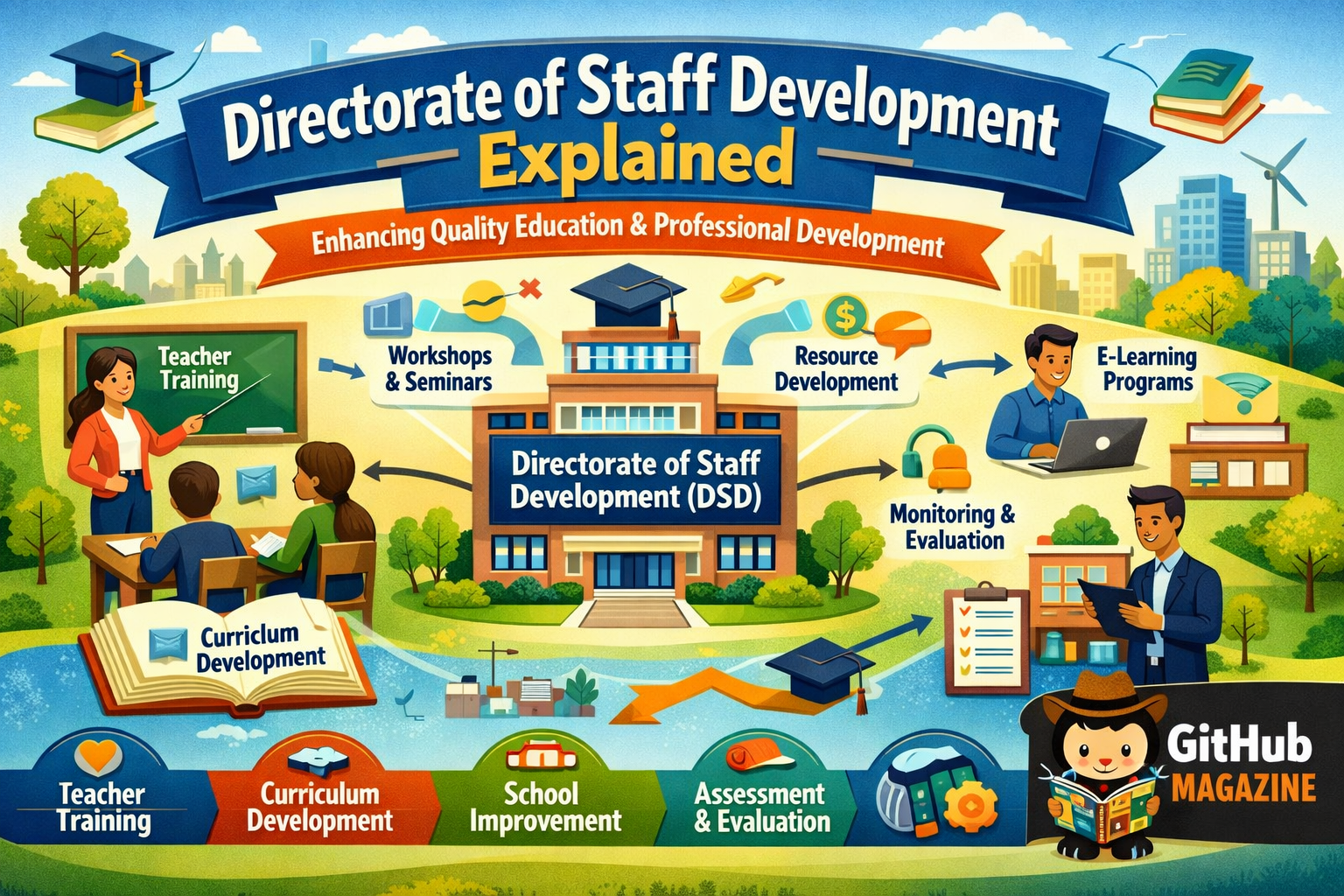
Directorate of Staff Development Explained
I have always believed that the strength of any education system begins with the people who stand in front of the classroom. The Directorate of Staff Development (DSD) exists to ensure those individuals are prepared, supported, and continuously evolving. It is a central institutional body responsible for teacher training, professional development, and aligning teaching practices with national education standards. At its core, the Directorate shapes how teachers teach, how students learn, and how systems improve.
Within its early implementation, particularly in regions like Punjab, the Directorate became a structured response to fragmented and outdated teacher training systems. It introduced organized, consistent, and ongoing professional learning frameworks that moved beyond one-time workshops. The goal was clear: create a sustainable model where teachers are not only trained but continuously developed.
The significance of the Directorate has grown with global demands for accountability in education. Governments now expect measurable improvements in literacy, numeracy, and classroom engagement. Institutions like the DSD stand at the center of this transformation, acting as both designers and evaluators of teacher performance. It is no longer just about delivering training sessions; it is about building an ecosystem where teaching becomes a dynamic, evolving profession.
The Origins and Institutional Evolution
The Directorate of Staff Development emerged as part of broader education reforms in the early 2000s. Before its establishment, teacher training lacked coherence, consistency, and long-term vision. Programs were often irregular, disconnected from classroom realities, and insufficient in addressing modern pedagogical needs.
The introduction of the Continuous Professional Development (CPD) model marked a turning point. Around 2007, the Directorate deployed District Teacher Educators (DTEs), who became the backbone of on-ground training delivery. This model ensured that training was not limited to urban centers but reached rural and underserved schools.
Over time, the Directorate evolved into more than a training provider. It became a policy-shaping institution that worked closely with government bodies and development partners. Its role expanded to include curriculum alignment, teacher assessment, and systemic reform. This transformation reflects a broader shift in education systems, where teacher development is no longer secondary but central to achieving quality education.
Core Functions and Strategic Mandate
The Directorate operates through a comprehensive mandate that integrates multiple dimensions of teacher development. Its primary responsibility is to ensure continuous learning opportunities for teachers at every stage of their careers.
It designs structured training modules aligned with curriculum changes and national education goals. It also manages induction programs for newly recruited teachers and refresher courses for experienced educators. Monitoring mechanisms such as classroom observations and feedback systems allow the Directorate to assess the effectiveness of its programs.
An education policy expert once noted that sustainable reform depends on institutional continuity. The Directorate provides that continuity by embedding professional learning into the system rather than treating it as an isolated initiative.
Another critical aspect of its mandate is the integration of technology. Digital tools, online modules, and blended learning systems have become essential in modern teacher training. These innovations allow the Directorate to extend its reach and adapt to changing educational environments.
Structural Framework and Operational Model
The Directorate follows a structured yet flexible operational model that balances centralized planning with decentralized implementation.
| Level | Key Role | Responsibilities |
|---|---|---|
| Provincial Directorate | Policy & Planning | Develops frameworks and coordinates with government |
| District Offices | Implementation | Manages training delivery and logistics |
| District Teacher Educators | Field Support | Provides mentoring and conducts training |
| Schools | Execution | Applies training outcomes in classrooms |
This layered structure ensures that policies are translated into practical actions at the school level. By placing teacher educators within districts, the Directorate creates a direct link between policy and practice.
The decentralized approach also allows for continuous feedback. Teachers can share challenges and experiences, enabling the Directorate to refine its programs. This adaptability is crucial in addressing diverse educational contexts and ensuring that training remains relevant.
Continuous Professional Development: The Engine of Reform
Continuous Professional Development stands at the heart of the Directorate’s work. Unlike traditional models that rely on occasional workshops, CPD emphasizes ongoing engagement and practical application.
The CPD framework includes regular training sessions, classroom observations, and collaborative learning opportunities. Teachers actively participate in their own development, making the process more effective and sustainable.
| CPD Component | Description | Frequency |
|---|---|---|
| Training Sessions | Focused on pedagogy and curriculum | Monthly |
| Classroom Observation | Feedback on teaching practices | Bi-monthly |
| Peer Learning Circles | Collaborative discussions | Ongoing |
| Assessment & Reporting | Evaluation of progress | Quarterly |
This model has contributed to improvements in teaching quality, particularly in foundational subjects. However, maintaining consistency across different regions remains a challenge, requiring continuous monitoring and support.
Measuring Impact and Outcomes
Assessing the impact of the Directorate’s initiatives involves analyzing both teaching practices and student outcomes. Classroom observations, teacher evaluations, and student performance data are key indicators.
Evidence from reform programs suggests that structured teacher training leads to measurable improvements in student learning. These gains are especially visible in early-grade education, where teaching quality plays a critical role.
However, measuring impact is complex. Factors such as socio-economic conditions, school infrastructure, and community support can influence outcomes. As one education reform expert observed, true change requires not only structural adjustments but also shifts in mindset and culture.
The Directorate’s effectiveness depends on its ability to influence both systems and individuals. It must ensure that training translates into meaningful classroom practices and sustained improvements.
Challenges in Implementation
Despite its progress, the Directorate faces several challenges that affect its efficiency and reach. Resource constraints remain a major issue, particularly in ensuring equal access to training across all regions.
Teacher resistance to change is another significant barrier. Transitioning from traditional methods to modern pedagogical approaches requires not only training but also motivation and support. Some educators may perceive continuous training as an additional burden rather than an opportunity.
Technological limitations also pose challenges. While digital tools offer new possibilities, disparities in access and digital literacy can hinder their effectiveness. Ensuring that all teachers benefit from technological advancements requires careful planning and investment.
Addressing these challenges is essential for maintaining the quality and sustainability of the Directorate’s programs.
The Role of Technology in Modern Training
Technology has transformed the way teacher training is delivered. The Directorate has increasingly incorporated digital platforms to enhance accessibility and flexibility.
Online modules, virtual workshops, and mobile-based learning tools allow teachers to engage with training materials at their own pace. This approach is particularly valuable in reaching remote areas and supporting continuous learning.
An educational technologist once explained that digital platforms have shifted training from isolated events to ongoing processes. However, the success of these platforms depends on infrastructure, connectivity, and user readiness.
Blended learning models, combining online and face-to-face interactions, offer a balanced approach. They provide flexibility while maintaining the benefits of direct mentorship and collaboration.
Policy Alignment and Global Context
The Directorate operates within a global framework that emphasizes the importance of teacher quality in achieving educational goals. International education agendas highlight the need for qualified and well-trained teachers.
Aligning with these frameworks requires adapting global best practices to local contexts. The Directorate must ensure that its programs meet international standards while addressing regional needs.
This alignment also strengthens collaboration with development partners and enhances the credibility of the education system. It positions the Directorate as a key player in both national and global education reform efforts.
Future Directions and Reform Trajectories
Looking ahead, the Directorate is likely to focus on innovation, personalization, and data-driven decision-making. Advances in technology may enable more tailored training programs that address individual teacher needs.
Partnerships with academic institutions and research organizations could further enhance the quality of training content. These collaborations would support evidence-based approaches and continuous improvement.
There is also increasing recognition of the importance of teacher well-being. Supporting educators emotionally and professionally is essential for sustaining motivation and performance.
The future of the Directorate depends on its ability to adapt, innovate, and maintain its commitment to improving education through teacher development.
Key Takeaways
- The Directorate of Staff Development plays a central role in improving teacher quality
- Continuous Professional Development ensures ongoing teacher learning
- Decentralized implementation supports contextual adaptation
- Technology is reshaping training delivery and accessibility
- Measuring impact requires both data and cultural change
- Challenges include resource limitations and resistance to change
- Future reforms will focus on personalization and innovation
Conclusion
I see the Directorate of Staff Development as more than an institutional mechanism. It represents a commitment to valuing teachers as professionals who require continuous growth and support. By embedding professional development into the education system, it transforms teaching into a dynamic and evolving practice.
Its journey reflects both progress and complexity. While it has improved training structures and teaching quality, its long-term success depends on sustained investment, adaptability, and cultural change. Education systems are intricate, and meaningful reform requires coordination across multiple levels.
The Directorate stands as a reminder that the future of education is shaped not only by policies and curricula but by the people who bring them to life. Strengthening teacher development is, ultimately, an investment in the future of society itself.
FAQs
What is the Directorate of Staff Development?
It is an institution responsible for training teachers and improving teaching quality through structured professional development programs.
What does Continuous Professional Development involve?
It includes ongoing training, mentoring, classroom observation, and collaborative learning for teachers.
Why is teacher training essential?
Teacher quality directly influences student learning outcomes and overall education system performance.
How does technology support teacher development?
Technology enables flexible training through online platforms, virtual sessions, and digital resources.
What are the main challenges faced by the Directorate?
Challenges include limited resources, resistance to change, and unequal access to technology.

Related Posts

Toro Star: The Complete Guide to El Toro and the Constellation Taurus

Generational Equity Lawsuit Explained