
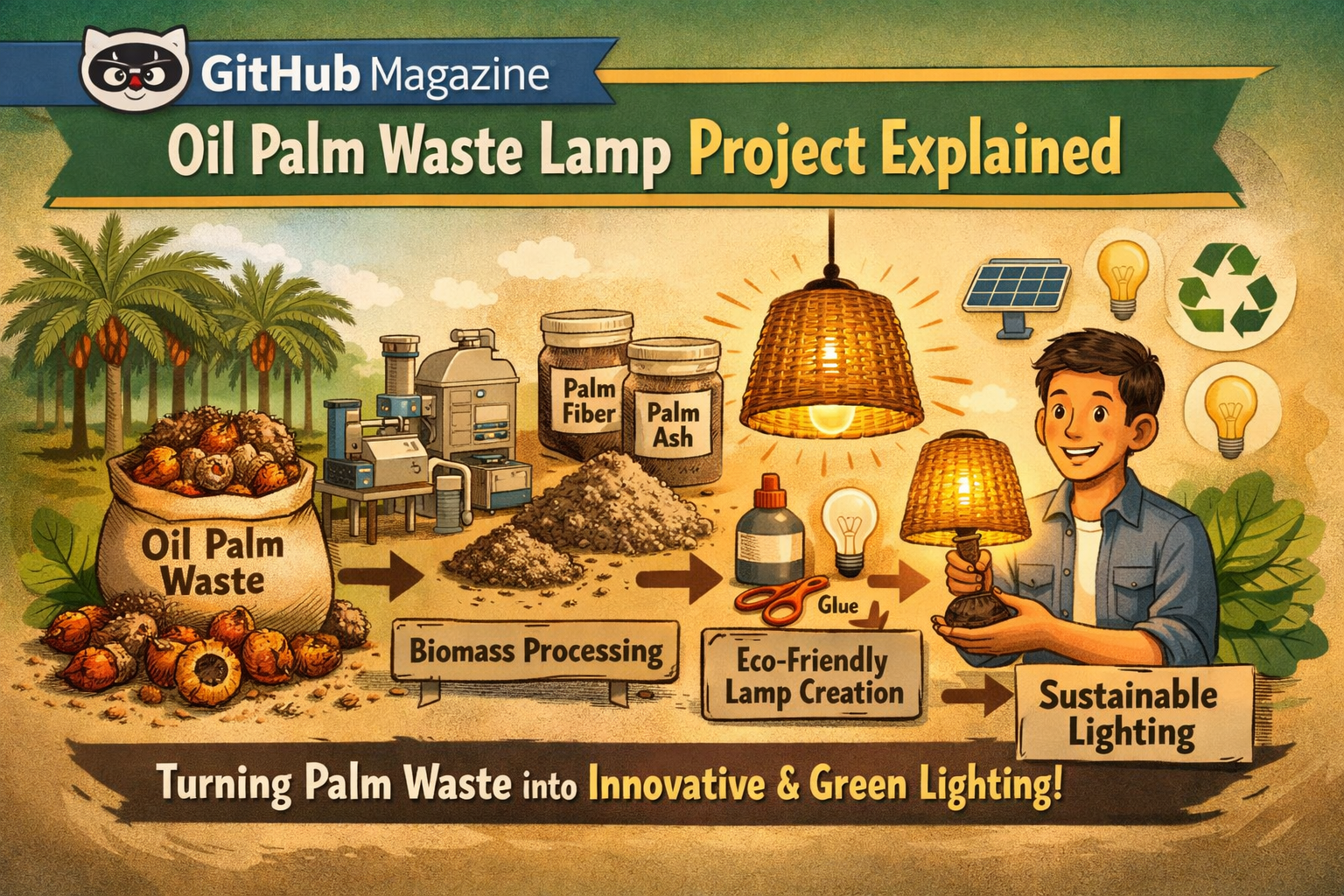
Oil Palm Waste Lamp Project Explained
I have always believed that the most meaningful sustainability solutions are the ones rooted in everyday realities, and the oil palm waste lamp project exemplifies exactly that. In regions where palm oil production dominates agricultural landscapes, the challenge of managing massive amounts of biomass waste has persisted for decades. Now, that same waste is being reimagined as a source of light.
Within the first moments of understanding this initiative, its relevance becomes undeniable. Oil palm waste lamps provide affordable, locally sourced lighting solutions while reducing environmental harm. They directly address two pressing global issues: waste mismanagement and energy poverty. For rural communities lacking reliable electricity, these lamps offer a practical alternative to kerosene and diesel-based lighting.
The innovation lies not in complexity but in rethinking value. Materials once discarded or burned are now processed into fuel or structural components for lighting devices. This shift not only reduces emissions but also creates new economic opportunities for farmers and small-scale producers.
Across Southeast Asia and emerging regions, pilot programs demonstrate how circular economy principles can thrive in local contexts. These lamps are more than objects; they are evidence that sustainability can be accessible, scalable, and deeply human-centered.
The Scale of Oil Palm Waste and Its Untapped Potential
I often reflect on how vast agricultural systems generate equally vast amounts of waste, and oil palm cultivation stands as one of the clearest examples. With global production reaching tens of millions of tons annually, the byproducts are equally immense. For every unit of palm oil produced, several units of biomass waste emerge, including empty fruit bunches, fibers, and shells.
Historically, this waste has been treated as a disposal problem rather than a resource. Open burning and natural decomposition release greenhouse gases, contributing to environmental degradation. In many cases, these practices persist due to limited infrastructure and lack of alternative uses.
Yet within this challenge lies significant potential. The fibrous and carbon-rich composition of oil palm residues makes them ideal candidates for conversion into usable materials. Through processes like drying, grinding, and carbonization, these byproducts can be transformed into fuel or structural components.
This shift from waste to resource represents a broader change in perspective. Instead of viewing agricultural residues as burdens, communities are beginning to see them as building blocks for innovation. The lamp project is one of the most accessible manifestations of this transformation.
From Residue to Radiance: How the Lamp Project Works
I find the technical simplicity of the oil palm waste lamp project particularly compelling. At its core, the process transforms raw agricultural residues into functional lighting systems through a series of manageable steps.
The journey begins with collection and sorting. Palm kernel shells, empty fruit bunch fibers, and other residues are gathered and prepared. These materials are then dried to reduce moisture content, ensuring efficient processing.
For fuel-based lamps, the next step involves carbonization, where biomass is converted into biochar. This material is then compressed into briquettes that burn more cleanly than traditional fuels. For structural applications, fibers are ground and molded into durable lamp casings, sometimes combined with natural binders.
In more advanced designs, these biomass components are integrated with LED or solar elements, creating hybrid systems that maximize efficiency and usability.
| Component Type | Source Material | Processing Method | Final Use |
|---|---|---|---|
| Biochar Fuel | Palm kernel shells | Carbonization, compression | Lamp fuel |
| Structural Housing | Empty fruit bunch fibers | Grinding, molding | Lamp casing |
| Hybrid Systems | Mixed biomass + electronics | Integration | Solar-biomass lamp |
The result is a product that is both functional and locally producible. Its simplicity ensures that communities can adopt and adapt the technology without heavy reliance on external resources.
Lighting the Underserved: Social Impact in Rural Communities
I have seen how access to something as basic as light can transform daily life, and this project brings that transformation into focus. In many rural areas, electricity remains unreliable or entirely absent, forcing households to depend on costly and hazardous alternatives like kerosene lamps.
Oil palm waste lamps offer a decentralized solution. By utilizing materials already available within the community, they reduce dependence on imported fuels. This not only lowers costs but also increases energy security.
The impact extends beyond illumination. Children gain the ability to study after sunset, improving educational outcomes. Small businesses can operate longer hours, boosting local economies. Women, often responsible for managing household energy, benefit from safer and cleaner lighting options.
An energy development specialist once noted that localized energy solutions are essential for sustainable progress, emphasizing that communities thrive when they control their own resources. This principle is evident in how these lamp projects empower local populations.
Moreover, the production process itself creates employment opportunities, from material collection to manufacturing and distribution, strengthening community resilience.
Environmental Gains Beyond Waste Reduction
I have always considered environmental solutions most effective when they address multiple problems at once, and this project does exactly that. By repurposing oil palm waste, it tackles both waste management and energy-related emissions.
Traditional disposal methods, such as burning or dumping, release significant amounts of greenhouse gases. By converting these residues into usable materials, the project reduces methane emissions and limits environmental damage.
Replacing kerosene lamps with biomass-based or hybrid alternatives further enhances environmental benefits. These lamps produce fewer pollutants, improving indoor air quality and reducing health risks associated with smoke inhalation.
| Environmental Factor | Traditional Practice | Lamp Project Impact |
|---|---|---|
| Waste Disposal | Burning or dumping | Resource utilization |
| Greenhouse Gas Emissions | High methane release | Reduced emissions |
| Indoor Air Pollution | Kerosene smoke | Cleaner combustion |
| Resource Efficiency | Linear use | Circular economy model |
A sustainability researcher once emphasized that transforming agricultural waste into valuable products is essential for reducing environmental footprints. The lamp project embodies this idea in a tangible and accessible way.
Innovation at the Intersection of Tradition and Technology
I often admire solutions that respect tradition while embracing innovation, and this project strikes that balance effectively. In many communities, biomass has long been used for basic energy needs, and this familiarity provides a foundation for adoption.
The lamp project builds on traditional practices by introducing improved methods and technologies. Artisans and engineers collaborate to design products that are both functional and culturally relevant. In some cases, traditional crafting techniques are incorporated into lamp designs, enhancing their appeal.
Technological advancements have also played a crucial role. Improved carbonization processes increase the efficiency of biochar production, while LED technology ensures brighter and more reliable lighting.
An expert in renewable materials once observed that combining local resources with modern technology creates scalable solutions for rural electrification. This integration is evident in how these lamps evolve from simple concepts into practical tools.
The result is a product that feels both familiar and forward-looking, bridging the gap between past practices and future possibilities.
Economic Viability and Market Potential
I see economic sustainability as a key factor in the long-term success of any innovation, and the oil palm waste lamp project demonstrates strong potential in this area. By turning low-value waste into marketable products, it creates new income streams for communities.
Production costs remain relatively low due to the availability of raw materials. This affordability ensures that the lamps are accessible to consumers while still allowing producers to generate profit.
In many regions, cooperative models have emerged to manage production and distribution. These cooperatives enable shared benefits and foster a sense of collective ownership. Support from development organizations often helps establish these systems through training and funding.
The market potential extends beyond rural communities. Urban consumers interested in sustainable products are increasingly drawn to eco-friendly innovations, opening opportunities for broader commercialization.
As awareness grows, these lamps may find a place in global markets, further expanding their economic impact.
Challenges and Limitations
I recognize that no innovation is without its challenges, and this project is no exception. One of the primary issues lies in maintaining consistency in material quality. Variations in waste composition can affect the performance of the final product.
Technical limitations also exist. While biomass-based lamps are cleaner than traditional options, they may still produce some emissions. Hybrid systems, although more efficient, require higher initial investment and technical knowledge.
Policy and regulatory environments can influence the success of such initiatives. In some regions, unclear guidelines for biomass utilization create uncertainty for producers and investors.
Scaling up production presents another challenge. Ensuring that increased demand does not compromise sustainability requires careful planning and management.
Despite these obstacles, ongoing research and community engagement continue to refine and improve the model.
Global Replication and Future Prospects
I find it encouraging that the principles behind this project are not limited to a single region. The concept of transforming agricultural waste into usable products can be applied wherever biomass residues are abundant.
In different parts of the world, similar initiatives are exploring the use of various agricultural byproducts for energy and material applications. This adaptability highlights the universal relevance of the approach.
The growing emphasis on circular economy models further supports the expansion of such projects. By prioritizing resource efficiency and sustainability, these models align with global development goals.
Future advancements in material science and renewable energy technologies may enhance the efficiency and scalability of these lamps. Integration with digital tools and smart systems could also open new possibilities.
The potential for growth is significant, and the project’s evolution will likely continue to inspire new innovations.
Takeaways
- Oil palm waste can be transformed into affordable and functional lighting solutions
- The project addresses environmental, social, and economic challenges simultaneously
- Rural communities benefit through improved lighting and new income opportunities
- Environmental impacts are reduced through better waste management and lower emissions
- Innovation combines traditional practices with modern technologies
- Challenges include scalability, consistency, and regulatory support
- The model has potential for global adaptation beyond palm oil regions
Conclusion
I have come to see the oil palm waste lamp project as more than a technical innovation; it is a reflection of how resourcefulness can reshape entire systems. By turning waste into light, it challenges conventional ideas about value and sustainability.
Its strength lies in its accessibility. It does not rely on complex infrastructure or expensive inputs, making it suitable for communities that need practical solutions. At the same time, it embraces innovation, ensuring that the technology continues to improve.
The journey ahead involves addressing challenges related to scaling and standardization. However, the progress already made suggests that these barriers can be overcome through collaboration and continued investment.
Ultimately, this project offers a powerful reminder that sustainable solutions often begin with rethinking what we already have. In doing so, it illuminates a path toward a more inclusive and environmentally responsible future.
FAQs
What materials are used in oil palm waste lamps?
They typically use palm kernel shells, fibers, and empty fruit bunches, processed into fuel or structural components for lighting devices.
Are these lamps safe to use indoors?
Yes, especially improved designs that produce less smoke than traditional kerosene lamps, making them safer for indoor environments.
Do these lamps require electricity?
Some designs are purely biomass-based, while others incorporate solar or LED components for enhanced performance.
Who benefits most from this project?
Rural communities without reliable electricity benefit the most, gaining affordable and accessible lighting solutions.
Can this concept be used outside palm oil regions?
Yes, similar approaches can be applied using other agricultural wastes, making the model adaptable globally.

Related Posts

Debby Clarke Belichick Life and Legacy

Constantine Yankoglu Biography and Private Life