
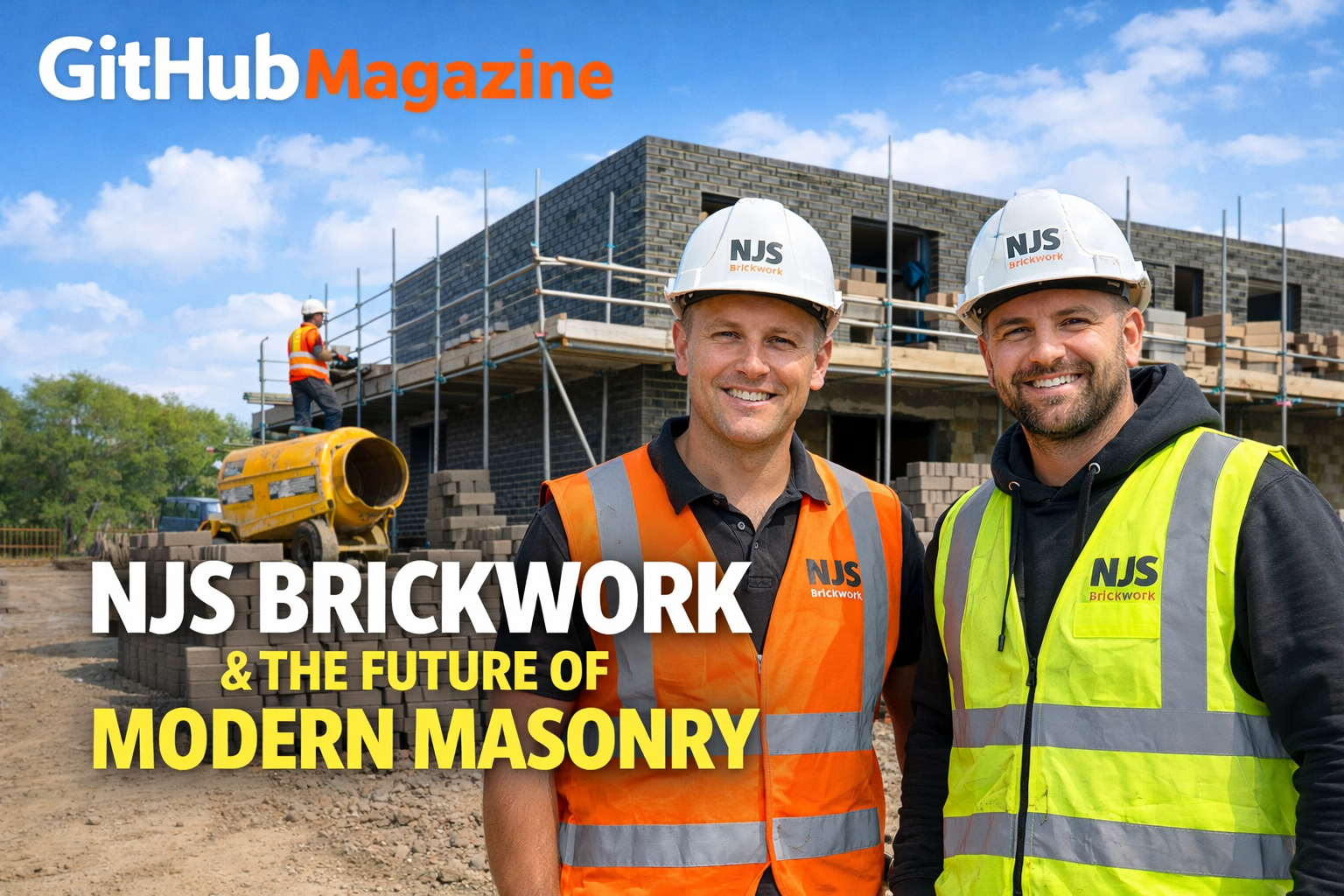
NJS Brickwork and Modern Masonry Construction
I often find it fascinating that some of the oldest construction techniques continue to define the skylines and neighborhoods we live in today. Brickwork, a craft dating back thousands of years, still forms the backbone of homes, schools, and commercial buildings across the world. While architecture and construction technology evolve rapidly, the fundamental role of skilled masonry remains unchanged.
NJS Brickwork represents this bridge between heritage and innovation. Operating within the broader NJS Group, the company focuses on delivering professional masonry services that support a wide range of construction projects. From residential housing developments to commercial buildings, their work demonstrates how traditional bricklaying skills remain essential in the modern construction industry.
The growing complexity of construction projects has increased the demand for contractors who combine craftsmanship with efficiency. Developers today expect more than simply laying bricks. They require coordination with architects, engineers, and project managers while ensuring that structures meet safety regulations, energy standards, and aesthetic expectations.
At its core, brickwork is about creating structures that last. The durability of brick, combined with careful masonry techniques, produces buildings capable of standing for generations. Companies like NJS Brickwork contribute to this legacy by applying time-tested knowledge alongside modern tools and construction management methods.
Understanding how masonry contractors operate provides insight into a broader truth about the building industry: even in an age dominated by digital technology and advanced materials, skilled hands and practical experience remain irreplaceable.
The Origins and Growth of NJS Brickwork
The development of NJS Brickwork is closely connected to the growth of the NJS Group, a construction services organization established in the 1990s. The company built its foundation by offering integrated construction services that included brickwork, scaffolding, and roofing. This integrated structure allowed the organization to handle multiple aspects of building projects under one umbrella.
Over time, this model proved highly practical for developers and contractors. Construction sites often involve numerous subcontractors, and coordinating these different teams can slow progress. By combining related services within one organization, companies can streamline communication and maintain clearer accountability during projects.
Within this structure, NJS Brickwork emerged as a specialized division focused entirely on masonry work. Its teams handle tasks ranging from small residential structures to large-scale housing developments and commercial buildings.
Growth in the construction sector has contributed significantly to the demand for skilled masonry services. Urban expansion, housing shortages, and infrastructure development continue to require durable and reliable building methods. Brickwork remains one of the most trusted solutions.
The company’s expansion into international markets demonstrates how construction firms increasingly operate across borders. Knowledge of building techniques, project management systems, and workforce training can transfer between regions while adapting to local regulations and environmental conditions.
Today, NJS Brickwork reflects a construction philosophy that values both efficiency and craftsmanship. Its role within large construction projects highlights how specialized expertise remains vital to successful building outcomes.
Brickwork in Modern Construction
Although modern architecture frequently features steel frames and glass façades, brick remains one of the most widely used materials in residential construction. Its durability, strength, and visual character make it a preferred material for builders and homeowners alike.
One reason brick continues to dominate certain sectors is its long lifespan. Properly constructed brick buildings can endure for over a century with minimal structural deterioration. Many historic buildings constructed in the eighteenth and nineteenth centuries still stand today, demonstrating the resilience of masonry.
Beyond durability, brick provides strong resistance to fire and harsh weather conditions. This resilience makes it particularly valuable in urban environments where safety and long-term structural performance are essential.
Another advantage is maintenance. Brick walls require far less upkeep than many other materials. While paint and coatings may deteriorate over time, exposed brick maintains its appearance with relatively minimal intervention.
Modern construction also values brick for its architectural flexibility. Architects can use different brick patterns, colors, and textures to create distinctive building designs while preserving structural integrity.
For companies like NJS Brickwork, these qualities ensure that masonry remains a core component of contemporary construction. Even as new materials emerge, brick continues to deliver a reliable combination of function and visual appeal.
Traditional Bricklaying Techniques That Still Matter
The art of bricklaying depends on methods that have been refined over centuries. Despite the introduction of advanced tools and machinery, the basic techniques used by bricklayers remain remarkably consistent.
One of the most important elements of masonry is the bonding pattern used to arrange bricks. These patterns determine how weight is distributed across the wall and how well the structure resists movement or cracking.
Several bonding styles have become standard in construction. Each pattern serves a specific structural or aesthetic purpose.
Common Brick Bond Patterns
| Bond Type | Description | Typical Use |
|---|---|---|
| English Bond | Alternating rows of stretchers and headers | Structural load-bearing walls |
| Flemish Bond | Alternating header and stretcher bricks within the same course | Decorative façades |
| Stretcher Bond | Bricks laid lengthwise in uniform rows | Modern cavity walls |
| Header Bond | Bricks laid with short ends facing outward | Curved or thick masonry |
These patterns illustrate how bricklaying combines engineering and artistry. A properly bonded wall distributes structural stress evenly while also creating visual rhythm within the architecture.
In addition to bonding patterns, bricklayers must understand mortar composition, alignment techniques, and moisture control. Small errors during construction can lead to long-term structural weaknesses.
For experienced masonry contractors, mastering these traditional techniques remains essential even as construction technology evolves.
Technology Meets Craftsmanship
While the fundamentals of bricklaying remain traditional, modern construction tools have significantly improved accuracy and efficiency. Many masonry teams now rely on technology that enhances both precision and planning.
Laser leveling systems are commonly used to maintain perfectly aligned brick courses across long wall sections. These tools reduce measurement errors and ensure structural consistency.
Digital measuring equipment has also replaced many manual calculations. Builders can now verify dimensions quickly and adjust layouts with minimal disruption to construction schedules.
Another major innovation involves digital modeling. Architects and engineers increasingly use three-dimensional design software to visualize buildings before construction begins. These models allow contractors to identify potential structural challenges early in the design process.
Project management platforms also play a growing role in construction. These systems track timelines, labor allocation, and material usage, helping teams coordinate large projects more effectively.
Sustainability considerations have further influenced brickwork practices. Many builders now choose bricks manufactured with lower carbon emissions and improved thermal properties.
For companies like NJS Brickwork, the integration of modern technology enhances traditional craftsmanship rather than replacing it. Skilled bricklayers still rely on experience and judgment, but advanced tools allow them to deliver results with greater efficiency and consistency.
Types of Projects Handled by Brickwork Contractors
Professional masonry contractors contribute to a wide range of construction projects. Their work extends far beyond residential homes and includes commercial developments, public infrastructure, and historic restoration.
Brickwork plays a critical role in housing developments where hundreds of homes may be constructed within a single project. Consistency, speed, and structural reliability are essential in these environments.
Commercial projects present different challenges. Office buildings, retail centers, and warehouses often require complex structural coordination with steel frameworks and concrete systems.
Historic restoration represents another specialized area of masonry work. Repairing older buildings requires careful matching of materials and techniques to preserve architectural authenticity.
Typical Brickwork Project Categories
| Project Type | Description | Typical Clients |
|---|---|---|
| Residential Extensions | Home additions and garden walls | Homeowners |
| Housing Developments | Large residential estates | Property developers |
| Commercial Buildings | Offices, retail, industrial structures | Businesses |
| Restoration Projects | Historic masonry repair | Heritage organizations |
| Public Buildings | Schools, civic structures | Government agencies |
Each project category requires different planning strategies and technical knowledge. Experienced contractors must adapt their methods to suit structural requirements, architectural styles, and regulatory standards.
The Role of Skilled Labor in Construction
One of the most significant challenges facing the construction industry today is the shortage of skilled tradespeople. Bricklaying requires extensive training, and experienced workers are essential to maintaining quality construction standards.
Becoming a professional bricklayer typically involves apprenticeships and hands-on learning under experienced mentors. Workers must develop technical abilities alongside knowledge of safety procedures and building regulations.
Construction projects rely heavily on teamwork. Bricklayers must coordinate with carpenters, electricians, plumbers, and structural engineers throughout the building process.
Expert observers often emphasize the importance of skilled trades within the construction economy.
“Craft knowledge remains the backbone of reliable construction,” explains construction analyst Daniel Foster. “Without skilled workers on site, even the best architectural plans cannot become successful buildings.”
Training programs and apprenticeships play an essential role in addressing labor shortages. Many construction firms invest in workforce development initiatives to ensure that future generations continue learning these critical skills.
Companies that prioritize training not only strengthen their workforce but also contribute to the stability of the entire construction industry.
Brickwork and Sustainability
Sustainability has become a central concern within modern architecture. Builders increasingly evaluate materials based on their environmental impact and long-term performance.
Brick contributes to sustainable construction in several important ways. Although brick manufacturing requires energy, the material’s durability often compensates for this initial environmental cost.
Buildings constructed with brick frequently remain functional for over a century. This longevity reduces the need for demolition and replacement, lowering long-term environmental impact.
Brick also contributes to energy efficiency through thermal mass. Thick masonry walls absorb heat during the day and release it gradually at night. This natural temperature regulation helps stabilize indoor environments and reduce energy consumption.
Architectural sustainability researcher Laura Bennett explains, “Materials that last multiple generations reduce resource consumption and minimize construction waste.”
As environmental awareness grows, masonry contractors increasingly incorporate sustainable practices into their operations. Efficient material sourcing, waste reduction, and energy-conscious design all contribute to greener construction methods.
The Future of Brickwork in Global Construction
The construction industry continues to evolve rapidly as technology reshapes building practices. Digital tools, automation, and robotics are beginning to influence masonry work.
Experimental robotic systems capable of laying bricks automatically have already been developed. These machines can perform repetitive tasks quickly and with remarkable precision.
However, many experts believe automation will complement rather than replace skilled workers. Complex architectural designs and unexpected site conditions still require human judgment.
Future masonry companies will likely operate within a hybrid environment that blends craftsmanship with technological assistance. Skilled workers may supervise automated systems while focusing on intricate structural details and finishing work.
Global urbanization will also continue driving demand for housing and infrastructure. As cities expand, durable construction materials such as brick will remain essential to building stable communities.
For firms like NJS Brickwork, adapting to these changes will require continuous learning and innovation. The companies that succeed will be those capable of balancing tradition with modern efficiency.
Takeaways
• Brickwork remains one of the most durable and reliable construction methods in the world
• NJS Brickwork operates within an integrated construction model that includes related building services
• Traditional masonry techniques still play a vital role in structural stability
• Modern technology improves efficiency while preserving craftsmanship
• Skilled labor shortages remain a major challenge in construction industries worldwide
• Brick contributes to sustainability through durability and thermal mass properties
Conclusion
When I reflect on the enduring presence of brick buildings in cities and neighborhoods, it becomes clear why masonry continues to play such an important role in construction. Despite constant innovation in architecture and engineering, the reliability of brick remains difficult to replace.
Companies like NJS Brickwork demonstrate how traditional skills can coexist with modern building practices. Their work reflects a broader transformation within the construction industry where craftsmanship and technology complement each other rather than compete.
As construction methods evolve, the importance of skilled labor, durable materials, and thoughtful design will only increase. Brickwork embodies all three of these qualities. It represents not just a building method but a tradition of craftsmanship that has shaped architecture for centuries.
Looking ahead, the future of masonry will likely include advanced tools, digital modeling, and even robotics. Yet the essential principles of bricklaying will remain rooted in the same careful techniques that builders have practiced for generations.
In a rapidly changing world, that continuity offers both stability and inspiration for the buildings of tomorrow.
FAQs
What is NJS Brickwork?
NJS Brickwork is a masonry division within a broader construction services organization that specializes in bricklaying and structural masonry for residential, commercial, and development projects.
What services do brickwork contractors provide?
Brickwork contractors construct walls, façades, extensions, and structural masonry elements for homes, commercial buildings, and large housing developments.
Why is brick still widely used in construction?
Brick offers durability, fire resistance, weather protection, and long-term structural performance, making it a trusted material for many building projects.
How long can brick buildings last?
Properly constructed brick buildings can remain structurally sound for more than 100 years with minimal maintenance.
Is brick environmentally sustainable?
Brick contributes to sustainability through its long lifespan and thermal mass, which can improve building energy efficiency over time.

Related Posts

budget travel tips expensive cities usa

Mygreenbucks kenneth jones: Sustainable Personal Finance Guide