
Adultism Explained and Its Impact on Youth
I often notice that when discussions about discrimination arise, attention usually turns to race, gender, or inequality among adults. Yet another form of bias quietly structures daily life for millions of young people. Adultism refers to the system of beliefs and practices that assume adults are inherently more capable, rational, and deserving of authority than children or adolescents.
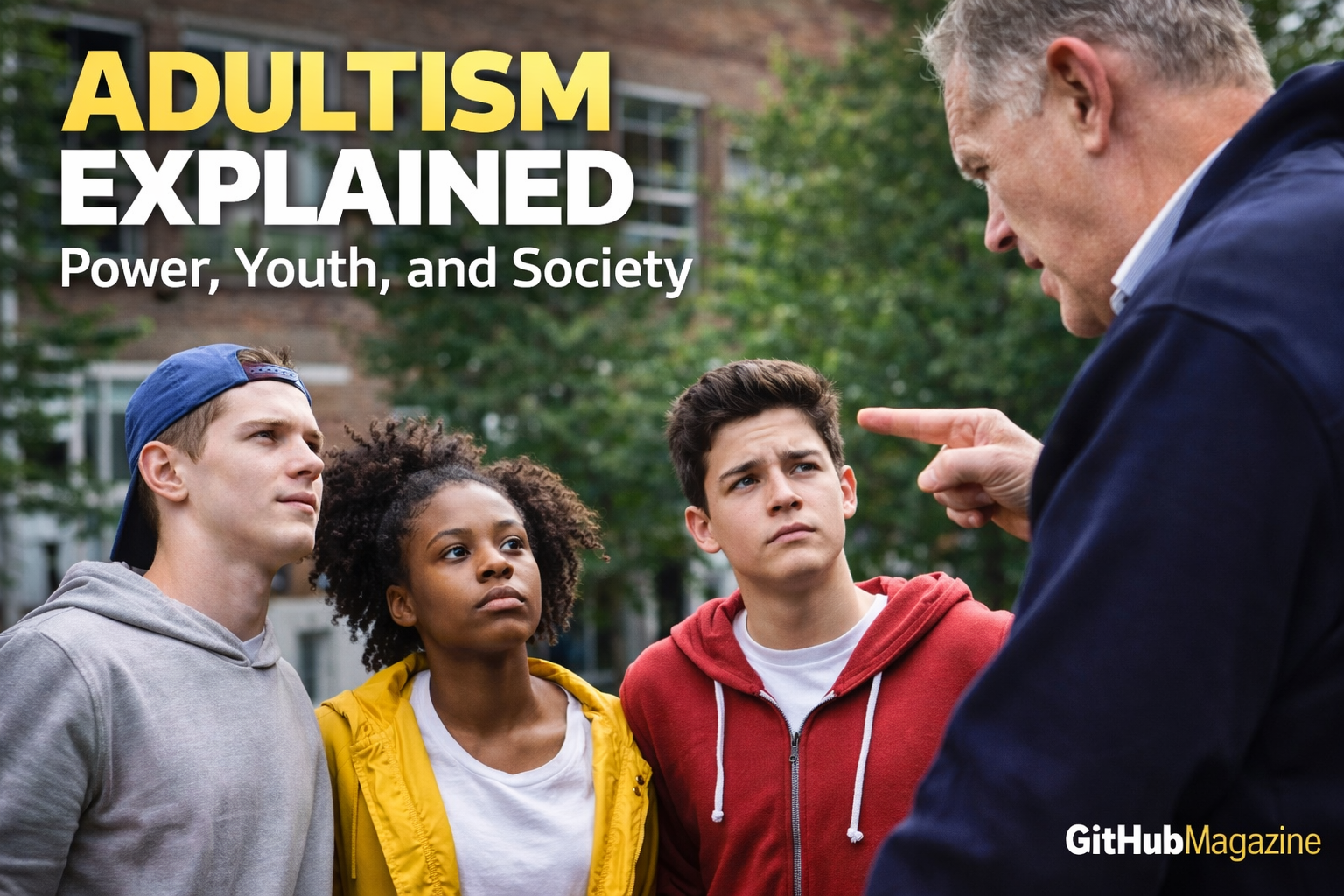
Within the first moments of understanding the concept, its presence becomes surprisingly clear. A teacher dismissing a student’s viewpoint, a family decision made without considering a child’s perspective, or policies designed entirely by adults that govern young people’s lives all reflect the same pattern. Adultism exists wherever adults hold unquestioned power over youth.
At a personal level, it appears through everyday attitudes about competence and maturity. Adults may assume that young people lack judgment or insight simply because of their age. At a structural level, adultism shapes institutions such as schools, courts, and government systems where young people must obey rules yet rarely participate in making them.
The modern understanding of adultism developed through psychological and sociological research exploring power relationships between generations. Scholars and youth advocates began examining childhood not merely as a developmental stage but as a social position shaped by authority and control.
Understanding adultism is not about arguing that young people should live without guidance. Rather, it raises deeper questions about how societies balance protection, responsibility, and participation. The issue ultimately concerns how power flows between generations and whether young voices receive the respect they deserve.
The Origins of Adultism
The concept of adultism evolved gradually through academic research and youth advocacy. Although the word appeared occasionally in early literature about childhood, its modern meaning emerged in the late twentieth century.
Psychologists and social theorists studying childhood began examining how authority structures shaped relationships between adults and young people. They observed that many social institutions were built on the assumption that adults possess superior judgment, while youth require constant supervision and control.
Researchers such as Jack Flasher played a significant role in shaping the modern definition of adultism. His work described it as the misuse of adult power over children, highlighting how authority could become oppressive when it ignored young people’s autonomy and perspectives.
During the same period, the growing children’s rights movement expanded the conversation. Scholars and advocates argued that young people should be recognized as individuals with evolving capacities and legitimate voices in decisions affecting them.
Youth-rights organizations and educators continued refining the concept through the 1990s and early 2000s. They framed adultism as both a personal bias and a systemic issue embedded in cultural expectations and institutional structures.
Over time, the idea developed into an important analytical lens for understanding how societies organize power between generations.
Key Milestones in the Development of the Concept
| Year | Event | Significance |
|---|---|---|
| Early 1900s | Early references to generational authority appear in child study research | Conceptual foundations emerge |
| 1970s | Academic discussions introduce adultism as a form of power imbalance | Modern interpretation develops |
| 1990s | Youth advocacy movements adopt the concept | Adultism linked to youth rights |
| 2000s | Sociologists expand structural analysis of childhood | Institutional perspectives grow |
| 2010s–present | Education and civic programs challenge adultist practices | Participation models emerge |
These developments illustrate how a relatively obscure idea gradually evolved into a significant framework for examining generational inequality.
The Many Faces of Adultism
Adultism rarely appears as a single dramatic act of discrimination. Instead, it operates through subtle assumptions repeated across everyday life.
Researchers commonly identify three major forms of adultism: attitudinal, cultural, and structural. Attitudinal adultism involves personal beliefs about young people’s intelligence, maturity, or reliability. Cultural adultism refers to shared narratives that portray youth as irresponsible or incapable. Structural adultism appears in institutions where adults maintain exclusive authority.
These forms often reinforce each other. Cultural stereotypes about teenagers being reckless, for example, may encourage strict disciplinary policies in schools or communities. Those policies then reinforce the stereotype by limiting opportunities for young people to demonstrate responsibility.
Youth engagement scholars emphasize that adultism becomes most powerful when it appears normal. When adults assume they naturally deserve authority, they may not recognize the imbalance created by their decisions.
This dynamic appears in family interactions, educational settings, and community programs. Adults may unintentionally silence young voices simply by assuming they know what is best without inviting participation.
As a result, youth remain present within institutions yet frequently excluded from meaningful decision making.
Youth Experiences of Age-Based Discrimination
Young people themselves often recognize adultist attitudes in daily life. Surveys and studies conducted across various countries show that age-based discrimination is widely reported by youth.
These experiences typically involve being ignored, dismissed, or excluded because of age. A teenager offering an idea in class may be told they are too young to understand the issue. A child’s opinion in family matters may be disregarded entirely.
Such experiences accumulate over time and influence how young people view their place in society. When youth repeatedly encounter dismissal, they may begin to doubt whether their ideas matter.
Psychologists describe this process as internalized adultism. Young people absorb the belief that their perspectives carry less value, even when they possess meaningful insight or creativity.
The consequences can affect emotional development, civic participation, and confidence. If youth learn early that their voices hold little influence, they may hesitate to speak up later in life.
Addressing these experiences requires recognizing that age-based discrimination can operate quietly through everyday interactions rather than overt hostility.
Adultism in Everyday Institutions
Adultism becomes particularly visible within social institutions designed primarily by adults.
Schools provide a clear example. Educational systems often prioritize order and efficiency over shared decision making. Students must follow rules that affect their daily lives yet rarely participate in shaping those rules.
Student councils exist in many schools, but their influence often remains symbolic. Major decisions about curriculum, discipline, or scheduling are typically made by administrators and policymakers.
The legal system reveals another dimension of institutional adultism. Young people must follow laws but usually cannot participate in political processes that shape those laws until reaching adulthood.
Family structures also reflect generational hierarchies. Parents understandably guide and protect children, yet many families make decisions without inviting meaningful discussion from younger members.
Institutional Expressions of Adultism
| Institution | Example of Adultist Practice | Impact on Youth |
|---|---|---|
| Education | Students excluded from policy decisions | Limited civic learning opportunities |
| Family systems | Decisions made without youth input | Reduced autonomy development |
| Legal systems | Political participation restricted by age | Limited representation |
| Media | Negative stereotypes about teenagers | Reinforcement of cultural bias |
These patterns demonstrate how adultism extends beyond individual attitudes into the design of social systems.
Cultural Narratives About Youth
The way societies talk about young people significantly influences perceptions of their abilities and responsibilities.
Media portrayals frequently depict adolescents as rebellious, irresponsible, or emotionally unstable. News stories about youth often focus on crime, risk, or social problems, reinforcing negative stereotypes.
These narratives shape public attitudes and policy decisions. When teenagers are portrayed primarily as troublemakers, communities may support strict disciplinary measures or surveillance.
Such portrayals rarely reflect the full complexity of youth experiences. Young people participate in community service, innovation, activism, and creative expression. Yet these contributions often receive less attention than stories highlighting conflict or misbehavior.
Cultural narratives also influence how adults interact with children in everyday life. Expectations about maturity or competence may shape how seriously adults take young people’s ideas.
Changing these narratives requires recognizing youth not simply as future citizens but as individuals already contributing to society.
The Psychological Impact on Young People
Adultism has consequences that extend beyond political structures and cultural narratives. Its effects often reach into the psychological development of young individuals.
When children consistently encounter dismissive attitudes, they may begin to question their own abilities and judgment. Over time, this can reduce self-confidence and willingness to participate in discussions or decision making.
Researchers studying youth development emphasize that opportunities for meaningful participation are essential for building self-efficacy. Young people learn responsibility and leadership through experience rather than exclusion.
When adults control every aspect of decision making, youth may struggle to develop independence. The absence of participation can create a paradox in which societies expect young people to become responsible adults without providing opportunities to practice responsibility.
Psychological research also suggests that feeling respected and heard contributes significantly to healthy identity formation during adolescence.
Therefore, addressing adultism is not merely a matter of fairness. It also plays a role in supporting the emotional and developmental well-being of young people.
Youth Participation and the Fight Against Adultism
Efforts to challenge adultism have increasingly focused on creating partnerships between youth and adults.
Educational programs, civic initiatives, and community organizations have begun experimenting with participatory models that involve young people in decision making. These initiatives seek to balance adult guidance with youth autonomy.
One example is participatory research projects in which young people collaborate with researchers to study issues affecting their communities. In these projects, youth help design research questions, collect data, and propose solutions.
Another approach involves youth-adult partnerships within schools or organizations. Instead of hierarchical decision structures, adults and young people share responsibility for shaping programs and policies.
These models aim to demonstrate that youth participation can strengthen institutions rather than undermine them. When young people feel respected and included, they often show increased motivation, creativity, and civic engagement.
Adopting such approaches requires cultural change. Adults must become comfortable sharing authority, while institutions must adapt structures historically designed around adult control.
Yet advocates argue that these shifts align with democratic values emphasizing participation and representation.
The Global Context of Youth Rights
Discussions about adultism also connect to broader debates about children’s rights at the international level.
Global organizations and human rights advocates increasingly emphasize that young people should have opportunities to express their views on matters affecting their lives.
International agreements recognize that youth possess evolving capacities and deserve participation in social and civic decisions. These frameworks encourage governments and institutions to consider young perspectives when designing policies.
Implementation varies widely across countries. Some communities establish youth councils or advisory boards that allow teenagers to contribute to municipal planning and policy discussions.
In other regions, youth participation remains limited, and adult authority dominates decision making.
The global conversation about youth rights continues evolving as new generations engage with issues such as climate change, education reform, and digital governance.
These debates illustrate that adultism is not merely a theoretical concept but part of a larger discussion about democracy, participation, and generational justice.
Takeaways
- Adultism refers to attitudes and systems that privilege adult authority over young people
- The concept emerged through psychological research and youth-rights advocacy
- Adultism appears in cultural narratives, everyday interactions, and institutional structures
- Young people frequently report experiences of age-based discrimination
- Cultural stereotypes about youth reinforce unequal power relationships
- Participatory programs and youth-adult partnerships can challenge adultist practices
- Addressing adultism encourages more inclusive decision making across generations
Conclusion
Adultism remains deeply embedded in many aspects of social life. Because adult authority is often seen as natural, its influence can go unnoticed even when it shapes major decisions affecting young people.
Examining adultism reveals how societies distribute power across generations. While adults hold responsibilities to protect and guide children, authority can become problematic when it silences youth perspectives entirely.
Finding balance is essential. Young people benefit from guidance, yet they also gain confidence and competence through participation. Allowing youth to contribute ideas and decisions prepares them for responsible citizenship while strengthening democratic institutions.
Recognizing adultism does not require dismantling all adult authority. Instead, it encourages thoughtful reflection about when authority protects and when it unnecessarily restricts.
Ultimately, a society that listens to its youngest members may discover new insights about creativity, fairness, and the future. When youth voices are heard alongside adult experience, the relationship between generations becomes less about control and more about collaboration.
FAQs
What does adultism mean?
Adultism refers to prejudice or discrimination that assumes adults are more capable or deserving of authority than young people.
How is adultism different from ageism?
Ageism usually refers to discrimination based on age affecting older adults, while adultism specifically targets children and youth.
Where is adultism most visible?
Adultism commonly appears in schools, families, media narratives, and legal systems where adults hold authority over youth decisions.
Why is adultism harmful to youth?
It can reduce confidence, discourage participation, and prevent young people from developing leadership and decision making skills.
How can societies reduce adultism?
Encouraging youth participation, creating youth-adult partnerships, and recognizing young people’s perspectives in decision making can help reduce adultist practices.