
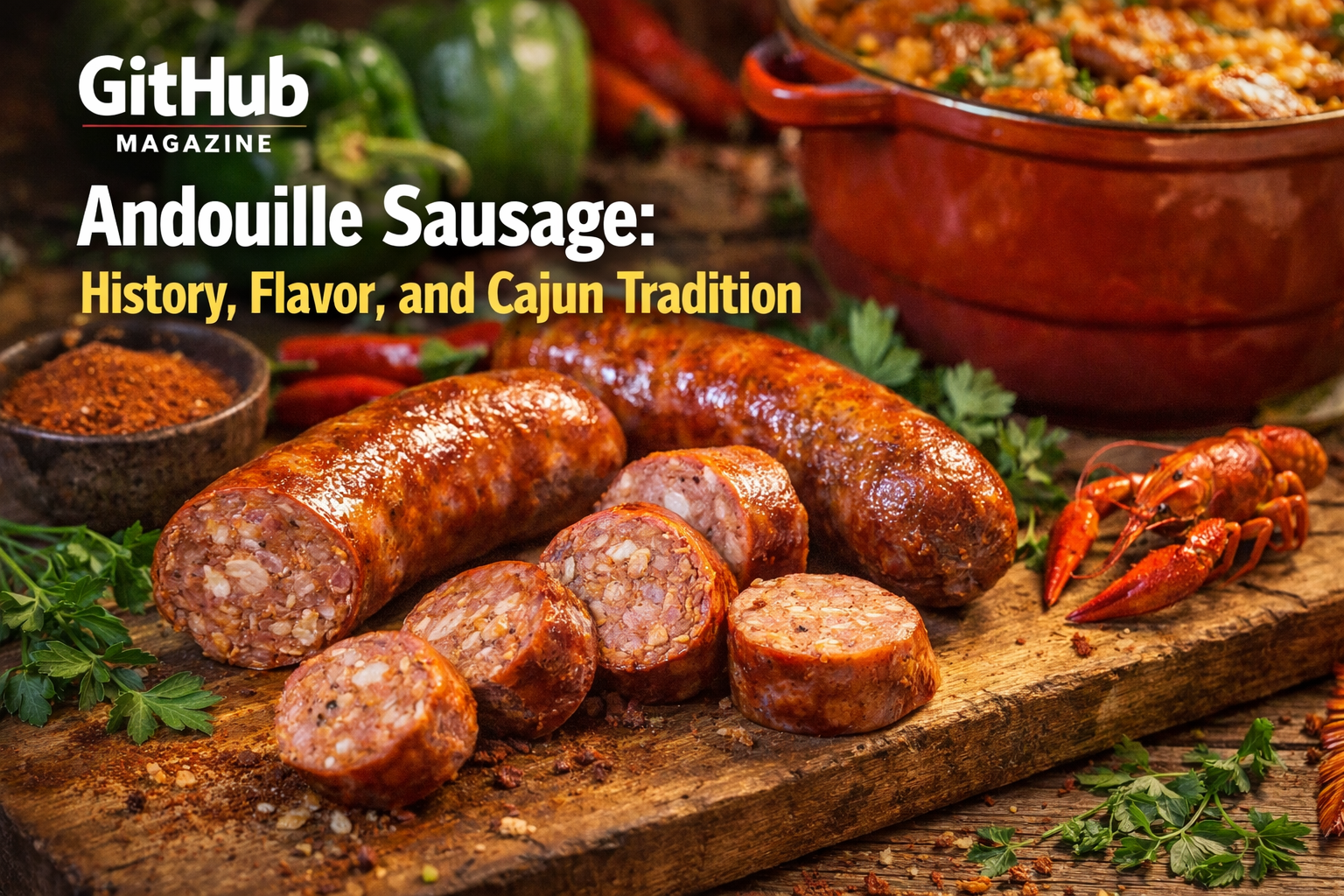
Andouille Sausage: History, Flavor, and Cajun Tradition
I often think of andouille sausage as more than a food. It is a story wrapped in smoke and spice, a culinary thread connecting European tradition with the evolving culture of Louisiana. For anyone wondering what andouille sausage actually is, the answer is straightforward: andouille is a smoked pork sausage, heavily seasoned and traditionally used in Cajun and Creole dishes such as gumbo and jambalaya. Yet its cultural history is far richer than a simple ingredient description.
In the first hundred words of any conversation about andouille, two facts matter most. The sausage originated in France centuries ago and evolved significantly after French settlers carried their culinary traditions to Louisiana in the eighteenth century. Over time, the sausage transformed from a rustic European preparation into a defining element of Cajun cuisine. Its bold flavor, coarse texture, and smoky aroma distinguish it from many other sausages around the world.
What fascinates me about andouille is how it embodies migration and adaptation. Early French settlers preserved meat through smoking and curing techniques they brought from rural France. Once in Louisiana, those traditions blended with local ingredients, African cooking influences, and Spanish colonial culture.
The result was a sausage unlike any other. Today, andouille appears everywhere from traditional Cajun kitchens to upscale restaurants across the United States. But beneath its modern popularity lies a deep history of craftsmanship, resilience, and cultural exchange that continues to shape the flavors of American cooking.
The French Origins of Andouille
Long before andouille became synonymous with Louisiana cooking, it was firmly rooted in French culinary tradition. Historical records suggest that the sausage emerged in medieval France, particularly in regions known for pork preservation and charcuterie.
French andouille differed from the modern Cajun version in several ways. Traditional French preparations often used pork tripe along with other cuts of meat, producing a sausage with a strong aroma and complex texture. The meat was typically seasoned with salt, pepper, wine, and herbs before being stuffed into natural casings and slowly smoked.
One of the most famous French varieties is Andouille de Guémené, a specialty from Brittany that dates back centuries. The sausage is constructed by layering strips of pork intestines, creating a distinctive circular pattern when sliced.
Food historian Ken Albala once observed:
“The art of charcuterie developed largely as a necessity in rural Europe, where preserving meat through smoking and curing ensured survival through winter.”
By the time French colonists began settling in Louisiana during the eighteenth century, these techniques had already been refined across generations. The settlers carried their sausage-making traditions across the Atlantic, laying the groundwork for what would eventually become Cajun andouille.
The Louisiana Transformation
I have always been struck by how dramatically foods can change when they travel. When French settlers arrived in Louisiana in the 1700s, they encountered a vastly different climate, ecosystem, and cultural landscape.
In France, charcuterie relied on cool cellars and traditional European spices. Louisiana offered humid weather, abundant hardwood forests for smoking meat, and a blend of culinary influences from Indigenous, African, and Spanish communities.
Gradually, the French andouille evolved into a new form. Louisiana andouille focused primarily on pork shoulder rather than tripe and developed a bold seasoning profile featuring garlic, black pepper, cayenne, and paprika. The sausage was smoked slowly over pecan or hickory wood, producing its signature flavor.
Culinary historian Jessica B. Harris explains:
“Cajun cuisine emerged from necessity and ingenuity, blending French techniques with ingredients and influences from across the Atlantic world.”
This transformation turned andouille into a foundational ingredient of Louisiana cooking. Rather than serving the sausage alone, cooks began incorporating it into stews, rice dishes, and soups.
The result was a culinary identity deeply tied to the region.
Cajun vs Creole Andouille
Although Cajun and Creole cuisines are often grouped together, they reflect different historical communities in Louisiana. Cajun cooking developed primarily among French-speaking Acadian settlers who relocated from Canada to rural Louisiana after the eighteenth-century expulsion known as the Great Upheaval.
Creole cuisine, by contrast, emerged in urban New Orleans and incorporated stronger Spanish, African, and Caribbean influences.
Andouille sausage appears in both culinary traditions, but subtle differences exist in seasoning and preparation.
Cajun vs Creole Andouille
Feature Cajun Andouille Creole Andouille
Primary setting Rural Louisiana New Orleans
Flavor profile Smoky and spicy Smoky with complex herbs
Cooking use Gumbo, jambalaya Red beans, stews
Texture Coarse ground Slightly finer grind
Seasoning Garlic, cayenne, paprika Garlic, thyme, bay leaf
Both versions share the same essential foundation: smoked pork seasoned with bold spices. However, regional cooking traditions give each style a distinct identity.
Inside a Smokehouse: A Conversation with a Cajun Sausage Maker
Smoke, Wood, and Tradition
Date: October 12, 2023
Time: 9:00 a.m.
Location: LaPlace, Louisiana
Atmosphere: The air inside the smokehouse smelled of pecan wood and pepper. Thin wisps of smoke curled through wooden rafters darkened by decades of curing meat.
I met Wayne Jacob, owner of Jacob’s Andouille, a smokehouse widely regarded as one of the most respected producers of traditional Cajun andouille. Jacob’s family has been making sausage in LaPlace since the 1920s.
Standing beside rows of hanging sausages, Jacob wiped his hands on a towel and nodded toward the smokehouse.
“This building,” he said, “is where the real flavor happens.”
Interview
Q: What makes traditional andouille different from other sausages?
Jacob paused, glancing toward the smokers.
“The smoke,” he said quietly. “Most commercial sausages use liquid smoke now. We still smoke ours over pecan wood for hours. That’s the difference you can taste.”
Q: Has the recipe changed over the years?
He shook his head.
“Not much. Pork shoulder, garlic, pepper, cayenne. Simple ingredients. The trick is patience.”
Q: Why does andouille matter so much in Cajun cooking?
Jacob leaned against the smokehouse door.
“It’s the backbone of the flavor. Put andouille in gumbo, and the whole pot changes.”
Q: Are younger generations continuing the tradition?
He smiled.
“They are. Food brings people home.”
Reflection
As I left the smokehouse, the scent of pecan smoke lingered in the air. The experience made something clear: andouille is not just a sausage. It is a craft passed down through generations.
Production credits:
Interviewer: Independent food writer
Interviewee: Wayne Jacob, Jacob’s Andouille
How Andouille Sausage Is Made
Making authentic andouille remains a labor-intensive process that blends traditional charcuterie techniques with regional flavor.
The process begins with pork shoulder, which is cut into coarse chunks rather than finely ground. The meat is then mixed with garlic, salt, black pepper, cayenne, and paprika.
After seasoning, the mixture is stuffed into natural casings and hung in a smokehouse. Hardwood smoke slowly penetrates the meat during several hours of curing.
Traditional Andouille Production Process
Stage Description
Meat preparation Pork shoulder cut into coarse chunks
Seasoning Garlic, salt, pepper, cayenne, paprika
Stuffing Meat placed into natural casings
Smoking Slow smoking over hardwood
Cooling Sausages hung to develop flavor
Unlike many modern sausages, traditional andouille retains a coarse texture that highlights the meat’s structure.
Chef Paul Prudhomme once described the sausage’s importance in Louisiana cooking:
“Andouille provides the deep smoky backbone of many Cajun dishes.”
The Role of Andouille in Classic Cajun Dishes
Few ingredients define Louisiana cuisine as strongly as andouille. Its smoky flavor enhances some of the region’s most iconic dishes.
Perhaps the most famous example is gumbo, a slow-cooked stew that combines meat, seafood, vegetables, and a dark roux. Andouille contributes depth and spice to the dish, balancing the richness of the broth.
Jambalaya, another Louisiana classic, uses andouille to flavor rice cooked with vegetables and sometimes chicken or shrimp.
Red beans and rice also rely heavily on the sausage for seasoning.
Chef Emeril Lagasse once remarked:
“Andouille is the heartbeat of Louisiana cooking.”
These dishes highlight how a single ingredient can shape an entire culinary tradition.
The Spread of Andouille Across America
Over the past century, andouille has moved far beyond Louisiana.
Restaurants across the United States now incorporate the sausage into pasta dishes, pizzas, and breakfast menus. Its distinctive smoky flavor pairs well with a wide range of ingredients.
This national popularity grew alongside the rise of Cajun cuisine during the 1980s and 1990s, when chefs introduced Louisiana flavors to broader audiences.
Today, grocery stores nationwide sell andouille sausage, though many versions differ from traditional Cajun preparations.
Despite this commercialization, authentic smokehouse andouille remains highly respected among chefs and food historians.
Takeaways
Andouille sausage originated in France before evolving in Louisiana
Cajun andouille uses pork shoulder and bold spices
Slow hardwood smoking defines the sausage’s signature flavor
The ingredient anchors classic dishes such as gumbo and jambalaya
Cajun and Creole traditions influence preparation styles
Artisanal smokehouses continue preserving traditional methods
The sausage has become a symbol of Louisiana culinary heritage
Conclusion
Reflecting on andouille sausage reveals something remarkable about food history. What began centuries ago as a method of preserving pork in rural France gradually transformed into one of the defining flavors of Louisiana.
Migration played a crucial role in that transformation. French settlers carried charcuterie traditions across the Atlantic, where local ingredients and cultural exchange reshaped those recipes into something new.
Today, the smoky aroma of andouille drifting from a gumbo pot carries echoes of that long journey. Each slice represents centuries of culinary experimentation, adaptation, and craftsmanship.
In a world where many foods become standardized through mass production, andouille reminds us that flavor often grows from tradition and patience. The sausage’s story continues to unfold wherever cooks gather around a pot of gumbo or a smoking grill.
FAQs
What is andouille sausage made from?
Traditional Cajun andouille is made primarily from pork shoulder, seasoned with garlic, pepper, cayenne, and smoked over hardwood.
Is andouille sausage spicy?
Yes, it typically contains cayenne pepper and other spices that give it a noticeable but balanced heat.
What dishes use andouille sausage?
Common dishes include gumbo, jambalaya, red beans and rice, and Cajun pasta.
How is Cajun andouille different from French andouille?
French versions often use pork tripe and have a milder spice profile, while Cajun andouille focuses on pork shoulder and bold seasoning.
Can andouille sausage be eaten by itself?
Yes, it can be grilled or sautéed and served alone, though it is most often used as a flavor base in cooked dishes.

Related Posts

Koalas Habitat History and Conservation Review

Scrub Cap Guide: Purpose, Types, and Evolution