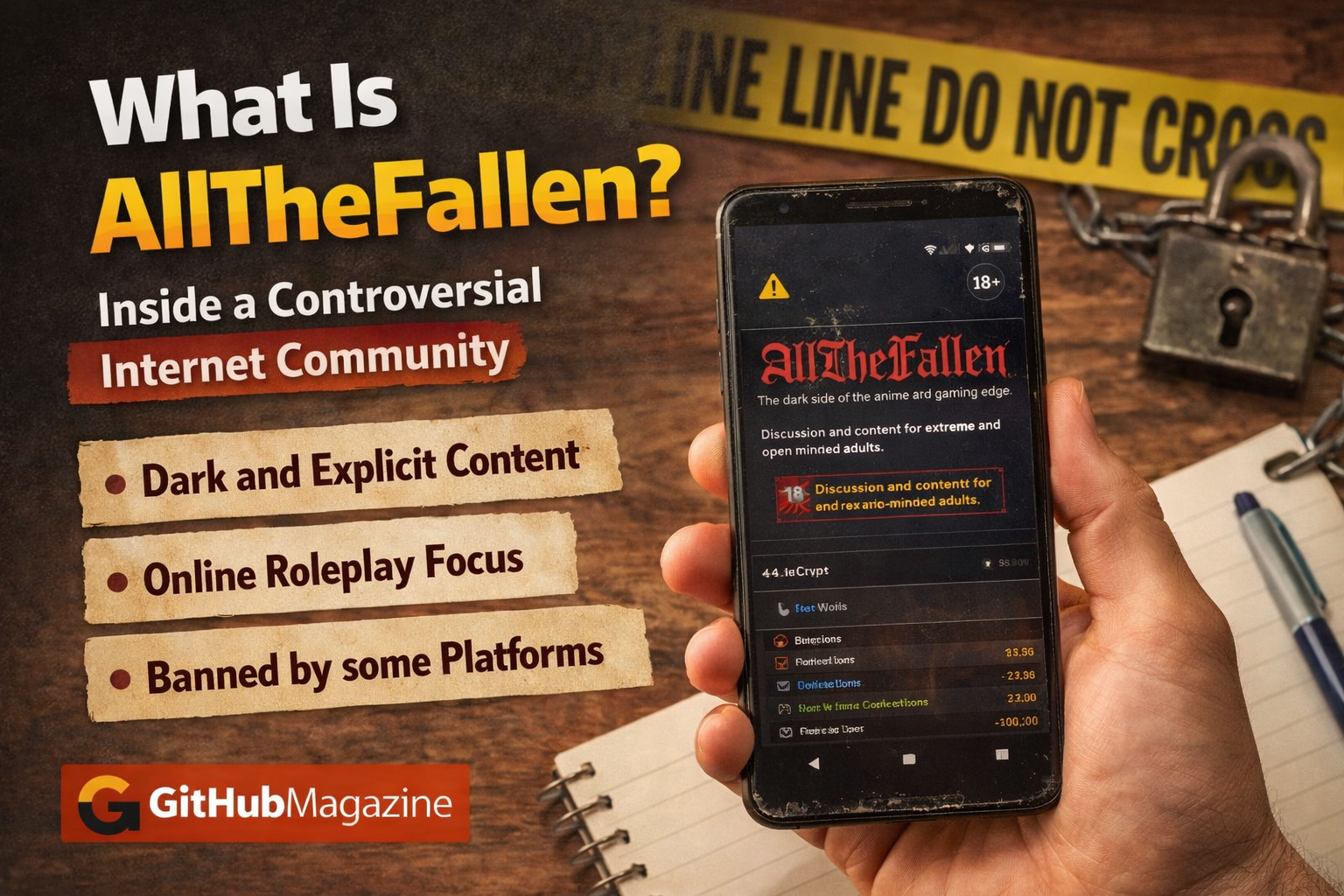
AllTheFallen Explained: Inside a Controversial Internet Community
I came across the name “AllTheFallen” during a late evening dive into online forums discussing obscure corners of internet culture. At first, it appeared to be just another niche community built around anime art and fan storytelling. But the more I explored its structure and reputation, the more it became clear that the platform represents something larger than a typical fan site.
AllTheFallen is an online forum-based community where users share artwork, stories, game modifications, and discussions centered largely around anime, gaming, and internet subculture. The platform emerged in the mid-2010s and developed into a collaborative environment where creators contribute digital projects and interact through discussions and shared interests.
However, the site’s notoriety comes from its willingness to host content that many mainstream platforms would prohibit. That difference has positioned it in a complicated place within internet culture. Supporters see it as a rare space where creative expression can exist without heavy corporate moderation. Critics argue that the platform demonstrates the risks of minimal oversight and the ethical challenges that can arise in anonymous online spaces.
The story of AllTheFallen reflects broader questions about the modern internet. As large platforms tighten rules to maintain advertiser-friendly environments, smaller communities frequently emerge to serve audiences that feel excluded. These communities operate outside mainstream attention, often cultivating their own norms and expectations.
Understanding AllTheFallen therefore requires more than describing a single website. It requires looking at the deeper forces shaping internet culture: anonymity, creative freedom, digital permanence, and the ongoing tension between open expression and responsible moderation.
Origins of an Underground Online Community
When examining how AllTheFallen emerged, I see a pattern common across many internet subcultures. Around the mid-2010s, online communities were shifting rapidly as major social platforms introduced stricter moderation rules. Content that had once circulated freely began disappearing from mainstream sites.
For creators whose interests or artistic themes no longer fit those guidelines, smaller independent communities became necessary. AllTheFallen developed during this moment of fragmentation.
The platform began as a relatively simple forum where users could post discussions, share creative projects, and interact through threads. Over time, it grew into a more complex ecosystem containing image boards, archives, and specialized discussion categories.
What distinguished the community early on was its emphasis on collaborative participation. Artists shared illustrations, writers posted serialized fiction, and programmers experimented with small games or modifications inspired by popular anime and gaming franchises.
The atmosphere resembled a workshop more than a traditional social network. Members discussed ideas, offered feedback, and helped shape each other’s projects. For participants, the site became less about passive consumption and more about active creative exchange.
This participatory culture helped the community expand despite remaining relatively obscure compared with mainstream platforms.
A Platform Built on User-Generated Creativity
The central feature of AllTheFallen is its reliance on user-generated content. Everything that defines the platform originates from community members rather than corporate curation.
Artists upload digital illustrations inspired by anime characters or fictional universes. Writers contribute serialized stories and fan fiction. Some users create small interactive games or visual novels using open-source tools.
Because participation is voluntary and decentralized, the site operates more like a collaborative archive than a traditional publishing platform.
Creators often receive feedback directly from readers and viewers. Comments on artwork or stories frequently include suggestions, interpretations, or encouragement. In this way, creative projects evolve through conversation.
Another important element is tagging. Uploaded content is typically labeled with descriptive tags that help users locate specific themes, characters, or styles. This system allows the archive to grow while remaining searchable.
For participants who value artistic freedom, the platform’s minimal restrictions are a major attraction. They can experiment with ideas that might be rejected on heavily moderated platforms.
At the same time, that openness contributes to the debates surrounding the site’s existence.
Core Features of the Platform
| Feature | Description | Purpose |
|---|---|---|
| Forums | Topic-based discussion boards | Community interaction and collaboration |
| Image Archives | Tag-organized collections of artwork | Efficient browsing and discovery |
| Creative Uploads | Stories, art, and small games shared by users | Creative expression |
| Tagging System | Detailed labeling of themes and characters | Searchability and organization |
| Anonymous Accounts | Pseudonymous participation | Privacy and creative freedom |
These components form the foundation of the community’s structure and daily activity.
Why Communities Like This Exist
While exploring the growth of platforms like AllTheFallen, I began to recognize a larger pattern in internet history. Whenever mainstream digital spaces become tightly regulated, alternative communities tend to appear.
These smaller networks function as what sociologists sometimes call digital counterpublics. They exist outside dominant cultural spaces and allow participants to develop their own norms.
Anonymity plays a key role in enabling these communities. On AllTheFallen, users typically interact through pseudonyms rather than real names. That separation between online identity and personal identity can encourage more open experimentation.
For creators, anonymity removes some of the pressure associated with public reputation. They can explore ideas or artistic styles without worrying about professional consequences.
However, anonymity also creates challenges. Without identifiable accountability, enforcing ethical standards becomes more complicated. Communities must rely on internal norms rather than formal authority.
This balance between freedom and responsibility defines many online subcultures.
Timeline of the Platform’s Development
| Year | Event |
|---|---|
| 2015 | Early forum community begins forming online |
| 2017 | Growth of collaborative art and storytelling projects |
| 2019 | Expansion into larger image archive systems |
| 2020–2023 | Increased attention from critics and online observers |
| 2024–2025 | Continued operation and community activity |
Although precise historical records are limited, this general timeline reflects how the platform gradually evolved from a simple forum into a complex digital community.
The Controversies That Defined Its Reputation
Despite its creative focus, AllTheFallen has become widely known for controversy. The debate centers on the types of material some users choose to create or share within the platform’s relatively open environment.
Critics argue that certain themes appearing in user-generated content raise ethical concerns and may normalize problematic narratives. They believe that platforms hosting such material should implement stronger moderation standards.
Supporters of the community often respond that fictional works should not automatically be equated with real-world behavior. From their perspective, storytelling and art frequently explore uncomfortable or taboo topics as part of creative expression.
This disagreement mirrors a larger cultural conversation happening across the internet. Social media companies must constantly decide how to balance free expression with safety and ethical responsibility.
In communities like AllTheFallen, those decisions are largely left to participants themselves rather than corporate moderators.
The result is a space where creativity flourishes but controversy remains persistent.
Digital Archives and the Persistence of Online Content
Another aspect of the AllTheFallen ecosystem involves the preservation of digital media.
Many internet communities place value on archiving content that might otherwise disappear. Images, discussions, and creative works can vanish quickly if websites shut down or creators remove material.
Archiving ensures that these pieces of digital culture remain accessible.
However, this practice raises difficult questions about ownership and consent. If a creator deletes content from its original platform, should it still circulate elsewhere in archived form?
Some argue that digital preservation protects cultural history. Others believe creators should retain full control over whether their work remains visible online.
This tension illustrates a broader challenge of the internet era. Digital information can be copied and redistributed almost instantly, making it difficult to fully erase once it has been shared.
Platforms like AllTheFallen therefore sit at the intersection of preservation and controversy.
The Culture of Anonymity
The community’s reliance on pseudonymous identities shapes its social dynamics.
When individuals interact without revealing personal details, conversations often become more direct and uninhibited. Participants may feel comfortable discussing niche interests or unconventional ideas.
For creative communities, this can be liberating. Artists and writers can test experimental concepts without worrying about how those ideas might affect their professional reputation.
At the same time, anonymity can reduce accountability. Disagreements may escalate more easily when participants are shielded by digital distance.
Online communities frequently develop informal norms to manage this challenge. Moderators or long-time members may step in to guide discussions and maintain a sense of order.
Even with these mechanisms, the balance between freedom and responsibility remains delicate.
AllTheFallen demonstrates both the possibilities and complications of anonymous digital interaction.
Comparison With Other Fan Art Platforms
| Platform | Primary Focus | Moderation Style | Community Scope |
|---|---|---|---|
| Pixiv | Anime illustration sharing | Moderated content guidelines | Large global audience |
| DeviantArt | General digital art community | Structured moderation | Broad creative network |
| Danbooru | Tagged anime image archive | Organized tagging oversight | Enthusiast community |
| AllTheFallen | Forums, art, stories, and games | Looser moderation environment | Niche subculture |
This comparison highlights how different communities adopt different philosophies about moderation and creative freedom.
The Psychology of Taboo Themes
To understand why controversial communities attract participants, I examined the role of fiction in human psychology.
Stories have long served as spaces where societies explore difficult ideas. Literature, cinema, and visual art frequently address themes that might be unacceptable in real life.
Fiction allows individuals to imagine scenarios without acting on them.
Within online communities, this exploratory function becomes even more pronounced because anonymity reduces social risk. Participants can discuss unusual or controversial topics more openly than they might in everyday conversation.
Yet critics remain concerned that repeated exposure to certain themes could influence attitudes or perceptions.
Researchers continue debating this issue, and there is no universal consensus. What is clear is that digital communities provide unprecedented opportunities for people to gather around shared interests, whether mainstream or unconventional.
Legal Gray Areas of Global Internet Communities
Another complexity surrounding platforms like AllTheFallen is the international nature of the internet.
Websites may be hosted in one country while users access them from dozens of others. Because laws vary widely between jurisdictions, determining what is legal can become extremely complicated.
Material that is considered protected speech in one nation might be restricted in another. Enforcement therefore depends on a combination of local regulations, hosting policies, and international cooperation.
This legal uncertainty means that controversial communities can persist even while facing criticism or scrutiny.
The borderless structure of the internet continues to challenge traditional legal systems.
Takeaways
• AllTheFallen is a niche internet community focused on user-generated art, stories, and games inspired by anime and digital culture
• The platform emerged in the mid-2010s during a period of increasing moderation on mainstream websites
• Anonymity and pseudonymous participation are central features of its culture
• The site has attracted controversy due to some themes appearing in user-generated content
• Debates surrounding the community reflect larger questions about censorship and digital expression
• Communities like this illustrate how online subcultures form outside mainstream platforms
Conclusion
Looking closely at AllTheFallen reveals how complex internet communities can become when creativity, anonymity, and controversy intersect.
What began as a small collaborative forum eventually evolved into a distinctive digital subculture. Members contribute artwork, stories, and experimental projects while interacting through pseudonymous identities. For many participants, the site represents a rare environment where creative ideas can exist without strict corporate moderation.
At the same time, the controversies surrounding the platform illustrate the challenges of maintaining open online spaces. Without clear boundaries, communities may encounter ethical and cultural debates that are difficult to resolve.
In many ways, AllTheFallen reflects a broader transformation occurring across the internet. As mainstream platforms continue to refine moderation policies, smaller communities will likely continue emerging to serve specialized audiences.
Some of these spaces will celebrate creativity and collaboration. Others will provoke criticism or concern.
Understanding them requires acknowledging both sides of that reality. The internet remains a vast ecosystem of communities, each shaped by its own values, rules, and participants.
FAQs
What is AllTheFallen?
AllTheFallen is an online community where users share artwork, stories, and discussions related to anime, gaming, and niche internet culture.
When did the platform appear?
The community began forming in the mid-2010s as an independent forum for creators seeking a space with fewer content restrictions.
Why is the site controversial?
Some user-generated content includes themes that critics consider ethically problematic, leading to debates about moderation and digital responsibility.
Is the platform similar to other art communities?
It shares similarities with fan art sites but generally operates with fewer restrictions on creative expression.
Is AllTheFallen still active?
Yes, the community continues to operate as a forum and content-sharing environment maintained by its users.

Related Posts

SOA OS23 Explained Across Technology and Construction

Sesame Motor CEO Profile and Industrial Strategy