Multitenant Database Containers Explained
I often describe multitenant database containers as one of the quiet architectural shifts that made modern cloud computing possible. At its core, a multitenant database container is a system design in which a single database environment hosts multiple independent databases or tenants while maintaining logical separation between them. This approach allows organizations to support many applications or customers using shared infrastructure, dramatically improving scalability, resource efficiency, and operational management.
Within the first moments of understanding the concept, the practical search intent becomes clear: multitenant database containers allow multiple users or applications to share a database server while keeping their data isolated. This model is widely used in cloud services, enterprise platforms, and software-as-a-service environments where efficiency and scalability are essential.
Traditional databases often operated in single-tenant environments where each application required its own dedicated database instance. While secure, that approach demanded significant hardware resources and operational overhead. As businesses moved toward cloud-native architectures in the 2010s, engineers began designing systems capable of serving thousands of customers simultaneously from shared infrastructure.
Multitenant containers emerged as the architectural solution. They allow a central container database to manage multiple pluggable databases or tenants, each operating independently while sharing the same core resources.
Today, this model powers everything from enterprise SaaS platforms to large-scale cloud providers. Understanding how multitenant database containers work, why they exist, and what trade-offs they introduce reveals how modern digital systems scale to serve millions of users across the globe.
The Evolution from Single-Tenant Databases
I often trace the roots of multitenant architectures back to the early decades of enterprise computing. For many years, organizations deployed single-tenant databases, meaning each application or customer operated within its own dedicated database instance.
This model offered simplicity and strong isolation. If a company ran an internal payroll system, a customer management platform, and an inventory database, each system often ran on separate database servers.
However, this approach carried significant costs. Every new application required its own infrastructure, licensing, and maintenance. As internet services expanded during the early 2000s, companies began seeking more efficient ways to manage large numbers of users and applications.
The rise of cloud computing accelerated this shift. Platforms like Amazon Web Services, Microsoft Azure, and Google Cloud introduced infrastructure models designed to serve thousands of organizations simultaneously.
Software developers quickly realized that database architecture needed to evolve alongside these platforms. Instead of running isolated servers for every application, they began designing systems where multiple tenants could share the same database infrastructure while remaining logically separated.
This idea became the foundation of multitenant database containers.
Understanding the Container Database Model
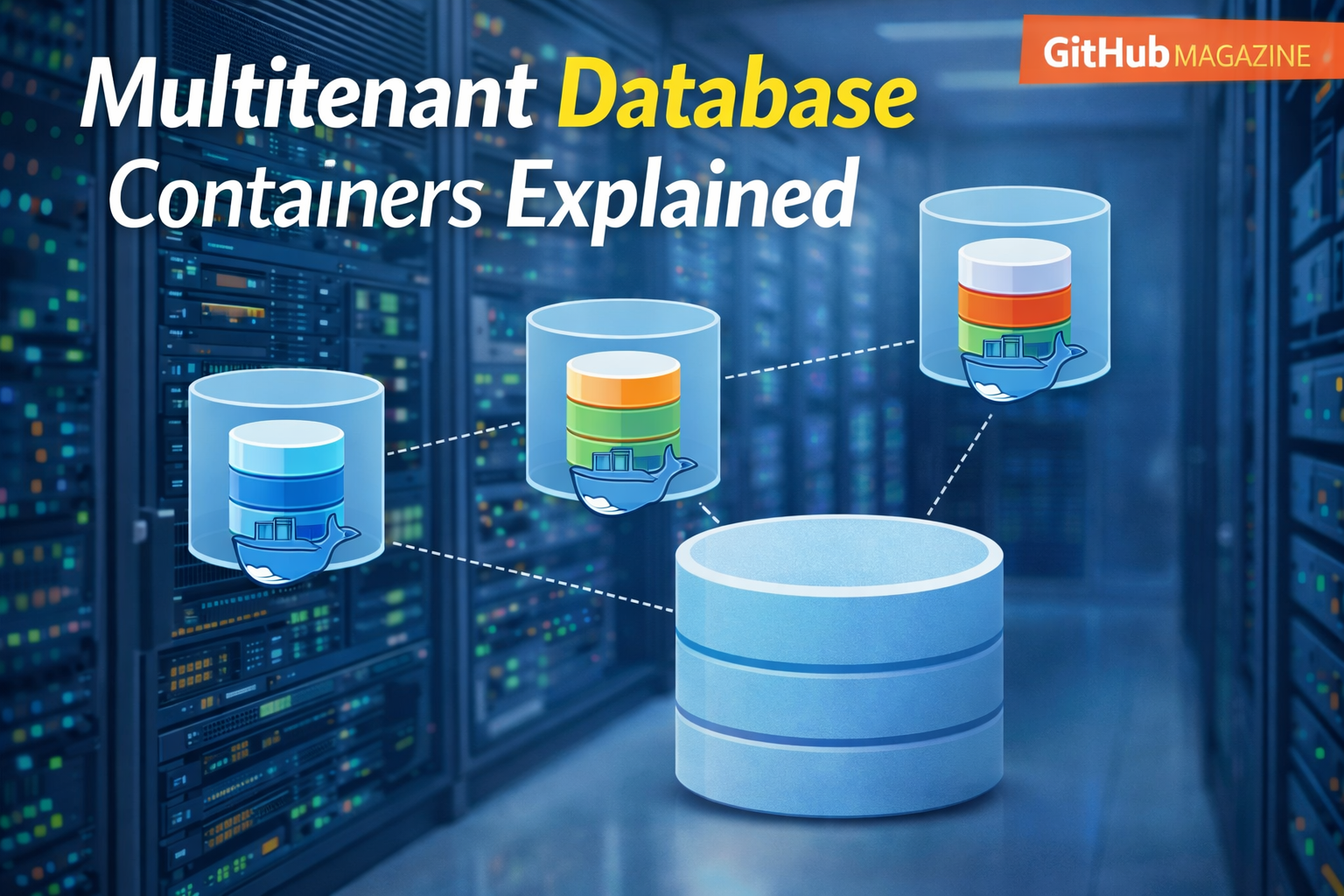
At the center of multitenant architecture lies a structure often described as the container database model. In this design, a single container database manages multiple pluggable databases.
The container provides shared services such as memory management, background processes, and system metadata. Each pluggable database represents a tenant with its own schemas, users, and application data.
This separation allows organizations to maintain logical isolation while sharing underlying infrastructure resources.
| Component | Function | Role in Architecture |
|---|---|---|
| Container Database (CDB) | Central management layer | Hosts multiple tenant databases |
| Pluggable Database (PDB) | Individual tenant environment | Stores application data |
| Shared Resources | Memory, CPU, storage | Used collectively by all tenants |
| Administrative Controls | Security and management tools | Manage tenants centrally |
This structure allows administrators to manage multiple databases as part of a unified system rather than maintaining separate database servers for each tenant.
In large cloud environments, the ability to manage hundreds or thousands of pluggable databases within a single container becomes essential for operational efficiency.
Why Multitenant Architecture Matters
When I examine why multitenant containers have become so widely adopted, the answer comes down to efficiency and scalability.
In traditional systems, each tenant required its own database server, which meant hardware resources were often underutilized. Multitenant architecture allows multiple tenants to share the same infrastructure, improving overall resource usage.
Database researcher Jim Gray once observed that large-scale computing systems succeed when they maximize resource efficiency while maintaining reliability. Multitenant containers embody that principle by allowing infrastructure to be shared without sacrificing data isolation.
This design also simplifies management. Administrators can apply updates, security policies, and backups at the container level instead of configuring each database individually.
For organizations operating global cloud services, these efficiencies translate directly into cost savings and improved operational agility.
The architecture enables platforms to scale rapidly while supporting thousands of independent applications.
Multitenant Databases in Cloud Computing
Cloud computing accelerated the adoption of multitenant database containers more than any other technological shift.
SaaS companies, which deliver software to thousands of customers through a single platform, rely heavily on multitenant architecture. Instead of deploying a separate database for each customer, SaaS providers create isolated tenant environments within a shared database container.
This approach dramatically reduces operational complexity while enabling rapid scaling.
| Architecture Model | Infrastructure Use | Scalability | Maintenance Complexity |
|---|---|---|---|
| Single-Tenant Database | Dedicated per customer | Limited | High |
| Shared Schema Multitenancy | One database, shared tables | High | Moderate |
| Container Multitenancy | Shared container with isolated PDBs | Very High | Lower |
| Fully Serverless Databases | Dynamic infrastructure | Extremely High | Low |
Container-based multitenancy strikes a balance between efficiency and isolation. Each tenant receives its own logical database environment while still benefiting from shared infrastructure.
This model has become a standard architecture in modern enterprise platforms.
Isolation and Security in Multitenant Systems
One of the most important questions surrounding multitenant databases involves security. If multiple tenants share the same infrastructure, how can their data remain isolated?
Engineers address this challenge through layered isolation mechanisms. Each pluggable database operates within its own namespace and user management system. Access controls ensure that applications can interact only with their designated tenant environment.
Database security expert Bruce Schneier has emphasized that effective system security often depends on strong architectural separation rather than simple encryption measures. In multitenant systems, logical isolation serves as the foundation of that security model.
Additionally, modern database engines implement advanced permission systems, auditing tools, and encryption features to ensure tenant data remains protected.
These safeguards allow multitenant containers to operate safely even in environments where thousands of organizations share the same infrastructure.
Performance Considerations
While multitenant architecture offers many advantages, it also introduces performance challenges. Because multiple tenants share infrastructure resources, workloads must be carefully managed.
Database administrators often implement resource management policies that allocate CPU, memory, and storage bandwidth to different tenants. This ensures that one tenant’s heavy workload does not degrade performance for others.
Computer scientist Michael Stonebraker, known for pioneering relational database systems, has frequently argued that modern database architecture must balance efficiency with predictable performance.
In multitenant systems, achieving that balance requires intelligent workload scheduling and monitoring tools.
Advanced database engines now include built-in performance monitoring systems that track tenant activity and automatically adjust resource allocation.
These technologies help maintain stable performance across large-scale multitenant deployments.
Operational Advantages for Administrators
For database administrators, multitenant containers offer several practical advantages.
One of the most important benefits is simplified database management. Instead of managing hundreds of independent database servers, administrators can manage multiple pluggable databases within a single container environment.
Tasks such as patching, backup operations, and security updates can be performed at the container level.
This centralized approach reduces operational complexity while improving consistency across environments.
Additionally, pluggable databases can often be moved or cloned easily between containers. This capability allows administrators to migrate workloads, create testing environments, or scale infrastructure with minimal disruption.
These operational improvements have made multitenant architecture particularly attractive to enterprises operating large distributed systems.
Real-World Applications
Multitenant database containers appear in many modern technology platforms.
Large SaaS providers rely on multitenancy to support thousands of customers within shared infrastructure environments. Enterprise cloud platforms use the model to deliver scalable database services.
Even internal enterprise systems increasingly adopt multitenant containers to simplify infrastructure management.
Technology analyst Martin Fowler once described multitenancy as a defining characteristic of modern software architecture, particularly in large-scale cloud platforms.
By separating tenants logically while sharing infrastructure physically, organizations can deliver services more efficiently while maintaining strong security boundaries.
As digital systems continue growing in scale, this architectural model is likely to remain central to database design.
Takeaways
- Multitenant database containers allow multiple tenant databases to share a single infrastructure environment.
- The container database manages shared resources while pluggable databases store tenant data.
- This architecture improves scalability and infrastructure efficiency in cloud environments.
- Security is maintained through logical isolation, permissions, and resource management policies.
- Multitenant systems simplify administrative tasks such as updates, backups, and migrations.
- The model has become foundational for SaaS platforms and large cloud computing systems.
Conclusion
I often view multitenant database containers as a reflection of how computing has evolved during the cloud era. Early database systems were designed for isolated applications running on dedicated hardware. As digital services expanded globally, that model could no longer scale efficiently.
Multitenant architecture emerged as the solution. By allowing multiple independent databases to operate within a shared container environment, engineers created a system capable of supporting thousands of applications simultaneously.
This design balances efficiency, scalability, and security. Organizations can maximize infrastructure utilization while maintaining clear boundaries between tenants.
Yet the architecture also introduces new challenges, particularly around performance management and operational complexity. As database technologies continue evolving, engineers will likely develop even more sophisticated systems for managing shared environments.
What remains clear is that multitenant containers now form a foundational layer of modern cloud infrastructure. From enterprise platforms to global SaaS providers, they quietly power the digital services that millions of people rely on every day.
FAQs
What is a multitenant database container
A multitenant database container is a database architecture where a single container database hosts multiple independent tenant databases while sharing infrastructure resources.
What is the difference between container and pluggable databases
The container database manages system processes and resources, while pluggable databases store tenant-specific data and operate as isolated environments.
Why do cloud platforms use multitenant databases
Cloud platforms use multitenant architecture to improve scalability, reduce infrastructure costs, and manage large numbers of customers efficiently.
Is multitenant architecture secure
Yes. Logical isolation, access controls, encryption, and resource management mechanisms help protect tenant data within shared environments.
What industries use multitenant database containers
Multitenant containers are widely used in SaaS platforms, cloud infrastructure services, enterprise applications, and large-scale digital platforms.