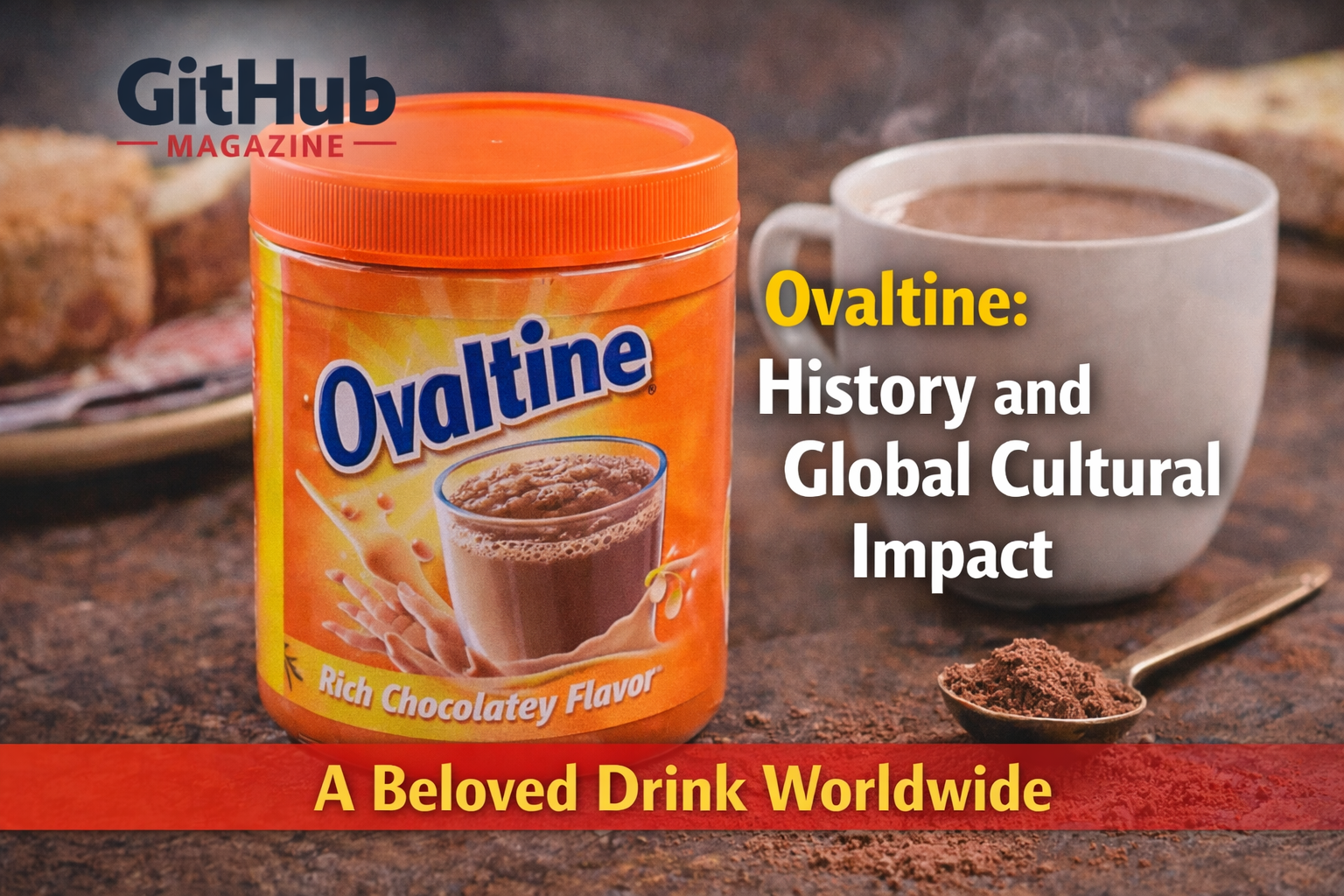
Ovaltine History and Global Cultural Impact
When I first think about Ovaltine, the image that comes to mind is simple: a warm mug of milk stirred with a chocolate-malt powder, a drink associated with childhood comfort and late-night kitchens. Yet the story of Ovaltine extends far beyond a nostalgic beverage. The drink began as a nutritional experiment in nineteenth-century Switzerland and eventually became one of the most recognizable malted drinks in the world.
Ovaltine is a powdered malt beverage mix typically combined with milk or water. It contains malt extract, milk derivatives, cocoa, and vitamins, designed originally as a nourishing supplement rather than a treat. The product was developed in the late 1800s by Swiss chemist Georg Wander and later commercialized by his son Albert Wander. From those beginnings, the drink spread internationally, becoming especially popular in Europe, the United States, and Asia.
During the twentieth century Ovaltine transformed from a laboratory tonic into a cultural icon. Clever advertising campaigns, radio shows, and nutritional messaging helped establish the drink in millions of homes. In many countries it became associated with children’s health and bedtime routines.
Yet the beverage also reflects changing attitudes toward nutrition, marketing, and processed foods. Its formula evolved, its advertising adapted to new media, and its ownership shifted among multinational food companies.
Understanding Ovaltine requires more than examining its ingredients. The drink represents a fascinating intersection of food science, cultural memory, and global branding. Over more than a century it has traveled from pharmacies to supermarket shelves, from medical supplement to nostalgic household staple.
Swiss Origins: A Chemist’s Experiment
The origins of Ovaltine lie in nineteenth-century Switzerland, where Georg Wander, a chemist and pharmacist, sought to develop a nutritious malt extract that could support health and recovery. In 1865 he began experimenting with barley malt, a substance rich in carbohydrates and enzymes that had long been used in brewing.
Wander’s goal was not to create a sweet drink but to produce a concentrated nutritional supplement. At the time, physicians frequently recommended malt extracts to patients suffering from fatigue, illness, or poor nutrition.
The resulting product, initially known as “Ovomaltine,” combined malt extract with milk, eggs, and cocoa. The name derived from the Latin word “ovum,” meaning egg, reflecting the drink’s early formulation. Over time the name was simplified in English-speaking markets to “Ovaltine.”
The drink gained popularity quickly across Europe. Pharmacies sold it as a health tonic, particularly for children and patients recovering from illness. The product’s nutritional profile made it appealing in an era when vitamin deficiencies and malnutrition were common.
Albert Wander, Georg’s son, played a key role in expanding production and marketing. By the early twentieth century the Wander Company had established factories capable of producing the powder at industrial scale.
This early period laid the foundation for what would eventually become one of the world’s most recognizable malt beverages.
From Pharmacy Shelf to Household Staple
At the beginning of the twentieth century Ovaltine was still marketed primarily as a medicinal supplement. Doctors often recommended it to patients who needed additional calories and nutrients.
However, the drink gradually shifted toward a broader consumer market. The growing middle class in Europe and North America created demand for convenient packaged foods that promised both nourishment and comfort.
Manufacturers began promoting Ovaltine as a family beverage suitable for breakfast, bedtime, and children’s diets. Advertisements emphasized its energy-boosting qualities and its combination of malt, milk, and cocoa.
Food historian Andrew F. Smith once observed that malted beverages like Ovaltine emerged during a period when industrial food production intersected with public interest in nutrition science.
“Ovaltine was one of the earliest examples of a functional food marketed to ordinary families,” Smith noted in discussions of twentieth-century packaged foods.
This shift from medicine to everyday beverage allowed Ovaltine to reach a much larger audience. By the 1920s it had become a familiar product in grocery stores rather than pharmacies alone.
The Science of Malted Drinks
The core ingredient that defines Ovaltine is malt extract, produced by germinating barley grains and then drying and processing them into a concentrated form.
Malt extract contains natural sugars formed during the breakdown of starch in the grain. These sugars contribute both flavor and energy content.
The beverage also includes milk powder, cocoa, and added vitamins and minerals. The combination creates a drink that provides carbohydrates, small amounts of protein, and micronutrients.
The following table outlines key ingredients typically found in Ovaltine formulations.
| Ingredient | Function |
|---|---|
| Malt extract | Source of carbohydrates and distinctive flavor |
| Cocoa powder | Adds chocolate taste and color |
| Milk solids | Provides protein and creaminess |
| Vitamins and minerals | Nutritional fortification |
| Sugar | Enhances sweetness |
Nutrition experts have often noted that malt beverages like Ovaltine reflect early attempts to combine taste with nutritional supplementation.
Food scientist Marion Nestle has commented that fortified drinks emerged partly because manufacturers recognized that consumers preferred foods that were both pleasurable and marketed as healthy.
This blend of flavor and nutrition would become a defining feature of Ovaltine’s identity.
Advertising That Shaped a Generation
Perhaps no aspect of Ovaltine’s history is as culturally influential as its advertising campaigns.
During the 1930s and 1940s the brand became closely associated with radio programming, particularly children’s adventure shows. One of the most famous examples was the sponsorship of “Little Orphan Annie,” a radio series broadcast in the United States.
Listeners were encouraged to join the “Ovaltine Secret Society,” where they received decoder badges used to interpret hidden messages broadcast during the program. The promotion created a powerful sense of belonging among young listeners.
Marketing historian Susan Strasser has noted that these campaigns represented an early example of integrated entertainment marketing.
“Ovaltine used storytelling and interactive promotions long before modern brands developed loyalty programs,” she explained in analyses of twentieth-century advertising strategies.
The success of these campaigns helped transform the beverage into a cultural phenomenon rather than simply a food product.
Children who grew up listening to those radio broadcasts often carried nostalgic memories of Ovaltine into adulthood.
Wartime Nutrition and Global Expansion
World War II played an unexpected role in expanding Ovaltine’s international reputation. During wartime food shortages many governments encouraged consumption of nutrient-dense foods that could provide energy and vitamins.
Because Ovaltine contained fortified nutrients and could be stored easily, it became popular among families seeking reliable nutrition during uncertain times.
The brand also expanded into new markets across Asia and Latin America during the mid-twentieth century. Factories were established in multiple countries to produce the drink locally.
The following table summarizes key milestones in the product’s global development.
| Year | Milestone |
|---|---|
| 1865 | Georg Wander develops malt extract |
| Early 1900s | Ovomaltine commercialized internationally |
| 1930s | Major radio advertising campaigns |
| 1940s | Popular during wartime nutrition programs |
| Late 20th century | Expansion into Asian markets |
These developments transformed Ovaltine from a European specialty product into a global brand.
Changing Ownership and Corporate Strategy
Over the decades Ovaltine passed through the hands of several major food corporations.
The Wander Company originally managed production and distribution. Later the brand was acquired by international food groups seeking to expand their beverage portfolios.
Eventually the product became part of Associated British Foods, a multinational company with operations in numerous food sectors.
Corporate transitions influenced how the drink was marketed and distributed. In some regions the product remained positioned as a nutritional beverage, while in others it became associated more strongly with chocolate flavor and comfort.
Despite these shifts, the brand retained its distinctive identity centered on malt and nourishment.
Variations Around the World
One reason Ovaltine has survived for more than a century is its adaptability. Different markets developed unique variations tailored to local tastes.
In the United States the drink is typically sold as a chocolate malt powder designed to mix with milk. In parts of Asia, Ovaltine products include ready-to-drink beverages, cookies, and snack bars.
Some countries emphasize the nutritional aspects of the product, highlighting vitamins and minerals. Others focus more heavily on flavor and indulgence.
This global flexibility demonstrates how food brands evolve in response to cultural preferences.
Food marketing expert David Sax has argued that international brands often succeed because they balance consistency with localization.
“Ovaltine shows how a simple core product can take on different identities depending on the culture that adopts it,” Sax observed in discussions of global food branding.
Cultural Nostalgia and Media References
Few beverages carry the same nostalgic weight as Ovaltine. For many people the drink evokes memories of childhood routines, bedtime rituals, and family kitchens.
The brand has appeared frequently in film and television, often symbolizing mid-twentieth-century domestic life.
One of the most famous references occurs in the holiday film “A Christmas Story,” where a secret message decoded by a young character humorously reveals a promotional slogan for Ovaltine.
Moments like this illustrate how deeply the brand entered popular culture.
Even in modern markets filled with energy drinks and protein shakes, Ovaltine retains an emotional connection with consumers who associate it with simpler times.
Ovaltine in Today’s Food Landscape
Today Ovaltine occupies an interesting position in the global beverage market. While it competes with chocolate drink mixes and nutritional supplements, it also benefits from long-standing brand recognition.
Modern consumers often view the drink through two lenses. Some see it as a nostalgic comfort beverage, while others appreciate its fortified nutritional profile.
Manufacturers continue to adjust formulations to meet changing dietary expectations. Reduced sugar versions and ready-to-drink formats reflect current consumer preferences.
Despite intense competition from newer beverage brands, Ovaltine remains widely available in supermarkets around the world.
Its survival demonstrates the enduring power of heritage brands that successfully balance tradition with adaptation.
Key Takeaways
• Ovaltine originated in nineteenth-century Switzerland as a malt-based nutritional supplement.
• The drink combined malt extract, milk, cocoa, and vitamins to create a fortified beverage.
• Radio advertising campaigns in the 1930s and 1940s played a major role in its popularity.
• Wartime nutrition needs helped expand its global presence.
• The brand evolved through corporate ownership changes and international product variations.
• Today Ovaltine remains both a nostalgic beverage and a fortified drink consumed worldwide.
Conclusion
When I reflect on the story of Ovaltine, I see more than the history of a beverage. I see a century of changing ideas about nutrition, marketing, and comfort.
What began as a pharmacist’s attempt to create a health supplement eventually became a cultural symbol recognized across continents. Its ingredients reflect early nutritional science, while its advertising campaigns illustrate the creativity of twentieth-century marketing.
At different times Ovaltine has been a medical tonic, a childhood treat, a wartime staple, and a nostalgic reminder of family routines. Few packaged foods have managed to occupy so many roles across generations.
The drink’s continued presence in supermarkets today suggests that heritage brands still hold powerful appeal. Consumers often return to products that carry emotional memories as well as familiar flavors.
In that sense, Ovaltine represents a rare blend of science, storytelling, and nostalgia. A simple mixture of malt, milk, and cocoa became something larger: a small but enduring part of global food culture.
FAQs
What is Ovaltine made of
Ovaltine typically contains malt extract, cocoa powder, milk solids, sugar, and added vitamins and minerals designed to enhance nutritional value.
When was Ovaltine invented
The drink originated in the nineteenth century when Swiss chemist Georg Wander developed a malt extract supplement.
Why was Ovaltine originally created
It was designed as a nutritional supplement intended to help people recover from illness and maintain energy.
Is Ovaltine still sold today
Yes. Ovaltine remains available in many countries and is sold as a powdered drink mix and in ready-to-drink forms.
Is Ovaltine considered healthy
It contains vitamins and minerals, but like many flavored drink mixes it also includes sugar, so moderation is recommended.