RuTracker and Russia’s Digital Piracy Battle
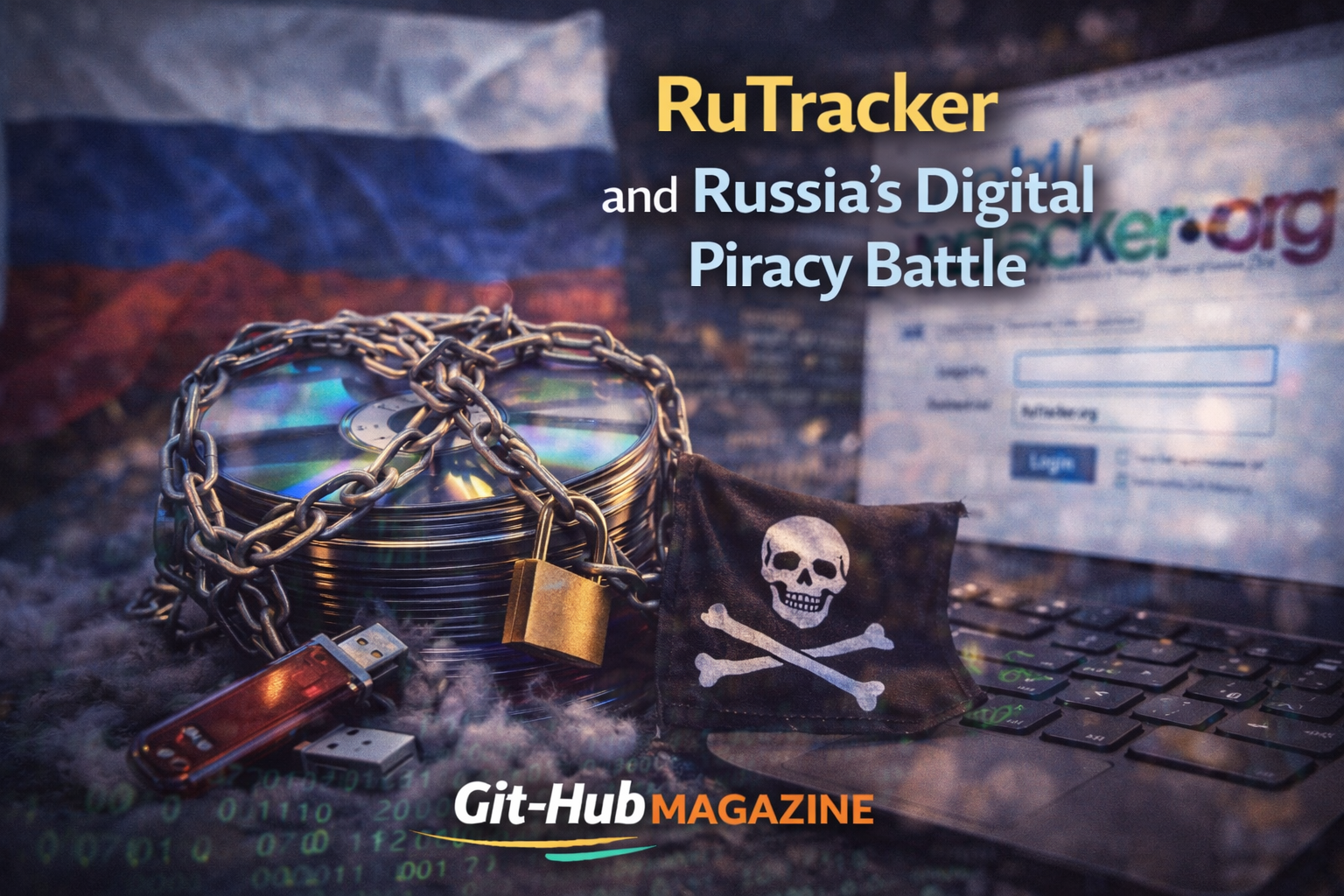
When readers look up RuTracker, they usually want clarity: what it is, why Russia banned it and whether it still operates. RuTracker is a Russian torrent tracker founded in 2004, originally known as Torrents.ru, that became one of the largest file sharing forums in the world before being permanently blocked in Russia in 2016. Despite that ruling, it continues to function through mirrors and virtual private networks.
From my perspective as a technology writer observing digital ecosystems over time, RuTracker represents more than a piracy hub. It reflects a particular era of internet culture when online forums functioned as organized, self governed libraries. Long before streaming services saturated global markets, RuTracker filled access gaps for music, software, films and archival material. It did so through a structured community model that blended strict moderation with peer to peer sharing.
Understanding RuTracker means understanding Russia’s digital transformation, the evolution of copyright enforcement and the resilience of online communities under pressure. Its story unfolds at the intersection of law, technology and culture.
The Origins of RuTracker
RuTracker began in 2004 under the name Torrents.ru during the global expansion of BitTorrent technology. Unlike chaotic public torrent indexes, Torrents.ru structured itself as a disciplined forum. Users registered accounts, followed formatting rules and maintained upload download ratios.
By the late 2000s, it had grown into one of the largest trackers worldwide, with millions of registered users and carefully organized categories. In 2010, after a domain dispute, the platform rebranded as RuTracker.org, consolidating its identity while preserving its original structure.
The forum architecture played a decisive role in its popularity. Threads contained detailed descriptions, screenshots, audio specifications and user commentary. Moderators enforced quality standards. In effect, RuTracker resembled a community curated archive rather than a simple download directory.
How the Platform Operated
RuTracker followed a private tracker model built around accountability. Registration was required. Users uploaded torrent files pointing to distributed content hosted across participants’ devices. Moderators reviewed submissions before approval.
The ratio system defined user behavior. Members who downloaded significantly more than they uploaded faced restrictions. This created an incentive to seed files long term, ensuring that rare or niche materials remained available.
Below is a structural comparison illustrating RuTracker’s distinct operational model:
| Feature | RuTracker | Public Torrent Sites | Legal Streaming Platforms |
|---|---|---|---|
| Registration Required | Yes | Often No | Yes |
| Moderation | Extensive | Minimal | Corporate Managed |
| Ratio Enforcement | Yes | Rare | Not Applicable |
| Content Scope | Broad, user curated | Broad, loosely organized | Licensed catalog only |
| Revenue Model | Donations | Advertising | Subscription |
This hybrid structure helped RuTracker cultivate trust within its user base. Files were often verified and categorized with precision rarely found elsewhere.
Russia’s Copyright Landscape
Russia’s approach to copyright enforcement evolved significantly in the early 2010s. As the country strengthened intellectual property regulations, lawmakers introduced expanded anti piracy legislation in 2013. The reforms enabled rights holders to seek court ordered blocking of websites distributing infringing material.
Enforcement authority rested primarily with Roskomnadzor, the federal communications regulator. The new legal tools marked a shift from targeting individual infringers toward targeting platforms themselves.
RuTracker soon became a high profile test case. Major publishing and music industry entities filed suits alleging repeated infringement. The Moscow City Court eventually ruled for permanent blocking under provisions designed for repeat offenders.
The case signaled a turning point in Russia’s digital governance strategy.
The 2016 Permanent Blocking
In January 2016, internet service providers across Russia began blocking access to RuTracker.org following the court’s decision. Regulators described the measure as a decisive response to repeated copyright violations.
However, the immediate aftermath revealed the limits of technical blocking. Users circulated detailed guides explaining how to bypass restrictions using VPN services, Tor browsers and mirror domains. Traffic declined initially but did not disappear.
Rather than dissolving, the community adapted. Administrators publicly rejected compliance demands that required removing large portions of the catalog. The ban, intended as a deterrent, became a rallying point for users who viewed the site as a cultural archive.
The episode exposed the tension between centralized enforcement and decentralized technology.
Piracy, Access and Market Gaps
RuTracker’s popularity cannot be understood without considering market conditions. In the early 2010s, Russia’s legal streaming ecosystem was still developing. Licensing fragmentation, limited catalogs and pricing disparities contributed to user migration toward peer to peer platforms.
Economic research on digital piracy suggests that enforcement actions can affect sales, particularly when legal alternatives are accessible and competitively priced. At the same time, piracy often flourishes in environments where legitimate access is constrained.
RuTracker filled these gaps. It offered content ranging from mainstream films to rare Soviet era recordings. For some users, it functioned as an informal preservation network.
This dual identity complicated the moral framing. While rights holders emphasized lost revenue, users emphasized availability and affordability.
Community Culture and Internal Governance
One of RuTracker’s defining characteristics was its internal governance system. Moderators enforced strict formatting requirements. Malware was actively removed. Duplicate or mislabeled uploads were flagged.
Discussion forums extended beyond file sharing. Users debated audio mastering quality, software performance and film restoration techniques. The site fostered expertise and collaboration.
This cultural dimension contributed to resilience. Members did not simply consume content. They contributed knowledge, seeded files and maintained order. When blocking occurred, those social bonds persisted.
Below is a timeline highlighting key milestones in RuTracker’s evolution:
| Year | Event |
|---|---|
| 2004 | Launch as Torrents.ru |
| 2010 | Rebrand to RuTracker.org |
| 2013 | Expansion of Russian anti piracy law |
| 2015 | Court orders permanent blocking |
| 2016 | Nationwide ISP blocking begins |
| Post 2016 | Continued operation via mirrors |
The timeline illustrates how legal pressure reshaped but did not erase the platform.
The Broader Implications for Internet Governance
RuTracker’s case demonstrates a broader shift in digital enforcement strategies. Governments increasingly target infrastructure rather than individuals. Blocking orders, domain seizures and payment processor restrictions have become standard tools.
Yet the technical architecture of the internet complicates such efforts. Mirror sites, encryption and anonymization tools enable rapid adaptation. Blocking reduces casual access but rarely eliminates determined participation.
The RuTracker episode also raised concerns about precedent. If courts can permanently block large platforms for copyright violations, similar mechanisms could apply to other categories of content.
In this sense, RuTracker stands at the crossroads of copyright enforcement and digital freedom debates.
The Platform’s Current Position
Today, RuTracker remains accessible through alternative routes. While officially blocked within Russia, experienced users navigate restrictions with relative ease. The forum structure, moderation practices and ratio system remain intact.
Meanwhile, Russia’s digital media market has matured. Streaming services expanded significantly in the years following the ban. Legal catalogs broadened. Consumer habits evolved.
Yet RuTracker’s continued existence underscores a deeper principle. Online communities built around shared norms and collective contribution can endure beyond legal and technical barriers.
Its survival reflects both the adaptability of peer to peer technology and the persistence of user driven digital culture.
Key Insights
- RuTracker originated in 2004 and became one of the world’s largest torrent forums
- Russia permanently blocked the platform in 2016 under strengthened anti piracy laws
- The site continues operating through mirrors and VPN access
- Its structured moderation distinguished it from many public torrent sites
- Market gaps and limited legal access contributed to its popularity
- The case illustrates the limits of large scale website blocking
- RuTracker’s community identity played a crucial role in its resilience
Conclusion
As I reflect on RuTracker’s trajectory, I see a story that transcends file sharing. It reveals how digital communities construct their own systems of order and meaning. It shows how law attempts to assert boundaries in a space designed for replication and distribution.
The 2016 ban marked a decisive moment in Russian internet policy. Yet it also demonstrated that technological enforcement cannot easily extinguish deeply rooted online cultures. RuTracker adapted, reorganized and persisted.
In the evolving landscape of digital media, the platform’s legacy endures as both cautionary tale and case study. It reminds us that access, control and community remain in constant negotiation across the global internet.
FAQs
What is RuTracker primarily known for?
RuTracker is known as one of Russia’s largest torrent forums, offering user shared files across music, films, software and archival materials.
Why did Russian authorities block it?
A Moscow court ordered permanent blocking in 2016 due to repeated copyright infringement under expanded anti piracy legislation.
Does RuTracker still function?
Yes. Although blocked by Russian internet providers, it remains accessible via VPN services and mirror domains.
How was RuTracker different from other torrent sites?
It required registration, enforced ratio rules and maintained strict moderation standards that emphasized organization and quality control.
What does RuTracker’s case represent in digital policy?
It represents the tension between copyright enforcement, censorship infrastructure and the resilience of decentralized online communities.