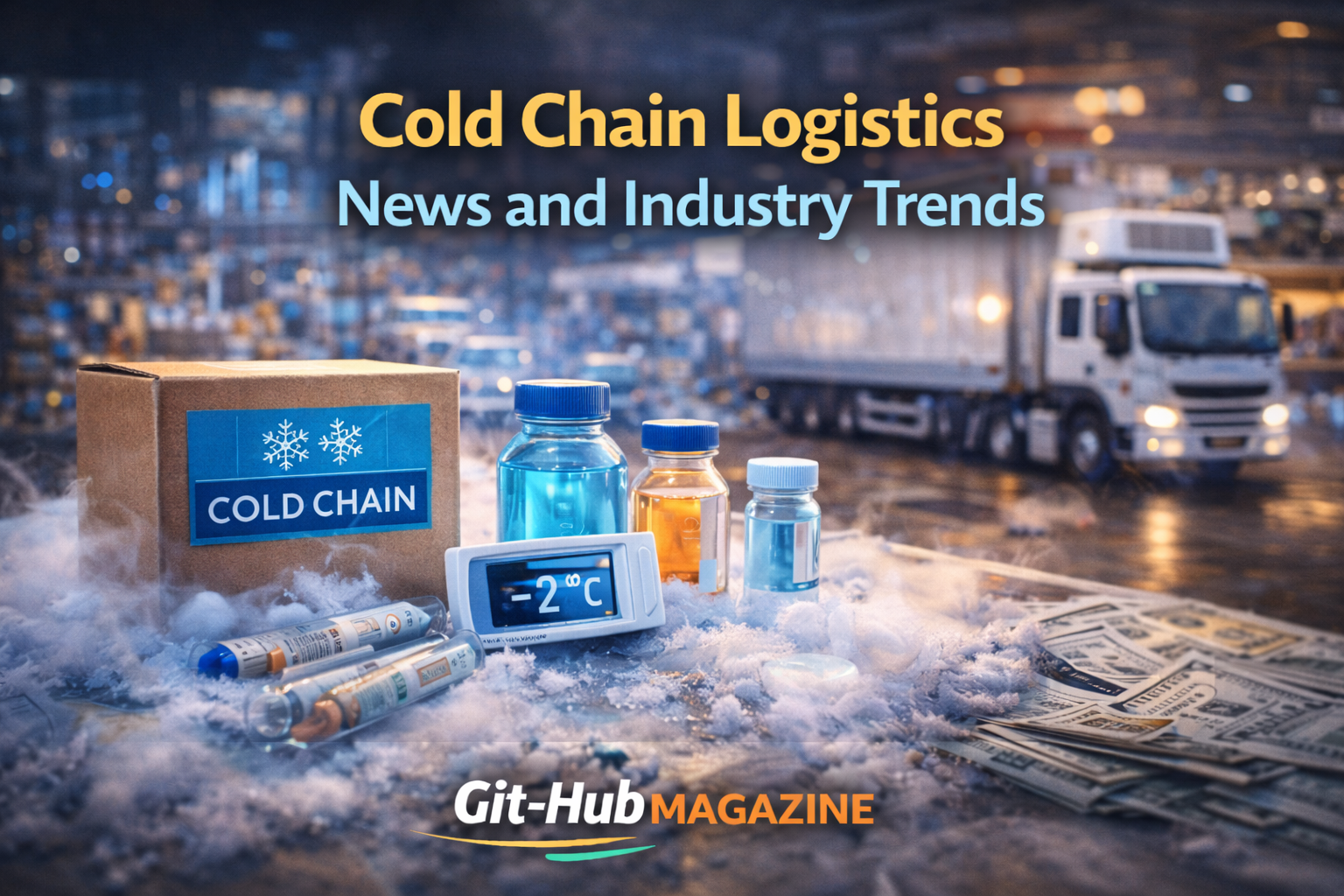
Cold Chain Logistics News and Industry Trends
I began reporting on cold chain logistics because readers searching for cold chain logistics news want clarity in a fast-changing sector: What is happening in temperature-controlled shipping? How are vaccines, fresh food, and biologics being transported safely? Which technologies and regulations are shaping the industry in 2026? And how are supply chain disruptions and climate pressures influencing costs and reliability?
Cold chain logistics refers to the transportation and storage of temperature-sensitive products under controlled conditions from origin to destination. It is essential for pharmaceuticals, vaccines, fresh produce, meat, dairy, and increasingly, high-value biologic drugs. According to the Food and Agriculture Organization of the United Nations, roughly 14 percent of food produced globally is lost between harvest and retail, much of it due to inadequate cold storage and transport infrastructure (FAO, 2019). Meanwhile, the global vaccine rollout during the COVID-19 pandemic exposed both the strength and fragility of ultra-cold logistics networks.
In recent years, investment in refrigerated warehousing, monitoring technology, and last-mile temperature control has accelerated. Regulatory scrutiny has tightened. Climate volatility has introduced new operational risks. Cold chain logistics is no longer a niche industry; it is a central pillar of global health and food security. This article examines the latest developments, technological innovation, regulatory frameworks, and economic forces shaping this critical sector.
The Expanding Scope of Cold Chain Logistics
Cold chain logistics once primarily served food distribution networks, particularly meat and dairy industries. Today, its scope has broadened dramatically. The World Health Organization has long emphasized the importance of maintaining proper temperature control for vaccines, warning that exposure to temperatures outside recommended ranges can reduce potency and compromise immunization programs (WHO, 2015).
The COVID-19 pandemic marked a turning point. The Pfizer-BioNTech mRNA vaccine required storage at approximately minus 70 degrees Celsius, pushing ultra-cold logistics into the spotlight in late 2020 (U.S. Food and Drug Administration, 2020). Governments and private logistics firms scrambled to expand freezer capacity, acquire dry ice supplies, and implement real-time tracking systems.
Simultaneously, rising global demand for fresh produce and frozen food expanded commercial cold storage footprints. According to the Global Cold Chain Alliance, refrigerated warehouse capacity has grown significantly across North America and Asia in recent years, reflecting increased consumer demand and globalization of food trade.
Infrastructure Growth and Market Scale
Cold chain infrastructure growth has accelerated alongside e-commerce and pharmaceutical innovation. A 2023 report from Grand View Research estimated the global cold chain logistics market size in the hundreds of billions of dollars, with steady compound annual growth projected through the decade.
The table below illustrates key growth drivers shaping the sector.
| Growth Driver | Impact on Cold Chain Expansion |
|---|---|
| Biologic Drug Development | Increased need for temperature-controlled transport |
| E-commerce Grocery | Higher demand for last-mile refrigerated delivery |
| Vaccine Distribution | Expansion of ultra-cold storage infrastructure |
| Global Food Trade | Cross-border temperature-controlled shipping |
| Regulatory Compliance | Investment in monitoring and validation systems |
Refrigerated warehouse construction surged in the United States between 2020 and 2023. Real estate advisory firm CBRE reported record levels of cold storage development in response to pandemic-driven demand and structural shifts in food consumption patterns.
This expansion is capital intensive. Cold storage facilities require advanced insulation, refrigeration systems, backup power, and temperature monitoring networks, all of which increase operational costs compared to traditional warehouses.
Technology and Digital Monitoring
Technology has transformed cold chain logistics from a reactive system to a predictive one. Modern shipments frequently incorporate Internet of Things sensors capable of transmitting real-time temperature data throughout transit.
The U.S. Pharmacopeia outlines stringent stability and storage standards for pharmaceuticals, emphasizing continuous temperature monitoring to ensure product integrity (USP, 2022). In response, logistics firms deploy digital tracking dashboards, automated alerts, and blockchain-based traceability systems.
Dr. Yossi Sheffi, director of the MIT Center for Transportation and Logistics, has noted that visibility across supply chains is now central to resilience, particularly for temperature-sensitive goods. “Data transparency allows faster intervention and prevents loss before it escalates,” he has argued in public lectures and publications.
The integration of AI-driven route optimization further enhances cold chain performance. Predictive models anticipate weather disruptions, traffic congestion, and equipment malfunctions, minimizing spoilage risk.
These technological advances reflect broader digital transformation trends in logistics, where analytics and automation increasingly define competitive advantage.
Regulatory Framework and Compliance Pressures
Cold chain operations are governed by strict regulatory frameworks, particularly in pharmaceuticals and food safety. In the United States, the Food Safety Modernization Act of 2011 strengthened requirements for safe food transport, including sanitary transportation rules enforced by the FDA (FDA, 2011).
For pharmaceuticals, Good Distribution Practice guidelines mandate temperature validation, documentation, and risk management throughout the supply chain. The European Medicines Agency similarly enforces guidelines for medicinal product transport within the European Union.
The table below summarizes major regulatory milestones.
| Year | Regulation | Significance |
|---|---|---|
| 2011 | Food Safety Modernization Act | Strengthened food transport safety rules |
| 2015 | WHO Vaccine Handling Guidance | Standardized vaccine cold chain requirements |
| 2020 | Emergency Use Authorizations for COVID Vaccines | Ultra-cold storage protocols introduced |
| 2022 | Updated USP Storage Standards | Expanded pharmaceutical temperature monitoring |
Regulatory compliance increases documentation and infrastructure costs but enhances product safety and public trust.
Climate Change and Operational Risk
Climate volatility presents mounting challenges. Rising global temperatures increase energy consumption for refrigeration and raise the risk of heat-related transit disruptions.
The Intergovernmental Panel on Climate Change has documented increased frequency of extreme heat events, which can strain electrical grids and disrupt cold storage operations (IPCC, 2021). Power outages pose serious risks to warehouses and distribution centers.
Energy efficiency has therefore become central to cold chain strategy. Companies are investing in alternative refrigerants with lower global warming potential, solar-powered facilities, and advanced insulation technologies.
Professor Rodrigue Tremblay, a supply chain analyst, has observed that climate resilience will define the next decade of cold chain investment. Firms that adapt infrastructure to withstand temperature extremes and energy volatility are more likely to maintain operational continuity.
The convergence of environmental risk and economic pressure is reshaping infrastructure planning decisions worldwide.
Interview: In the Freezer Corridor
Date: January 18, 2026
Location: Chicago, Illinois
Interviewer: Michael Anders, logistics correspondent
Interviewee: Laura Chen, Vice President of Operations at ArcticLink Logistics
Atmosphere: A refrigerated warehouse humming softly, forklifts gliding between towering racks of palletized pharmaceuticals.
The metallic scent of cold air filled the loading dock as I met Laura Chen, who oversees temperature-controlled operations at one of the Midwest’s largest cold storage hubs. Wearing a heavy insulated jacket, she gestured toward rows of stainless steel doors leading into minus-20-degree chambers.
“We are moving products that cannot afford a mistake,” she began, her breath visible in the chilled air.
Q: What changed most during the pandemic?
Chen: “Ultra-cold became mainstream overnight. We expanded freezer capacity by nearly 40 percent in 2021 alone. The scale was unprecedented.”
Q: Are we better prepared now?
Chen: She paused thoughtfully. “Yes, but resilience is ongoing work. We now rely heavily on sensor networks and predictive analytics. If a unit drifts even one degree, we know instantly.”
Q: What worries you most?
Chen: “Power stability. Extreme weather events are increasing. Backup systems are critical.”
Q: How do regulations shape daily operations?
Chen: “Documentation is everything. Every shipment is validated, logged, and audited. It protects patients and protects us.”
As forklifts maneuvered silently behind her, Chen emphasized workforce training. “Technology helps, but people make the difference.”
Leaving the facility, I reflected on how invisible yet essential this infrastructure remains. Consumers rarely see these refrigerated corridors, yet global health depends on them.
Production Credits: Reporting by Michael Anders. Photography by Daniel Ruiz.
Economic Implications and Investment Trends
Private equity and institutional investors have shown growing interest in cold storage real estate. High barriers to entry and consistent demand make the sector attractive.
CBRE’s industrial market reports have highlighted cold storage as one of the fastest-growing segments in logistics real estate between 2020 and 2023. Meanwhile, pharmaceutical pipeline expansion, particularly in biologics and cell therapies, suggests sustained long-term demand for ultra-cold solutions.
Global food trade further reinforces the need for robust refrigerated shipping lanes. As emerging markets increase protein consumption and fresh produce imports, cold chain networks expand accordingly.
Industry analyst Maria Gomez notes, “Cold chain logistics is no longer cyclical. It is structural. Demand is embedded in global consumption patterns.”
Investment momentum appears likely to continue, though rising interest rates and energy costs may moderate expansion pace.
Takeaways
- Cold chain logistics underpins global food security and pharmaceutical safety.
- Pandemic vaccine distribution accelerated ultra-cold infrastructure growth.
- IoT monitoring and predictive analytics enhance reliability.
- Regulatory compliance shapes operations across food and pharma sectors.
- Climate volatility increases energy and resilience challenges.
- Infrastructure investment continues despite economic headwinds.
Conclusion
As I consider the trajectory of cold chain logistics in 2026, one truth stands out: this industry has moved from operational afterthought to strategic necessity. Whether safeguarding vaccine potency, preserving fresh produce, or ensuring biologic drug stability, temperature control is fundamental to modern life.
The pandemic exposed vulnerabilities but also catalyzed innovation. Digital monitoring, infrastructure expansion, and regulatory harmonization have strengthened resilience. Yet climate pressures and energy volatility introduce new complexities.
Cold chain logistics news reflects a sector balancing technological advancement with environmental responsibility and regulatory accountability. The refrigerated corridors humming quietly across continents may remain largely unseen, but their importance has never been clearer. The future of food, medicine, and global commerce depends on their reliability.
FAQs
What is cold chain logistics?
It refers to temperature-controlled storage and transportation of perishable goods such as food and pharmaceuticals.
Why is cold chain important for vaccines?
Vaccines require specific temperature ranges to maintain potency and effectiveness.
How did COVID-19 impact cold chain infrastructure?
It accelerated ultra-cold storage expansion and monitoring technology adoption.
What regulations govern cold chain transport?
Food Safety Modernization Act and Good Distribution Practice guidelines are key frameworks.
How does climate change affect cold chain logistics?
Extreme heat and power instability increase operational risks and energy costs.

Related Posts
budget travel tips expensive cities usa

Mygreenbucks kenneth jones: Sustainable Personal Finance Guide